
IHEDN Mondays are now available as audio files!
Click below to listen:
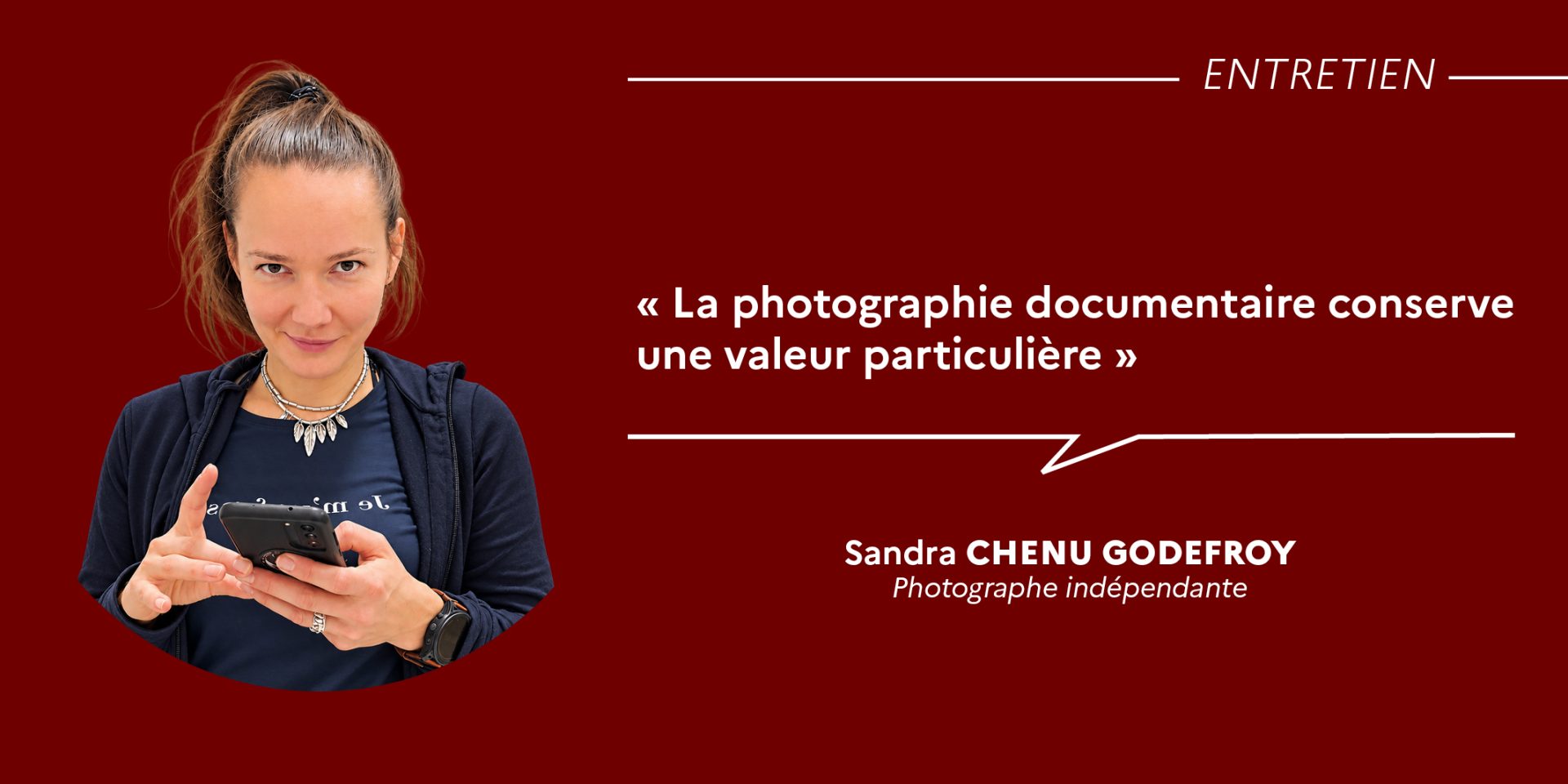
Originally from Grenoble, Sandra Chenu Godefroy has been a freelance photographer since 2009. As a photojournalist, she produces immersive photo reports on units working in the fields of defence, security, emergency services and healthcare, and she supports businesses and institutions with their projects, which she showcases and promotes through exhibitions and books.
In 2023, she received the Army Vermeille Medal, in tribute to Sergeant Sébastien Vermeille, a «soldier of the image» who died for France in Afghanistan in 2011, for his photograph *Selva*, taken in January 2023.
Her approach to photography was notably influenced by the work of great photographers such as the American Margaret Bourke-White (1904–1971). A sensitive pioneer and adventurer in photojournalism, she was the first Western photographer to be granted entry to the USSR in 1930. She was also the first female war correspondent accredited by the US Army during the Second World War, authorised, notably, to fly on combat missions. Sandra also mentions the British photographer Don McCullin (1935–), who covered numerous conflicts, notably in Vietnam and Indochina, for the rapport he was able to establish between himself and the humblest of his subjects.
Very different backgrounds, eras and worlds, but a shared interest in people, the quality of the image, and the ability to commit oneself personally – sometimes under difficult conditions – to capture images that serve as testimonies.
It is this sense of adventure and adversity that draws her to photography. For Sandra Chenu Godefroy, photography means choosing to step outside her comfort zone, to immerse herself in unfamiliar environments and to confront reality in order to tell the stories of those who live there. An approach that places people at the heart of her work and has naturally led her to take an interest in the world of the armed forces.
Does your status as a civilian photographer influence the way you work or the way you view operations?
It is important to state, first and foremost, that, in absolute terms, there is no difference between a civilian photographer and a military or defence photographer employed or commissioned by the armed forces. We use the same cameras, have broadly the same training and share the same visual culture. However, my status does influence the perspective from which I view things and the way in which I am viewed.
When I am welcomed into a unit, my status as an ’outsider« and as a woman can help to open up certain spaces. I am not a member of the armed forces, I hold no rank and am therefore not part of any chain of command. Seen in this light, being a civilian allows me to move about more freely, to meet and document the daily lives of personnel with very different backgrounds, from the commanding officer to the youngest of the soldiers, including the cook and that elderly officer on the cusp of retirement. It’s important for me to move between different branches and specialities, because I like to show that the armed forces» operations aren’t solely down to combatants who fit the stereotypical image: behind any operation, there are also technical and support staff, intelligence specialists, and service personnel working behind a desk or in a maintenance workshop.”.
After a career spanning more than fifteen years, I am, in fact, proud to say that certain institutions specifically seek me out because I am a civilian photographer. Indeed, the armed forces have long understood the power of images to communicate in a different way and raise awareness of their activities. Inviting an outside photographer means accepting that a different perspective will be brought to bear on what is happening within the armed forces, with a sensitivity all of its own. Although my eye may be accustomed to the military world, it remains an outsider’s perspective, which gives me a certain freedom in the way I observe and tell stories.
That said, I would like to point out that being an «outsider» does not necessarily mean being «objective». It is important for me to remind an audience that does not necessarily have a very specific understanding of the visual arts, and who might be tempted to believe that being an outsider allows for objectivity. Every perspective necessarily has a source, and I, on the contrary, embrace this element of subjectivity, which is inherent to the medium of photography.
The same event can be perceived very differently depending on where you are, who you are with, or the moment you choose to capture. Depending on whether you are a few centimetres, metres or tens of metres away from a scene, you do not perceive the same reality. When I choose to follow the soldiers or the communities they are helping… I see the world as my subjects see it, from their point of view. This does not mean that one photograph is true whilst another is false; it simply means that they show different aspects of the same reality. My role as a storyteller is therefore not to claim an impossible objectivity, but to recount as accurately as possible what I have seen and understood, from my own perspective.
What are you trying to convey through your photographs?
Beyond simply creating a beautiful image, I aim to tell a story that will have an impact on the viewer. And as a single photograph is usually not enough to build a narrative, in my photojournalism work I use a series of images which, when placed one after the other, help to structure a story.
This process involves a great deal of selection work, or ’ editing ». Whilst on an assignment, I can take over a thousand photographs a day. So when I get back, I have to select the «good» ones – the ones that will help build a coherent narrative without losing the viewer’s attention. To construct this narrative, I ultimately draw on fairly universal principles of storytelling: who are the characters? What is happening? Where? How? Why? My selection process must provide answers to these questions.
Constructing a narrative is difficult for a photographer to envisage immediately upon returning from a reporting assignment. It requires taking a certain distance from the photographs one has taken: when I am immersed in a situation, I myself experience the situations and the emotions they provoke. So, when I return, I allow some time to pass before selecting my images, or I choose to show them to trusted outsiders, so that their objective perspective can confirm that the story I am telling is comprehensible to someone who has not experienced it first-hand.
When putting together a photo essay, I often narrow my selection down to 15 images; that’s the right number to show to someone who hasn’t expressed any particular interest. Any more than that, and the human brain tends to switch off. But this editing It can amount to hundreds of images, depending on the intended output format: if I want to put on an exhibition or produce a book, I can afford to go into greater detail in my narrative.
So much for the structure of the narrative, but in my view it is only of interest if it can have an impact on those who are willing to let themselves be carried along by it. I choose my subjects to show, from a human perspective, realities that the public knows little about, that aren’t often seen, but which have «something» about them and which can teach us more about our society or about ourselves.
For example, during a report on the Legionnaires deployed as part of Operation Harpie in French Guiana, I wanted to show not only these men of different nationalities facing a particularly hostile environment and living in difficult conditions, but also the solidarity and camaraderie that bind them together. Beyond the military mission, I discovered men there who were capable of pressing on, finding solutions and smiling in the face of adversity.
How do you think a photograph can convey what words cannot express?
Photography has one key advantage: it is more universal than language. A photograph does not require the viewer to speak the same language as the photographer to be understood. Although everyone may have their own interpretation of an image, there is always something in it that is accessible and understandable to everyone. This is what enables photography to reach a much wider audience than written or spoken language.
The same image can, in fact, be interpreted on several levels. If I take a photograph of a soldier in uniform and show it to my mother, who is unfamiliar with that world, she will pick up on his human expressions: his tiredness, his pride… A soldier, on the other hand, will interpret it differently: he will recognise a patch or a decoration, and deduce from this a unit affiliation or a theatre of operations. The photograph thus contains several layers of information, depending on the frame of reference of the viewer.
This is also what makes photography a particularly interesting medium for communication. At my exhibitions, I particularly enjoy organising tours for children. They see things differently from us: they often pause at a detail that adults overlook, something that amuses or surprises them. Whilst a text must necessarily adapt its vocabulary to its audience, a photograph can be viewed and understood by people of different ages and with varying levels of knowledge.
For me, this is one of the great strengths of photography: it is less exclusive, allowing us to share a reality without requiring the same codes or the same language, whilst leaving everyone the freedom to interpret it and the responsibility to seek to understand it.
In your view, what role does photography play in preserving the history of the armed forces?
For me, one of the roles of photography is to show a little more than just the major events. The photographer will, of course, take pictures of the general delivering a speech, follow a dynamic tactical manoeuvre or be present during a critical operation. But because they are also present in everyday moments, they can capture the «quiet moments» too: soldiers sharing a coffee on their camp beds after returning from a mission, doing their washing, having a meal together or joking around… These moments may not be part of the grand narrative of history, but they are part of it nonetheless. They tell the story of an era, a way of life, a state of mind. Taken individually, they may seem anecdotal; yet, when pieced together, they help to tell a story and lend a human dimension to those who lived through these engagements. This is where photography comes into its own.
This issue of preservation is all the more important today, given that our personal habits have changed. We used to keep letters, photographs… but today the scale has changed. Messages sent via digital messaging services are more ephemeral than letters written in ink, and there is a much greater risk that they will disappear over time. The sheer volume of images taken on our smartphones poses a new challenge, with several thousand personal photos taken every year: how do we pass on this legacy to our children? When the time comes to pass on these memories, if no selection process takes place, a photograph – even a vital one – will simply be lost, buried amongst thousands of others. That is why, for our personal archives too, the process of selection is essential.
These questions form part of the photographer’s work and role in society. Photographers do not merely produce images: they play a part in determining what will be preserved from the present day and thus passed on to future generations. This responsibility sometimes involves making difficult choices, notably that of not showing certain images and prioritising others. This is known as iconography: this process of selection, captioning and contextualisation thus transforms a multitude of photographs into a record that is more easily accessible and transmissible.
This approach is particularly important for the armed forces, which need to maintain a sense of continuity and pass on the memory of those who came before them to the soldiers of today and tomorrow. Images therefore provide a simple and universal means of keeping that memory alive.
In this respect, I wouldn’t necessarily draw a distinction between still and moving images. My medium remains photography, but a well-crafted video can also convey a reality, show things and immerse someone who wasn’t there. Ultimately, what matters is not so much the medium as the image’s ability to preserve an authentic record and convey it.
What is the value of documentary photography in the age of artificial intelligence?
The advent of artificial intelligence – and in particular the ability of the general public to generate images with ease – has profoundly disrupted the profession of photography, which has already been under pressure in recent years. This is forcing imaging professionals to address an obvious question. And that question is not: ‘What can AI do that I cannot?’ but rather: ‘What can I do that AI cannot?’
For me, the value of documentary photography lies first and foremost in its ability to bear witness to a lived reality. When I return from the Guyanese forest with photographs of legionnaires on operation, these images convey something very concrete: I was there, I saw this scene and I photographed it. They are a testimony and bear the mark of a real experience. If I ask an artificial intelligence to generate «a French legionnaire on a mission to combat illegal gold panning in French Guiana», it may, perhaps, produce a convincing image, but it will not be a scene that actually took place, nor men who actually existed; nothing will prove to me that every detail of the generated composition is authentic.
AI systems also lack a sense of culture, so they blithely mix up references: for example, when you ask for an image of a French soldier, you get a soldier wearing uniform features specific to the US Army, with a blue, white and red patch stuck onto the sleeve, because the AI generates its creations from a dataset that is predominantly Anglo-Saxon in origin.
This mediocrity is inherent in LLMs (Large Language Model), And that is why, in my view, documentary photography retains a special, irreplaceable value. The photographer, as a human being, captures a moment of authentic reality and bears the responsibility that goes with it: that of taking ownership of their image. This responsibility is more than just a legal one; it is also epistemological and ethical.
When I sign a photograph, I take ownership of it, but I am also staking my credibility on it: it has been produced in accordance with the principles, methodology and ethics of the profession, as well as my own. In a way, I am saying: «I took this photograph; I was there, and this is what I saw.» As I have mentioned, this does not mean that my photograph is an absolute truth, nor that it is devoid of subjectivity. It is the result of my perspective, the position I took and the moment I chose to capture. But I stand by that perspective, and I can answer for it before my peers and the public. That is a guarantee that no LLM is able to offer its users.
This is the key difference between a photograph and an AI-generated image: AI can produce something very realistic without ever being able to attest to the reality of its existence. It reveals neither where the image was taken, nor by whom, nor under what circumstances. Documentary photography, on the other hand, relies on a photographer who has demonstrated their intention and who takes responsibility for what they have chosen to show.
Moreover, today, as society questions the concepts of truth and evidence, it seems to me that the role of the documentary photographer is taking on a new significance.
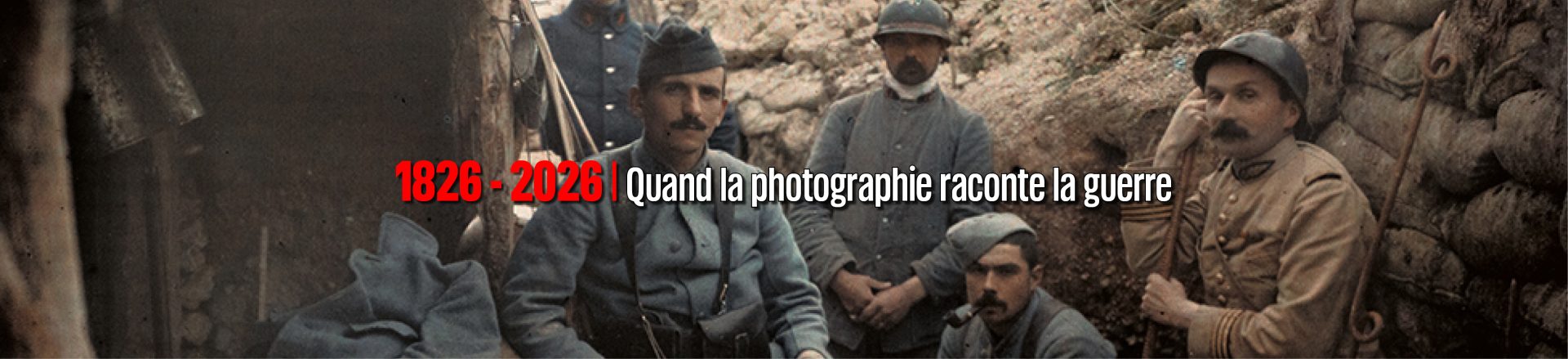
1826–2026: When photography tells the story of war
 French
  English