
This fact sheet is also available in audio format
Click below to listen:
Summary
- Hungary, a pivotal state between Central Europe, the Balkans and the Danube region, combines close integration into Euro-Atlantic structures with a strategic culture shaped by the trauma of the Treaty of Trianon (1920), the defence of national sovereignty and the protection of Hungarian minorities in neighbouring countries and abroad.
- Under Viktor Orbán (Prime Minister from 1998 to 2002 and from 2010 to 2026), Hungary remained a member of NATO and the EU whilst developing a strategy to diversify its partnerships with Russia, China and Turkey in order to preserve its autonomy in decision-making, a stance whose limitations have been revealed by the war in Ukraine.
- Péter Magyar’s accession to power in April 2026 could pave the way for closer ties with Brussels and more transparent governance, but the institutional, economic and geopolitical constraints inherited from the Orbán era are likely to lead more to an adjustment in Hungarian policy than to a major strategic shift.
Background – Hungary, a pivotal country at the heart of Central Europe
Situated at the heart of Europe, in the Carpathian Basin and at the crossroads between Central Europe, the Balkans and the Danube region, Hungary occupies a unique geographical position. As a neighbour of Ukraine, it is directly affected by the repercussions of the war on its strategic environment. It also plays an important role in regional energy flows, acting as a transit point between Russia, Turkey and Central Europe thanks to infrastructure such as the TurkStream and BalkanStream gas pipelines. Since Russia’s invasion of Ukraine in 2022, Hungary has continued to import Russian oil and gas, a situation which has led to pressure from the EU, which is working to reduce its energy dependencies.[1].
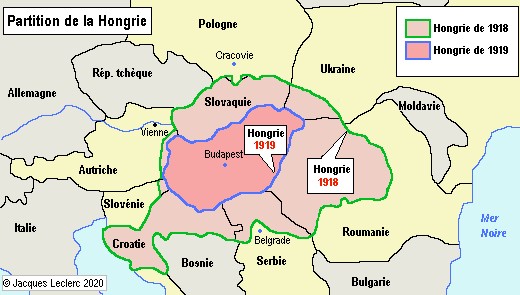
This geographical configuration has helped to shape a particular perception of its role within its regional environment. More than just a frontline state, Hungary has traditionally viewed itself as a space for transit, connection and intermediation between different geopolitical areas. This perception is inextricably linked to the weight of its history and, in particular, to the legacy of the Austro-Hungarian Empire. In this regard, the memory of the Treaty of Trianon occupies a central place in Hungarian political and strategic culture. Signed on 4 June 1920 following the end of the First World War, this treaty formalised the dismantling of the Kingdom of Hungary and the loss of nearly two-thirds of its territory, as well as a significant proportion of its population. Several million Hungarians thus found themselves outside the new national borders, mainly in Romania, Czechoslovakia and Yugoslavia. Regarded by some sections of Hungarian society as a «historical injustice», the Treaty of Trianon continues to exert a considerable influence on national narratives. The issue of Hungarian minorities in neighbouring states thus remains a sensitive topic in Budapest’s foreign policy. Since 2010, 4 June has also been celebrated as «National Unity Day», illustrating the enduring place of this legacy in the Hungarian national narrative. This event has helped to foster a national narrative centred on the defence of sovereignty, national identity and the continuity of the Hungarian nation beyond the state’s borders, with particular attention paid to Magyar communities living in neighbouring countries, making their protection a recurring theme in national political discourse. More broadly, Hungarian foreign policy remains shaped by a lasting sense of historical vulnerability. Inherited from the upheavals of the 20the Throughout the century, this perception has fuelled a strong sensitivity to issues of sovereignty and a persistent mistrust of any form of political or strategic dependence deemed excessive.
During the Second World War, specifically between 1941 and 1944, Hungary fought alongside Nazi Germany. At the end of the war, the country gradually came under Soviet control: the communist regime eliminated the opposition and, in 1949, established a people’s republic aligned with Moscow. An uprising in 1956, crushed by the Soviet army, led to a relative relaxation of the regime, which made Hungary the «showcase» of the Eastern Bloc, prior to the democratic transition of 1989.
Following the end of the Cold War, Hungary became firmly embedded within Euro-Atlantic structures. It joined NATO in 1999 and then the European Union in 2004, two major milestones in its reintegration into the Western world. Its economy is now deeply integrated into the European Single Market and benefits significantly from European funds, which have contributed to the country’s modernisation since its accession.
In the defence sector, Budapest has, since 2016, been undertaking a major modernisation programme for its armed forces through the Zrínyi 2026 programme, which aims to replace equipment dating back to the Soviet era and to strengthen interoperability with its allies. This transformation has been accompanied by a gradual increase in military spending (2% of GDP in 2025) and the development of domestic industrial capabilities[2]. Hungary has, in particular, strengthened its cooperation with several European partners, notably Germany – which has become its main supplier of land-based equipment – as well as France, Sweden and NATO bodies. However, this integration into Western institutions and these efforts at military modernisation have not led Budapest to adopt a policy of systematic alignment. On the contrary, under the leadership of Viktor Orbán from 2010 onwards, Hungary has gradually developed a doctrine aimed at preserving and increasing its decision-making autonomy by expanding its partnerships in an international environment perceived as increasingly competitive.
Analysis – The Orbán model, or the «multi-alignment» strategy»
Viktor Orbán first became Prime Minister of Hungary in 1998, a position he held until 2002. However, it was his re-election in 2010 that marked a major turning point in Hungary’s political trajectory. A former liberal and pro-Western opponent during the post-communist transition, he gradually set about transforming the Hungarian political system around a sovereignist conception of the state and democracy. This shift was accompanied by a growing centralisation of power, facilitated by the large parliamentary majorities secured by his party, Fidesz (Hungarian Civic Union). During the 2010s, several constitutional reforms strengthened the executive’s control over institutions, whilst the media, the judiciary, universities and certain independent authorities were gradually brought under tighter control. Viktor Orbán himself advocates the construction of an «illiberal democracy», which he presents as an alternative to the Western liberal model. This development is underpinned by a political narrative structured around several recurring themes: the defence of the Christian nation, the preservation of Hungarian cultural identity, the rejection of multiculturalism and opposition to the migration policies promoted by Brussels. In this view, the European Union is contested less as an economic area than as a political project that imposes standards deemed contrary to national interests.
Nevertheless, Orbán does not question Hungary’s place in the West. As a member of NATO and the European Union, the country remains firmly anchored within Euro-Atlantic structures. On the other hand, the Hungarian Prime Minister challenges the normative dimension of the European project and asserts the right of Member States to freely define their own political and societal models. This vision of sovereignty is reflected in Hungarian foreign policy: Budapest does not seek to break with its Western alliances but to increase its freedom of action by forging a wider range of external partnerships. This strategy, sometimes described as «multi-alignment», aims to avoid any exclusive dependence on a single actor. Relations with the European Union illustrate this ambivalence. On the one hand, Hungary remains heavily dependent on the single market and European funding, which play an important role in its economic development. On the other hand, tensions with Brussels have escalated over issues relating to the rule of law, the independence of the judiciary and media freedom. Against this backdrop, Budapest has regularly used its right of veto – or the threat of using it – as a negotiating tool to defend its interests or secure concessions. The European Union has retaliated on the budgetary front, notably by freezing the disbursement of a support fund until structural reforms aimed at upholding the rule of law are implemented. Within NATO, Hungary had also adopted a blocking stance, opposing the accession of Sweden and Finland in 2024 before finally coming round to the idea. By delaying the agreement by several months, Viktor Orbán hoped to demonstrate his country’s influence.
At the same time, Viktor Orbán has maintained a close relationship with Russia. This closeness can be partly explained by the country’s energy dependence, as it continues to source vast quantities of hydrocarbons from Russia. The project to expand the Paks nuclear power station (Paks II), carried out with Moscow’s support, is also a key element of this relationship. Since the start of the war in Ukraine, Budapest has adopted a more conciliatory stance towards Russia than most of its European partners, favouring a rhetoric of «peace» and emphasising the imperatives of national energy security. On the diplomatic front, in addition to blocking EU member states’ sanctions against Russia, Viktor Orbán has demonstrated his closeness to the Russian leader, for example during an official visit to Russia in 2024, where he presented himself as a peace negotiator, going against the European position.
Turkey also plays an increasingly important role in Hungary’s strategy: the two countries cooperate closely in the energy sector, particularly on the TurkStream gas pipeline, which enables Hungary to receive Russian gas whilst bypassing Ukraine. Relations have also developed in the industrial and military sectors, whilst Viktor Orbán and Recep Tayyip Erdoğan share certain political views regarding national sovereignty and criticism of Western liberalism. Finally, Budapest is hosting several strategic Chinese investments, notably in the electric battery, automotive and infrastructure sectors. Hungary is thus seeking to position itself as a key gateway for Chinese capital into Central Europe, whilst benefiting from the opportunities offered by Europe’s industrial transition.
Overall, the «Orbán model» is based less on a pro-Russian alignment than on a strategy of diversifying dependencies. The aim is not to leave the Western camp but to broaden Hungary’s diplomatic, economic and energy options in order to strengthen its autonomy in decision-making. However, the Russian invasion of Ukraine in February 2022 has put this balance under strain. On the one hand, Hungary continues to honour its commitments within NATO and is pursuing a major military modernisation programme. On the other hand, the Hungarian government has been far more reluctant than its European partners regarding certain measures to support Ukraine. Budapest has regularly delayed or made certain European decisions conditional – whether regarding sanctions against Russia, financial aid to Kyiv or the opening of negotiations on Ukraine’s accession to the European Union. This stance has contributed to Hungary’s gradual isolation on the regional stage. The Visegrad Group, which historically brought together Hungary, Poland, the Czech Republic and Slovakia on the basis of a shared conservative outlook, has been severely weakened by the war. Whilst Warsaw has established itself as one of Ukraine’s main European supporters, Budapest has maintained an ambiguous stance towards Moscow, accentuating the divisions within the group.
The war in Ukraine has thus highlighted the limitations of the strategy pursued by Viktor Orbán for over a decade. The Hungarian doctrine is in fact based on a balance that has become more difficult to maintain since 2022: remaining fully integrated into Western structures whilst maintaining privileged relations with external powers such as Russia, China or Turkey.
Outlook – Péter Magyar and the post-Orbán era
Péter Magyar’s rise to power in April 2026 marks the beginning of a new political era in Hungary following more than fifteen years of Fidesz rule. Formerly close to the ruling circle and a former member of Viktor Orbán’s inner circle, Magyar embodies a challenge emerging from within the system rather than a radical ideological break. His career path has enabled him to attract a section of the conservative electorate whilst rallying opponents of the institutional abuses and corruption that have been denounced for several years. His rhetoric is based primarily on criticism of cronyism, the lack of transparency in the awarding of public contracts and the concentration of power around Fidesz. On social and identity issues, however, Péter Magyar adopts a relatively moderate stance, avoiding presenting himself as the antithesis of Viktor Orbán. His profile appears more technocratic than activist, prioritising the effectiveness of public action, good governance and the restoration of institutional credibility. Just a few weeks after he came to power, the Hungarian veto blocking financial aid to Ukraine was lifted, and €6.6 billion from the European Peace Facility (EPF) was released to reimburse Member States that had supplied arms to Ukraine and to support the continuation of military aid to Kyiv.
In this respect, Péter Magyar appears less as a revolutionary than as a reformer of the system. His aim seems to be more to correct the excesses of the Orbán era than to challenge the overall policies that have shaped Hungarian politics since 2010. However, the new government’s ability to bring about far-reaching changes remains limited by several structural factors. The first obstacle is institutional in nature. After more than a decade in power, Fidesz has profoundly reshaped the Hungarian state. Many key posts within government departments, independent authorities, the judiciary and the public media remain occupied by figures appointed during the Orbán years. Added to this are the numerous quasi-public foundations and economic networks with close ties to the government, which continue to exert significant influence over the country’s political and economic life.
Economic constraints represent a second major challenge. The new government has inherited a deteriorated fiscal situation which limits its room for manoeuvre. Against this backdrop, restoring relations with Brussels appears to be a priority. Indeed, Péter Magyar’s initial initiatives have been aimed at rebuilding trust with the European institutions. This strategy appears to have borne fruit, as the European Commission has agreed to release €16.4 billion in previously frozen funds, in return for reforms designed to enhance transparency and combat corruption. Finally, the geopolitical constraints remain largely unchanged. The country’s energy dependence, its proximity to Ukraine and the scale of foreign investment – particularly from Germany and China – continue to influence Budapest’s strategic choices. These factors limit the scope for a sudden reorientation of Hungarian foreign policy.
A change in government could, however, lead to a significant shift in relations between Budapest and its European partners. A rapprochement with Brussels seems likely, particularly on institutional and budgetary issues. Hungary is also expected to adopt a more cooperative stance in discussions concerning Ukraine, thereby easing the deadlocks that have characterised the final years of the Orbán government.
To find out more
Bibliography
This This fact sheet is based on information from the following sources:
- Amnesty International, «Report 2025/26 – Hungary», accessed on 9 June 2026
- Beaud-Blanckaert, Auguste, «Viktor Orbán’s Hungary is sinking deeper into illiberalism», Toute l’Europe, 18 March 2025
- Csaky, Zselyke, «Viktor Orbán’s Hungary has become a hybrid regime between democracy and dictatorship», Centre for European Reform, 28.06.2026
- Crellin, Zac, „Serbia, Hungary say explosives found at Russian gas pipeline”, DW, 4 May 2026
- Dettmer, Jamie, “How Viktor Orbán became Vladimir Putin’s best friend in the EU”, Politico, 30 March 2026
- Fontaine, Marion, «What is illiberal democracy, the model of which Viktor Orbán claims to be the champion?», IFRI, 12 April 2022
- Gaal, Ferenc, “Could Hungary win its case against the EU’s Russian gas ban?”, DW, 2 August 2026
- Hajling, Dóra, “What are the main drivers of member states’ defence procurement practices? The Hungarian case”, IRIS, ARES Group, March 2026
- Labruyère, Florence, «In Hungary, Viktor Orbán’s oligarchs are in Péter Magyar’s sights’, France Culture, 15.05.2026
- Léotard, Corentin, «To defeat Orbán, the Hungarian left is rallying behind Magyar, a conservative, populist and technocratic figure», 21 March 2026
- Léotard, Corentin, «In Hungary, the new prime minister is working to dismantle the Orbán system», Mediapart, 3 June 2026
- Mayer, Verena, Rühle, Alex, „Endlich frei“, Süddeutsche Zeitung, 29 May 2026
- Madlovics, Balint, Magyar, Balint, “A Last Chance for Hungary”, Foreign Affairs, 9 April 2026
- Ministry for Europe and Foreign Affairs, «Overview of Hungary», 2 June 2026
- Norberg, Johan, “In Hungary, illiberalism has already lost», a conversation with Johan Norberg, Le Grand Continent, 11 April 2026
- Reuters, „TurkStream pipeline operator to relocate base to Budapest, bypassing sanctions, Hungary says”, Reuters, 9 December 2025
- SciencesPo, «Hungary: the end of the Orbán era?», Centre for European Studies and Comparative Politics, 14 April 2026
- Sussex, Matthew, “What Viktor Orbán’s election defeat means for Putin, Trump and the rise of right-wing populism”, The Conversation, 13 April 2026
- TOI, “Hungary’s New Prime Minister Peter Magyar Defies NATO, Refuses to Supply Weapons to Ukraine”, Times of India, 30.05.2026
- Vinocur, Nicholas, “Maygar to visit Brussels next week to discuss unfreezing funds for Hungary”, Politico, 23 May 2026
This file is automatically translated
 French
 English