
Click below to listen:
A world of successive crises
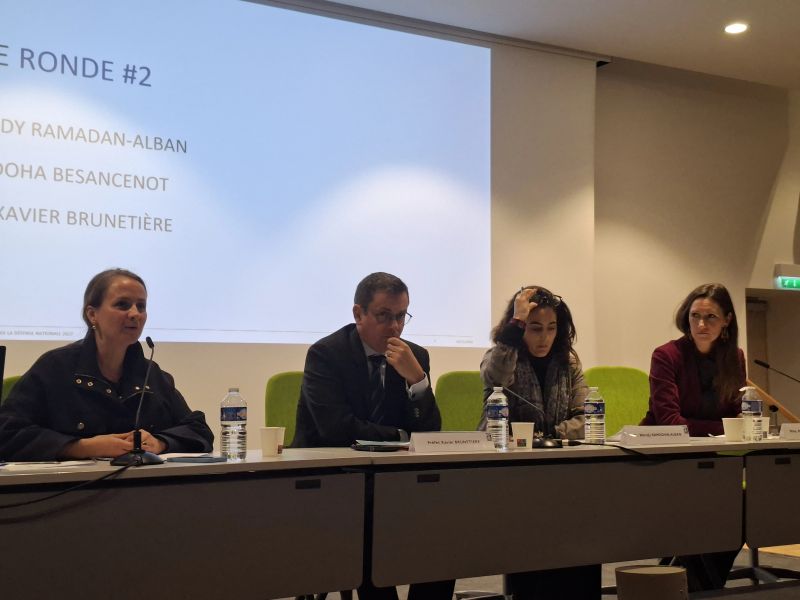
The book looks back at the major events that shaped ²the year 2025 and the start of 2026. The crisis in the Middle East is examined from two different perspectives. Wendy Ramadan-Alban examined the Islamic Republic of Iran’s use of passive defence. General Jean-Patrice Le Saint, for his part, interprets the Twelve-Day War as an exercise in coercive diplomacy. Closer to home, Stéphane Audrand demonstrates that the peace plans for Ukraine encourage Europeans to consider their security independently. Kevin Parthenay, for his part, analyses – drawing on the US National Security Strategy of 2025 – the strategic directions pursued by the Trump administration in Latin America and the «Trump corollary» to the Monroe Doctrine. Finally, in the Indian Ocean, Prefect François-Xavier Bieuville looks back at Cyclone Chido in December 2024, which struck Mayotte with unprecedented ferocity, as well as the ambitions of the framework law for the island’s regeneration, adopted in August 2025.
Anticipating stock-outs
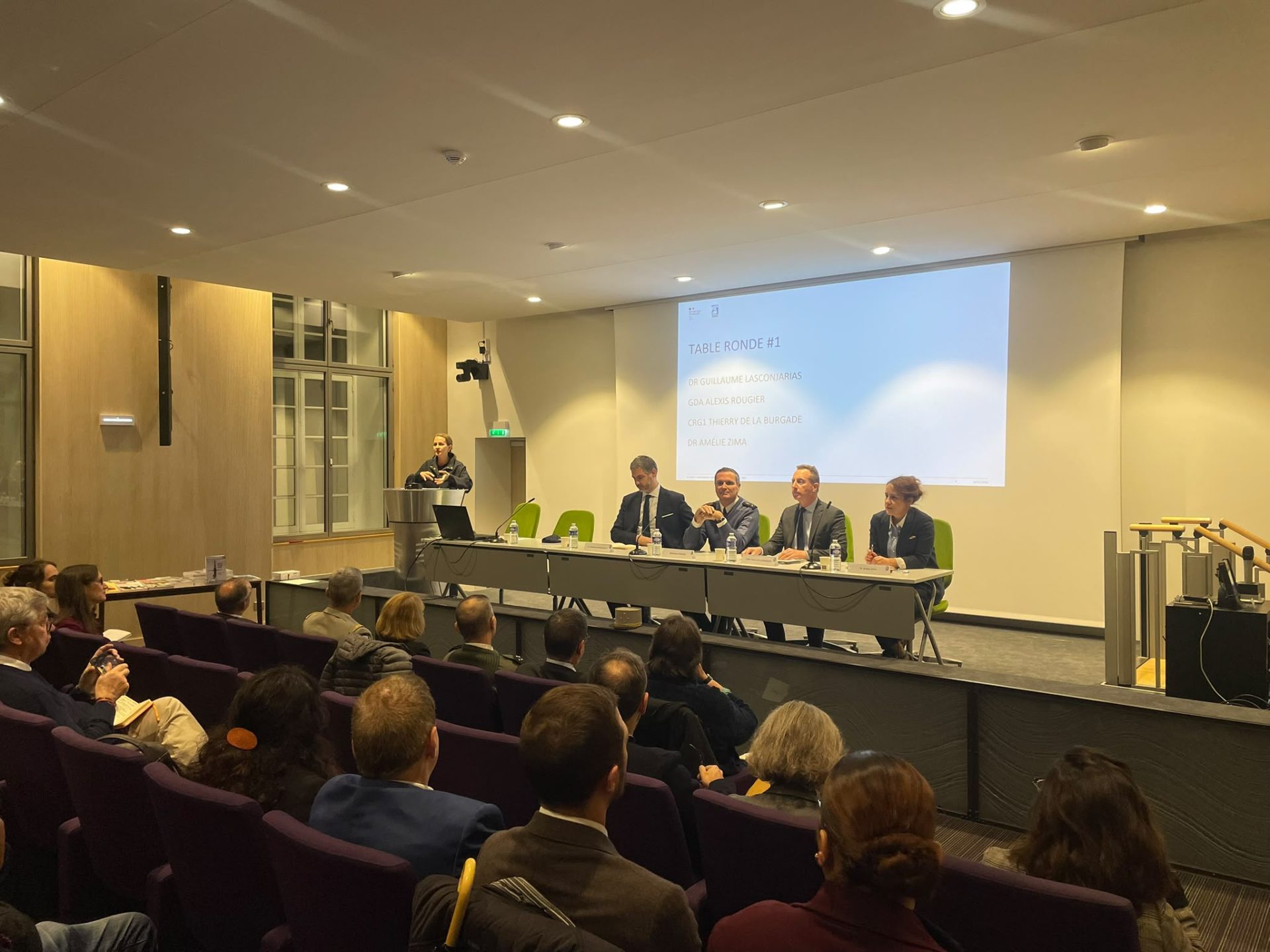
Anticipating a threat means, first and foremost, identifying it. Guillaume Lasconjarias highlighted the worst-case scenario outlined in the 2025 National Strategic Review: a high-intensity war in Europe, with repercussions for the national territory. In *L’ADN*, General Bruno Baratz anticipates a battlefield that will be «more transparent, more lethal and more saturated» by 2040. As IGA Guillaume de Garidel points out, the credibility of France’s nuclear deterrent is political, operational and technical in nature. In this regard, Bruno Tertrais regards the President of the Republic’s speech at Île Longue on 2 March 2026 as the most significant revision of French doctrine in thirty years, paving the way for «advanced» deterrence, emphasising that «France’s vital interests have a European dimension».
Identify areas for manoeuvre
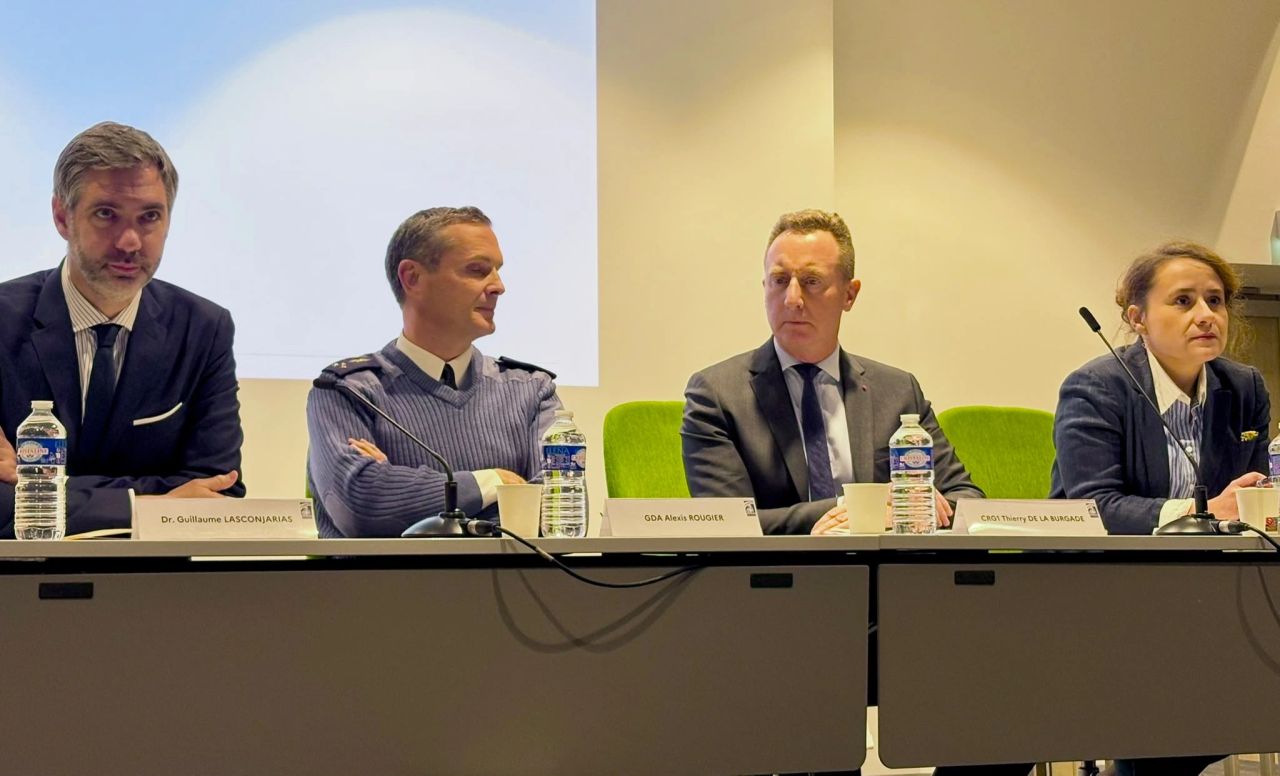
Whilst some scope for manoeuvre may emerge in new areas of conflict, others are being developed in collaboration with partners. General Alexis Rougier thus presented the very high altitude – that long-neglected zone between the flight ceiling of aeroplanes and the orbit of satellites – as a sphere conducive to power struggles. For his part, Nicolas Mazzucchi traces four centuries of naval history and highlights its key challenges, notably the intertwining of different fields and spheres, as well as control of the seabed. On the subject of partnerships, Amélie Zima emphasised that Poland had welcomed its inclusion in forward deterrence, but that the Treaty of Nancy was still struggling to materialise, whilst Warsaw is stepping up its bilateral agreements. In *L’ADN*, Clara Hénoux and Maud Quessard highlight the uncertainties surrounding the US commitment to Europe. These shifts are evident even in the Arctic, where Pauline Pic notes that the French 2025 strategy emphasises an intention to maintain a presence rather than the means to achieve it.
Identify levers
As well as anticipating disruptions and identifying various areas of flexibility, the identification of levers for action was broken down into several key areas. Commissioner-General Thierry de La Burgade presented the national voluntary service, which aims to increase its numbers from 3,000 young people in 2026 to 10,000 in 2030. More broadly, resilience is emerging as a collective imperative, mobilising society as a whole, as Prefect Xavier Brunetière pointed out. In his article, General Pierre-Joseph Givre emphasises that this desire to defend one’s country is fostered from an early age, starting with Mobilisation Day (formerly Defence and Citizenship Day).
Protecting the public also means fighting the battle of narratives. Marie-Doha Besancenot explained how the account French Response The Quai d’Orsay responds to cyberattacks through a very short decision-making chain. The same standard is reflected, on a different scale, in citizens’ everyday lives. Colonel Frédéric Avy describes the Ministry of the Interior’s efforts to combat cybercrime, building on the national cybersecurity strategy presented by Vincent Strubel. Arnaud de Morgny and Nicolas Moinet extend this vigilance to the field of economic warfare.
Beyond the diversity of the topics covered, a common conviction emerges: understanding the changes taking place in the world is essential to maintaining our capacity to act. It is vital to bring different perspectives together, to compare analyses and to move beyond sector-specific interpretations. This is the very purpose of this book and, more broadly, of the IHEDN’s mission.
Watch the live stream of the debate on ADN 2027 below:
 French
 English