
Click below to listen:
Resilience is the ability of an individual or a group to overcome adversity, to draw on resources to rebuild their lives and to carry on despite trauma, without this implying an absence of suffering. At a national level, it also relies on crisis preparedness, social cohesion and solidarity with those who suffer the consequences.
Since 1936, the IHEDN has contributed to this national resilience by training citizens from a variety of backgrounds in matters relating to defence, security and sovereignty, with a view to fostering a shared culture of defence and strengthening the collective capacity to deal with crises.
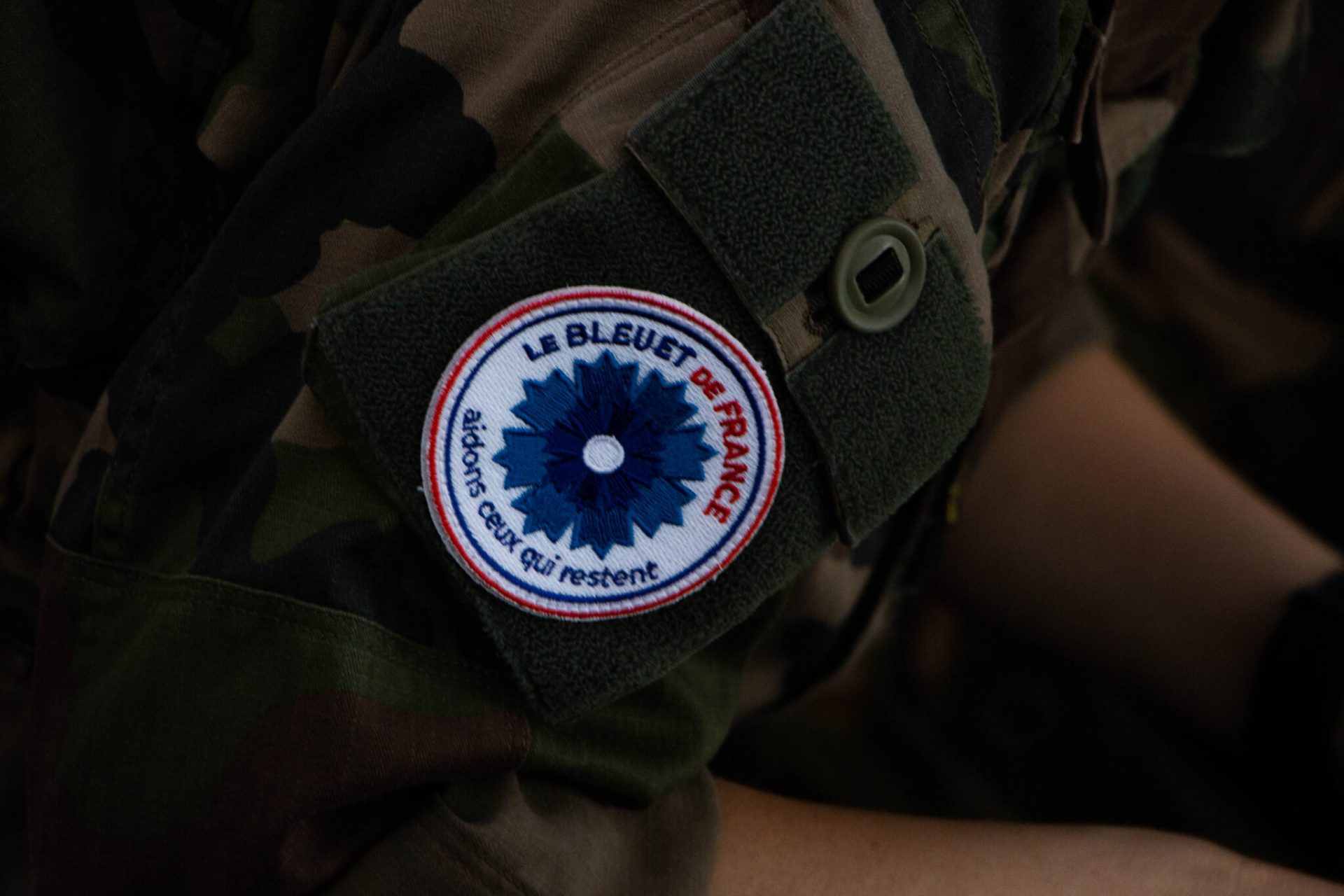
Le Bleuet de France, founded after the First World War on the initiative of Suzanne Lenhardt and Charlotte Malleterre, was one of the first initiatives set up to honour the memory of and show solidarity with veterans, wounded servicemen, victims of war and terrorism, and their families.
Today, Le Bleuet supports nearly 25,000 beneficiaries each year: wounded servicemen and women, veterans, children in state care, victims of terrorism and bereaved families.
Recognised as a charity, it raises funds through donations, sponsorship and the national fundraising campaigns on 8 May and 11 November. In 2024, 90 per cent of the funds allocated to its charitable work went to wounded service personnel and 10 per cent to victims of terrorist attacks.
These resources fund individual support and community-based projects, in particular to assist with the physical and psychological recovery of the injured, to support their loved ones and to facilitate their reintegration. By highlighting the work of Bleuet de France, the IHEDN emphasises that national resilience does not rest solely on crisis preparedness, but also on the collective capacity to care for those who bear the scars of such crises.
The turning point of the First World War
The First World War marked a major turning point in the history of war injuries. Owing to its scale and the power of the weapons used, it caused physical injuries of a new severity and nature. Of the 8 million French men mobilised, 4 million were wounded, including 500,000 who suffered maxillofacial trauma (15,000 of whom were in a critical condition), the most severe cases of which gave rise to the term «gueules cassées» (broken faces). 75 per cent of injuries were caused by explosions, 15 per cent by bullets and 10 per cent by toxic gases.
As well as visible injuries, combatants also suffer psychological trauma that was long ignored or misunderstood, referred to at the time by terms such as «shell shock» or « shell shock ». This suffering, which is often invisible, was not sufficiently recognised or addressed at the time.
The consequences of an injury are not limited to its physical or psychological aspects: they also affect the person’s place in society. The way others view them, isolation, difficulties in returning to work and a break with their former life can pose long-term obstacles to recovery. After the war, 30 per cent of those who had suffered injuries faced social rejection and 45 per cent experienced isolation.
This serves as a reminder that healing is not just about treating an injury: it is also about enabling a person to regain their place amongst others.
Recognition of psychological trauma has grown over the decades, particularly with the inclusion of post-traumatic stress disorder in international medical classifications during the 1980s and 1990s. Today, psychological injuries are given greater consideration in the care of service personnel, although identifying them remains complex: they can emerge some time after the traumatic event and co-exist with physical injuries.
In 2025, the Ministry of the Armed Forces recorded 10,816 service personnel injured whilst on duty, which highlights the scale of the challenge: the rehabilitation of those injured is a long-term and collective responsibility.
An increasing number of collective actions and responses
The State and the Government are organising support, in particular through the Ministry of the Armed Forces’ 2023–2027 Plan for the Wounded, launched in 2022. It aims to improve medical care and administrative support, simplify access to entitlements and strengthen rehabilitation and reintegration pathways. As at 19 January 2026, 88 per cent of its measures had been implemented or were in the process of being implemented. The Digital Hub for Wounded Service Personnel and Their Families centralises information useful to service personnel and their families, whilst public schemes seek to facilitate the recognition of injuries, compensation and a return to work.
The Armed Forces Health Service provides medical, physical and psychological care for the wounded. The ‘Rencontres militaires blessures et sports’ (Military Injuries and Sport Meetings), established in 2012 by the Army’s Injured Personnel Support Unit (CABAT), offer adapted sporting activities to help service personnel regain confidence in their abilities, reconnect with the group and explore new prospects. For psychological injuries, the Athos centres provide a space for psychosocial rehabilitation, with personalised support bridging the gap between the treatment process and a return to a more independent life. Finally, the OMEGA scheme supports the return to work of injured service personnel.
Le Bleuet: a trusted resource for the injured
In 1916, at the Institution nationale des Invalides, Suzanne Lenhardt and Charlotte Malleterre set up a workshop where wounded soldiers made fabric flowers. This activity enabled them to find something to do, regain their confidence and earn some extra income. In 1925, the initiative took on a national dimension and was extended beyond wounded soldiers alone to include children in state care and those injured in terrorist attacks.
Today, the donations raised – particularly during the 11 November and 8 May campaigns – help to fund support and projects for these injured women. Le Bleuet thus supports adapted sport through equipment and initiatives linked to the ‘Rencontres militaires blessures et sport’ and the Invictus Games, which contribute to physical recovery, self-confidence and team spirit. It also helps to fund rehabilitation programmes and infrastructure projects (renovation or construction of facilities) in military hospitals and at the Institution nationale des Invalides, as well as psychological and psychosocial support services.
In February 2025, Le Bleuet took part in the inauguration of the Cour de la Paix at the Cercle Sportif de l’Institution nationale des Invalides, which was accompanied by the signing of an agreement aimed at promoting wellbeing and rehabilitation through adapted sport. By supporting these initiatives and the improvement of care facilities, Le Bleuet complements institutional support with material, financial and human assistance that takes into account physical, psychological, family and social needs. In this way, it turns solidarity into a driver of resilience, fostering a return to independence and reintegration into society.
Although it may seem paradoxical, individual resilience is never built in isolation: supported by institutions, carers, charities and loved ones, it becomes a collective endeavour. By supporting those who have suffered trauma as they rebuild their lives, by fostering social cohesion and by keeping memories alive, initiatives such as those run by Bleuet de France help to strengthen solidarity amongst citizens.
From the personal recovery of each individual to the nation’s ability to cope with adversity, resilience thus becomes a factor in national cohesion, based on mutual support, recognition and a shared commitment.
 French
 English