
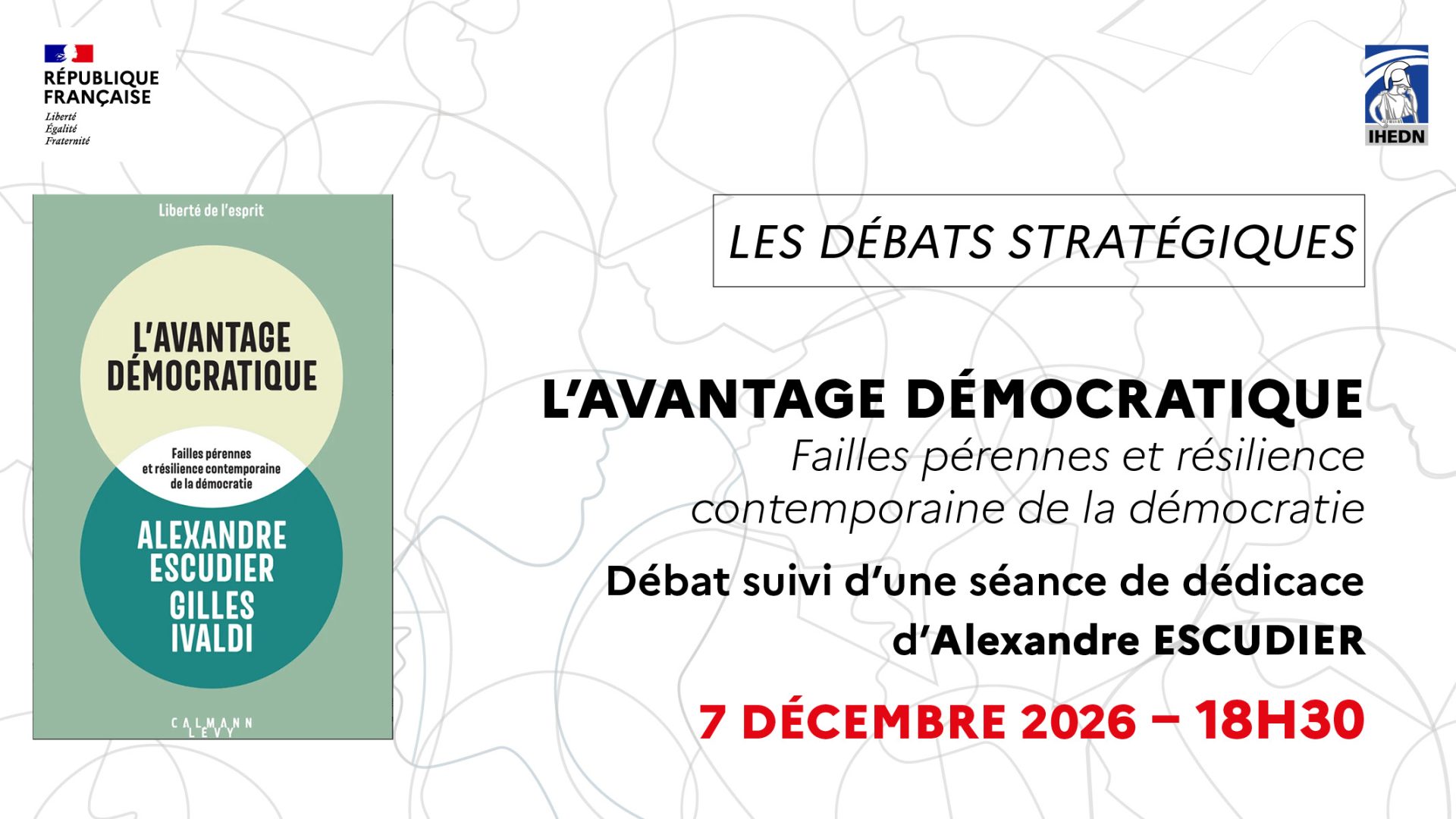
Since the 2008 financial crisis, liberal democracies seem to have been caught up in a series of crises: deindustrialisation, polarisation, Donald Trump’s re-election, the rise of the radical right in Europe and the return of war to the continent. But does that mean we should give in to doom-mongering? In The Democratic Advantage: Enduring Flaws and Contemporary Resilience in Democracy (Calmann-Lévy, 2026), Alexandre Escudier and Gilles Ivaldi analyse the contradictions that democracy has always harboured, the current upheavals that are reigniting them, and the risk of a drift towards authoritarianism. They put forward the thesis of a «capable democracy». Thanks to their capacity for self-correction, the plurality of their centres of power and their ability to incorporate dissent rather than suppress it, democracies have a structural advantage over authoritarian regimes.
Alexandre Escudier is a specialist in political theory and comparative historical sociology. He has been a research fellow at the Centre for Political Research at Sciences Po (CEVIPOF, FNSP) since 2004. His work focuses on the history of ideologies and political theories, and he is currently researching the dual resilience (internal and external) of democracies.
Programme :
- 6.30 pm – start of the debate
- 8.00 pm – book sale and signing session
 French
 English