
IHEDN Mondays are now available as audio files!
Click below to listen:
In 2026, photography will celebrate the bicentenary of its invention. Throughout the year, both in France and internationally, the Ministry of Culture will therefore be celebrating two centuries of history, creativity and the uses of the image, from Nicéphore Niépce’s invention to digital photography and the transformations brought about by artificial intelligence. This anniversary is also an opportunity to highlight the many professions that have helped make photography an essential tool for documenting and understanding our own era and those of the past.
On this occasion, the IHEDN invites you to discover a unique history: that of photography in war and within the armed forces. From the earliest images of the Crimean War right up to the present day, images have always been a constant feature of conflicts. Over time, specialised structures and professions have developed within the armed forces, making photography a tool at the very heart of their operations.
Soldiers of the lens: witnesses to history and wars
For over 110 years, the «soldiers of the image» have accompanied the French armed forces during both training and operations, often right at the heart of the action, sharing the daily lives of their brothers-in-arms and facing the same dangers. As military photographers and videographers, their mission is to produce the armed forces’ official images and keep the public informed about their activities, to bear witness to the realities on the ground and to preserve an accurate record of events.
Established in 1915 with the creation of the Army’s Photography and Film Sections – now known as the Defence Communications and Audiovisual Production Agency (ECPAD) – they have since covered major French military engagements, from the First World War to contemporary overseas operations.
These archives provide a unique insight into the evolution of conflicts, equipment and methods of engagement, as well as into the everyday lives of the men and women who serve France.
Indeed, these images play a vital role in the work of preserving national memory by forming part of an audiovisual heritage of exceptional value. They give a human face to conflicts, bear witness to both suffering and solidarity, and enable us to pass on a history brought to life to future generations.
Today, at a time when information circulates instantly and on a massive scale, the role of those who shape public perception is of growing strategic importance. The rise of new technologies – from artificial intelligence to image-editing tools and disinformation campaigns – facilitates the creation and dissemination of manipulated content capable of influencing public opinion, fuelling influence operations and undermining trust in news sources.
In the face of these new challenges, the images produced by war photographers serve as an authentic record and a key documentary resource. Their role therefore goes beyond simply producing images: they help to provide accurate information, combat manipulation, preserve the memory of conflicts and convey a faithful account of history.
In 2025, 75 military operators were trained at the ECPAD’s School of Visual Media (EMI). Stationed across the ECPAD, the SIRPA (Armed Forces Information and Public Relations Service), the communications departments of the Armed Forces General Staff, the National Gendarmerie, the Paris Fire Brigade and the Foreign Legion, they continue to carry out this mission today.
And every 4 February, the feast day of Saint Veronica, their patron saint, they – along with their comrades who fell in battle – are honoured for their work and their dedication.
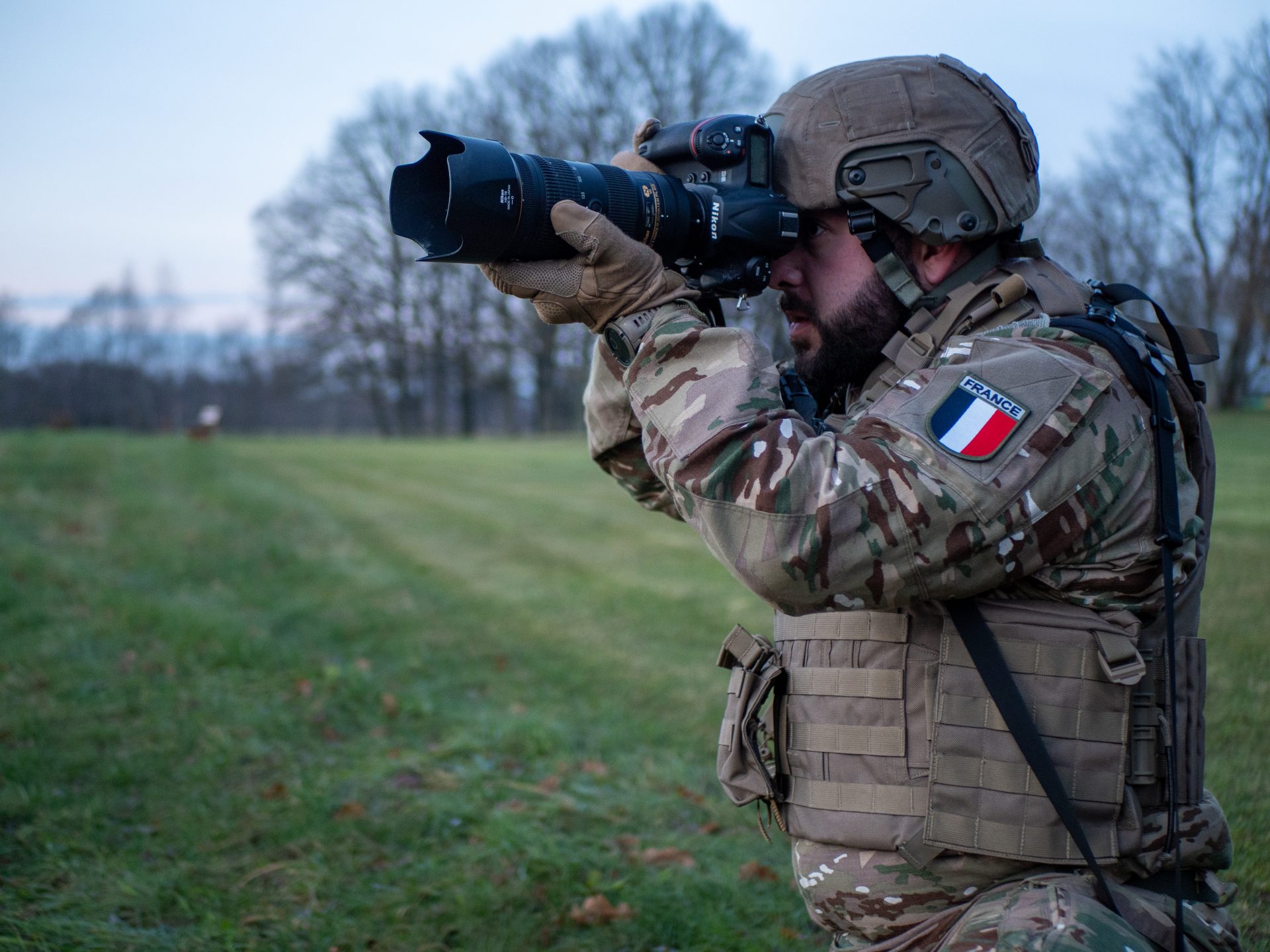
Photograph taken by Master Enzo during the LYNX 24 mission on 20 November 2025 in Estonia. © Jonathan Ferrara/ECPAD/DÉFENSE
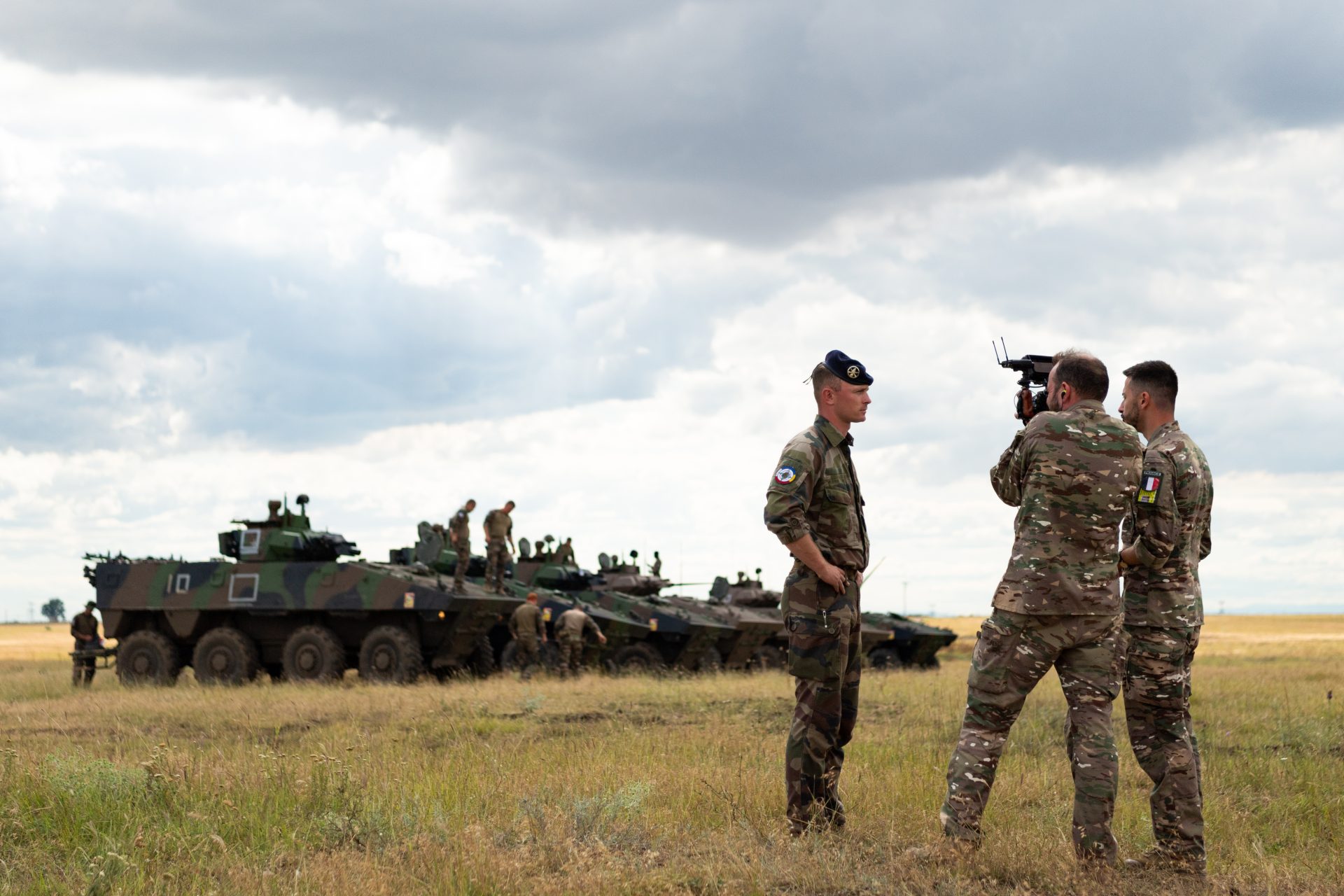
Interview conducted by Captain Thomas and Petty Officer First Class Simon during the AIGLE mission, on 10 July 2025 in Romania © Gustave Klinger-Zind/ECPAD/DEFENCE
- To find out more: The history of the ‘soldiers of the image’, on the ECPAD website
The Crimean War: when photography entered the theatre of war
In 1855, the Crimean War[1] marked a turning point in the history of photography. For the first time, a conflict was documented on a large scale by photographers sent to the front line. Until then, wars had mainly been depicted by painters, draughtsmen and engravers, who often presented a spectacular and heroic view of them. Photography introduced a new, documentary perspective, focusing on the people, the places and the traces left behind by the fighting.
It was a Briton, Roger Fenton, who produced the first major photographic war reportage. His mission was driven by political considerations: whilst the British press was publishing highly critical accounts of the living conditions of British soldiers, he was commissioned, at the request of Queen Victoria, to present a different portrayal of the conflict. On arriving in Sevastopol in March 1855, he took around 360 photographs.
The considerable technical constraints of the time – heavy equipment, wet collodion plates that were difficult to prepare and develop on site, and long exposure times (around 8 hours for the image to set on the plate) – meant it was not yet possible to capture the fighting in motion. His images depict a static, silent war, on the fringes of the fighting: soldiers posing for the camera, cannons, bivouacs and devastated landscapes.
Following Fenton, other photographers covered the conflict. On the French side, this included Léon-Eugène Méhédin, accompanied in the field by the retired colonel and painter Jean-Charles Langlois. Langlois chose, for the first time, to use photographs to replace or supplement his traditional sketches when preparing his paintings Panorama of Sevastopol. Photography thus becomes a tool in the service of other forms of representation.
The Crimean War also marked a milestone in the international dissemination of images. Printed, sold and exhibited in several countries, the photographs reached a much wider audience than those present on the ground. Although the press was not yet able to reproduce the photographs directly and had to rely on engravings, photography gradually established itself as a new source of visual information.
Thus, the Crimean War not only gave rise to this new medium, but also contributed to a genuine revolution in the way war was viewed. Grand heroic scenes and spectacular depictions of battles were gradually replaced by a more fragmentary and documentary-style approach. Whilst still unable to directly depict the full violence of the fighting, photography began to preserve traces of it and became a tool for information, communication and remembrance.
The Great War: Photography Takes on a New Dimension
By 1914, photography was already well established in France. Technical advances, the development of instant photography, the emergence of more affordable cameras and the rise of illustrated magazines all helped to accelerate its spread. Between 1914 and 1918, hundreds of thousands of photographs were taken on the various fronts by military photographers, reporters and even soldiers equipped with their own cameras.
Newspapers such as The Mirror, The Illustration or I’ve Seen are producing more and more images to enable the public to «see» the war. The Mirror went so far as to launch a competition in 1915 to reward the most striking war photograph. But these images do not show the full reality of the conflict: subject to censorship, they focus on scenes likely to boost public morale and expose the destruction attributed to the enemy. Identifiable French casualties, the most serious injuries and scenes of disarray were excluded.
Indeed, faced with the power of German propaganda, France too organised its own production of images. The Army Photographic Section (SPA), now known as ECPAD, was established in 1915 to supervise military photographers and document operations. The photographs it produced showed soldiers at the front, but also life behind the lines, hospitals, factories, women at work and the destruction of towns and villages. Photography thus became a tool for communication and influence amongst the French and international public.
The Great War played a major role in the development of photojournalism as a profession in its own right. And the experiences gained between 1914 and 1918 foreshadowed the practices of the war correspondents who would go on to cover subsequent wars.
The First World War also gave photography a new military dimension: aerial reconnaissance. Mounted on board aircraft, cameras made it possible to monitor enemy positions, track troop movements and map fortifications. Thousands of photographs were then analysed by specialists in photo-interpretation. The image thus became a genuine source of intelligence, heralding the uses that would develop throughout the 20th century.
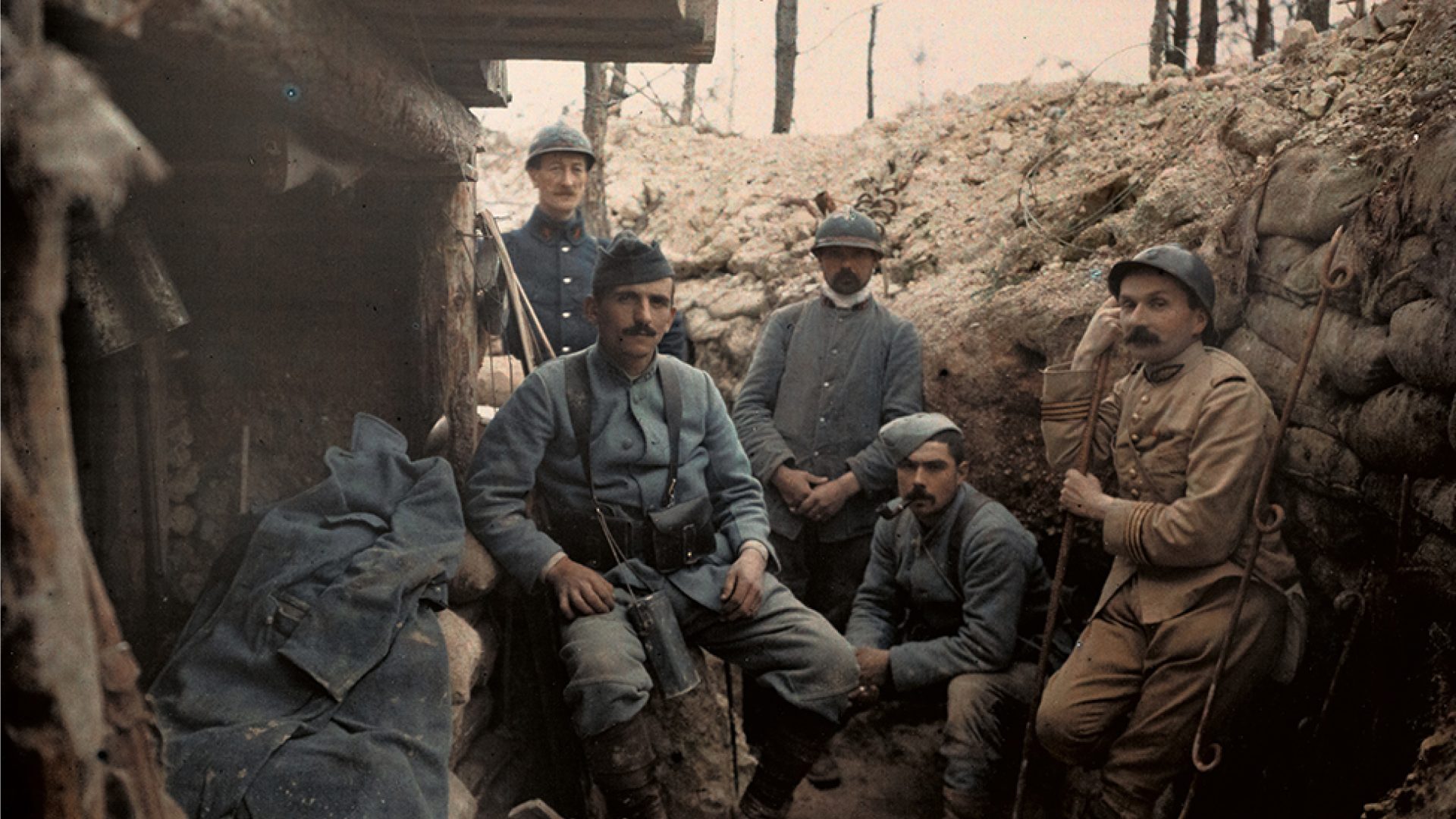
Alongside the official images, a more personal record was also being created. The advent of more portable cameras enabled some soldiers to photograph their daily lives, their comrades, the trenches, moments of rest and the landscapes they passed through. Technical constraints – partial darkness, restricted movement in the trenches and constant danger – still limited the taking of photographs in the thick of the action: soldiers therefore focused on life between assaults. These private photographs, preserved in family albums, now supplement the national archives and offer a more personal insight into the daily lives of the combatants and a broader view of society during this period.
During the four years of the conflict, photography thus changed in scope and function. Produced on a massive scale by the armed forces, press photographers and the soldiers themselves, it documented a war on such a vast scale for the first time that it became a lasting tool for information, propaganda, intelligence and remembrance. From the faces and testimonies of the ‘Poilus’ to the devastated landscapes of Verdun, via the mobilisation of society and the cooperation of the Allies, these images have shaped our perception, understanding and retelling of the conflict at both national and international levels.
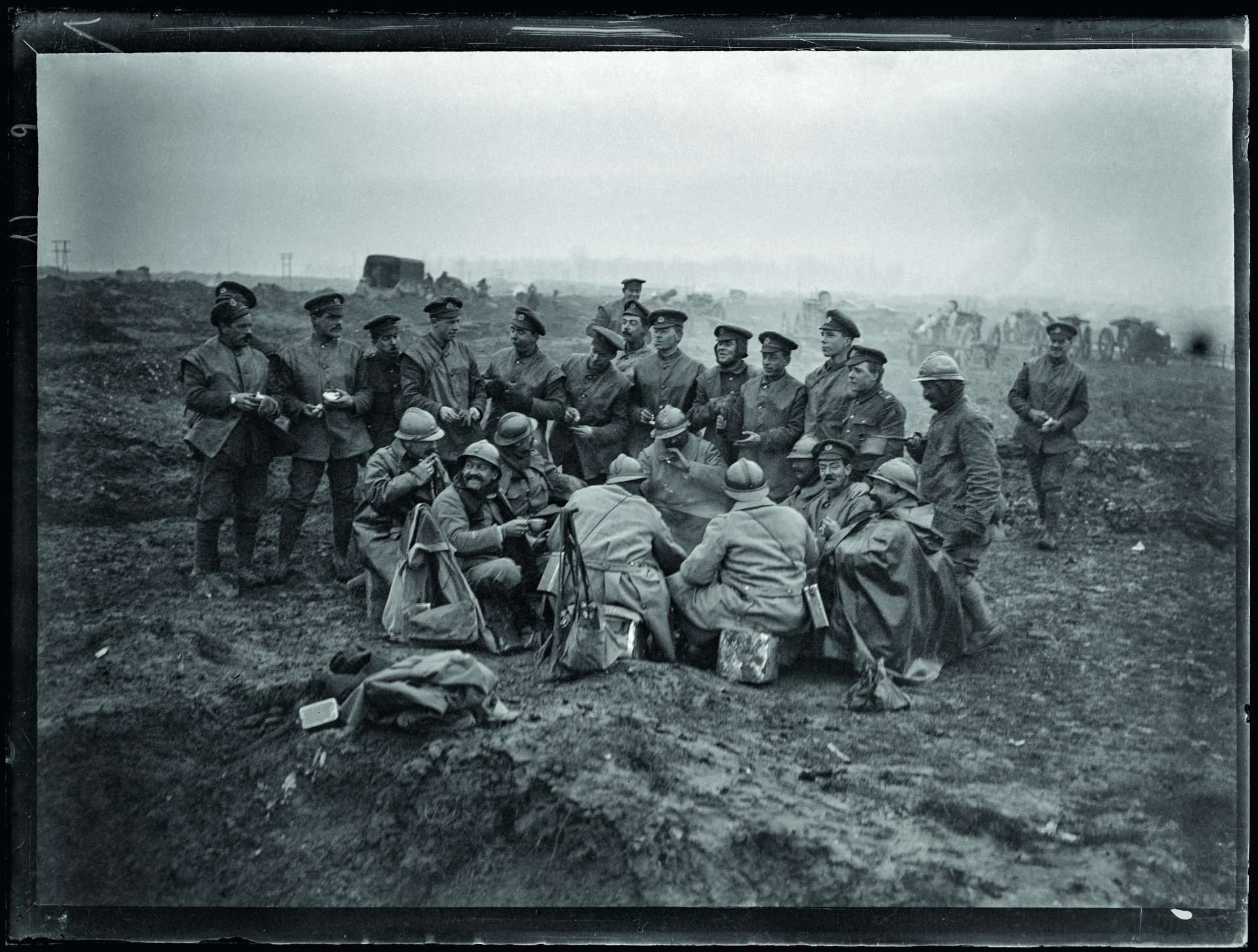
Between two assaults, French and British soldiers fraternised in Maricourt between 6 and 12 December 1916. © Emmanuel Mas/ECPAD/Ministry of Defence
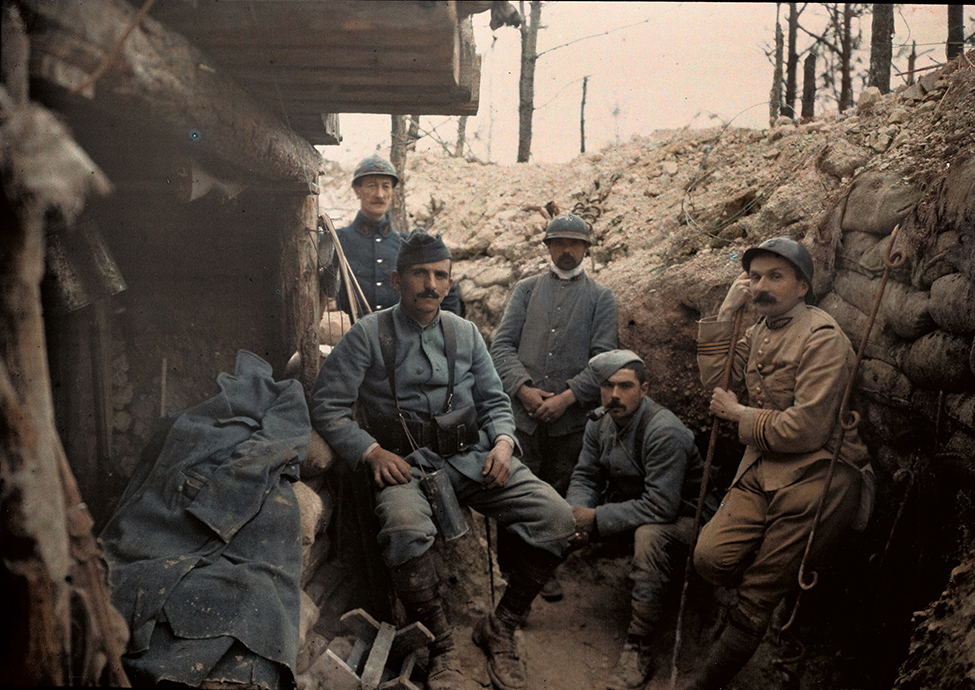
An officer and infantrymen in a front-line trench, in France in 1917. © Photographer unknown/ECPAD
- To find out more: the ECPAD collections relating to the First World War
Photography in modern wars
In today’s conflicts, photography forms part of a much broader visual landscape in which photographs, videos, satellite imagery, drones, mobile phones and social media coexist and complement one another. Its primary purpose remains unchanged: to document, bear witness to and preserve a record of events. Military photographers thus continue to cover operations, soldiers, civilian populations and the consequences of conflicts.
The main development lies instead in the complementary nature of the formats. Video allows us to capture the movement, sound, duration and sequence of a scene. It is particularly well-suited to instant broadcast on news channels and social media. Photography, on the other hand, captures a single moment, allows for a more immediate interpretation and can take on a particular symbolic power. Today’s wars are therefore told through a range of interrelated forms of content.
Indeed, the media are increasingly working with teams comprising both photographers and videographers, as is the case, for example, with the documentary 20 Days in Mariupol : Associated Press journalists Evgeniy Maloletka and Mstyslav Chernov worked together to document the siege of the city, producing both photographs and videos.
Above all, the production of images is no longer the preserve of professionals or soldiers. Smartphones and digital platforms now enable civilians and humanitarian organisations to take photographs and share them directly from conflict zones. The war in Ukraine is particularly telling of this development. Thousands of images are posted daily on social media, sometimes just minutes after an event. This vast number of images helps to document events that journalists cannot always witness first-hand.
However, this massive circulation of images has a downside. A photograph is not necessarily evidence in itself. It may be old, taken out of context, or attributed to the wrong place or event. It may also have been cropped or retouched. Added to this is the fact that it is now possible to generate or alter images using artificial intelligence to produce deepfake.
The question is therefore no longer simply: «What does this photograph show?», but also: «Who took it? When? Where? In what context? Has it been altered? And how can we verify this?»
This need to verify images is a major challenge facing contemporary journalism. Specialised teams and methods of’OSINT, such as geolocation, chronolocation, satellite image analysis and cross-referencing of sources, have become essential for verifying the authenticity of content.
The use of images to influence people is, of course, nothing new; the propaganda used during the last two world wars is proof of this. What has changed today is the scale and speed at which they circulate. A photograph can be published from a war zone and reach millions of people within a matter of hours, sometimes without passing through the filter of a media organisation or publisher. It can then help to inform, stir emotions, mobilise public opinion or fuel a political narrative.
War photography has therefore not lost its importance: it has simply taken on a new dimension. From Roger Fenton’s camera to today’s digital cameras, it remains a tool for bearing witness and preserving memory.
Throughout the 20the Throughout the century, leading figures have documented the greatest conflicts, sometimes at the cost of their lives or serious injury, often producing iconic images that have become part of the collective memory:
- The British soldier Ernest Brooks during the First World War; ;
- The Spanish Civil War (1936–39) was covered by the German photojournalist Gerda Taro, the American of Hungarian origin Robert Capa, and the Polish photographer David Seymour; ;
- As regards the Second World War, in addition to Capa and Seymour, we should mention the Frenchman Henri Cartier-Bresson (the three of them went on to found Magnum Photos in 1947), the American Lee Miller, her compatriot Joe Rosenthal, and the Soviet photographer Evgeny Khaldei; ;
- Next, from Cambodia to Syria via Vietnam, the Americans James Nachtwey, Eddie Adams, Stanley Greene, the British photographers Don McCullin and Larry Burrows, the French photographers Gilles Caron, Henri Huet, Raymond Depardon, Alexandra Boulat, Patrick Chauvel, Camille Lepage, and the Vietnamese photographer Nick Ut…
In the 21ste In this century, with the internet and social media, photography is also at the heart of a broader, more saturated cognitive environment, one that is subject to the challenges of disinformation, which can turn it into a genuine weapon of influence.
Now more than ever, this record must be documented, contextualised and verified in order to become a genuine historical source, particularly when it relates to a subject as sensitive as war.
[1] The Crimean War, which lasted from 1853 to 1856, pitted the Russian Empire against a coalition comprising the Ottoman Empire, the French Empire, the United Kingdom, the Kingdom of Sardinia and the Regency of Tunis. Triggered by Russian expansionism and fears of the collapse of the Ottoman Empire, the conflict was fought mainly in the Crimea, centred on the naval base at Sevastopol. It ended in Russia’s defeat, which was formalised by the Treaty of Paris in 1856.
Article produced in partnership with ECPAD
Sandra Chenu Godefroy: «Documentary photography retains a special value»

To mark European Heritage Days, which this year celebrate the bicentenary of photography, we meet freelance photographer Sandra Chenu Godefroy. Through her perspective, this interview explores the role of photography in the armed forces: telling human stories, bearing witness to reality and preserving memories, at a time when images have never been so numerous or so easy to produce.
 French
  English