
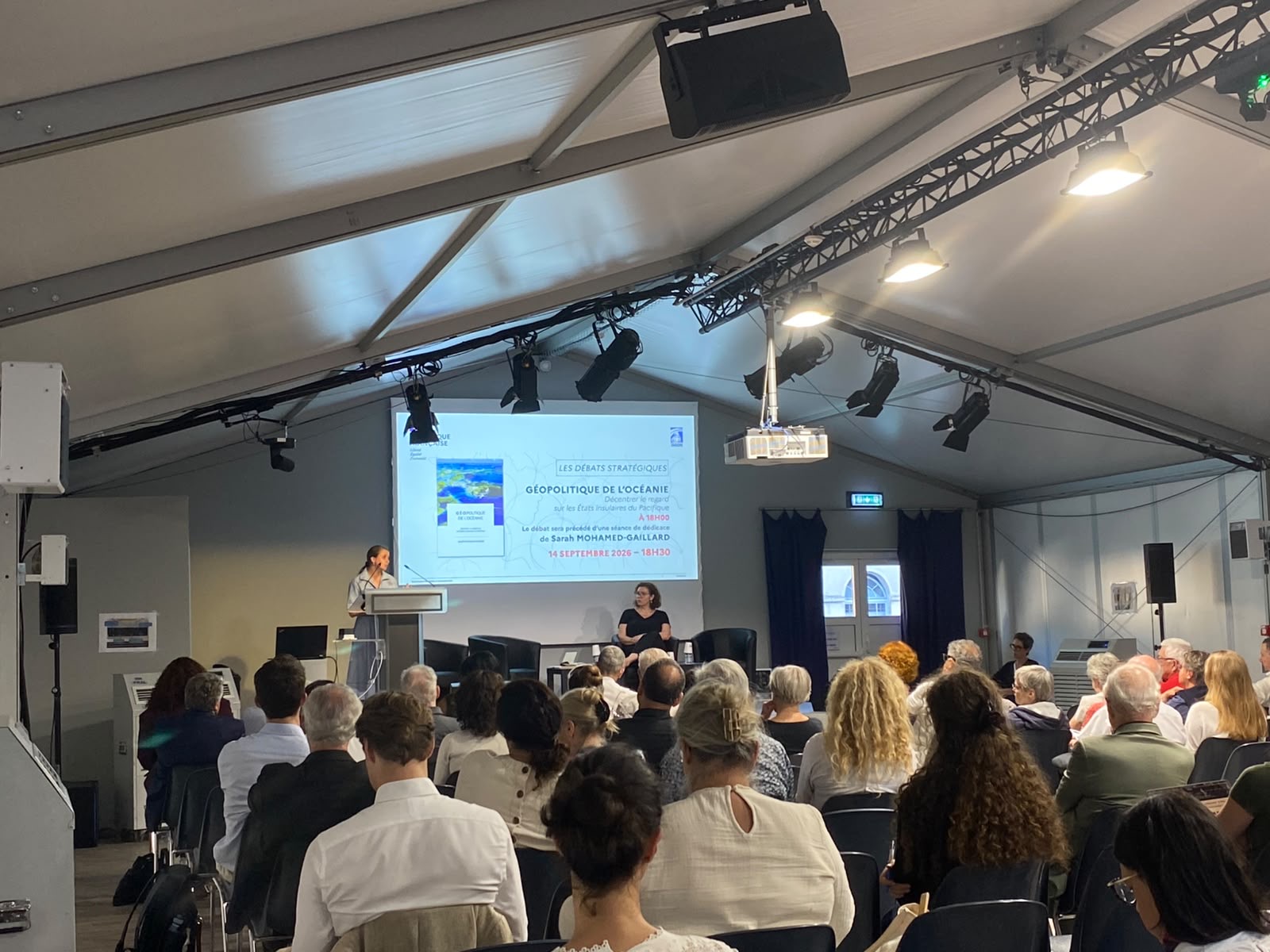
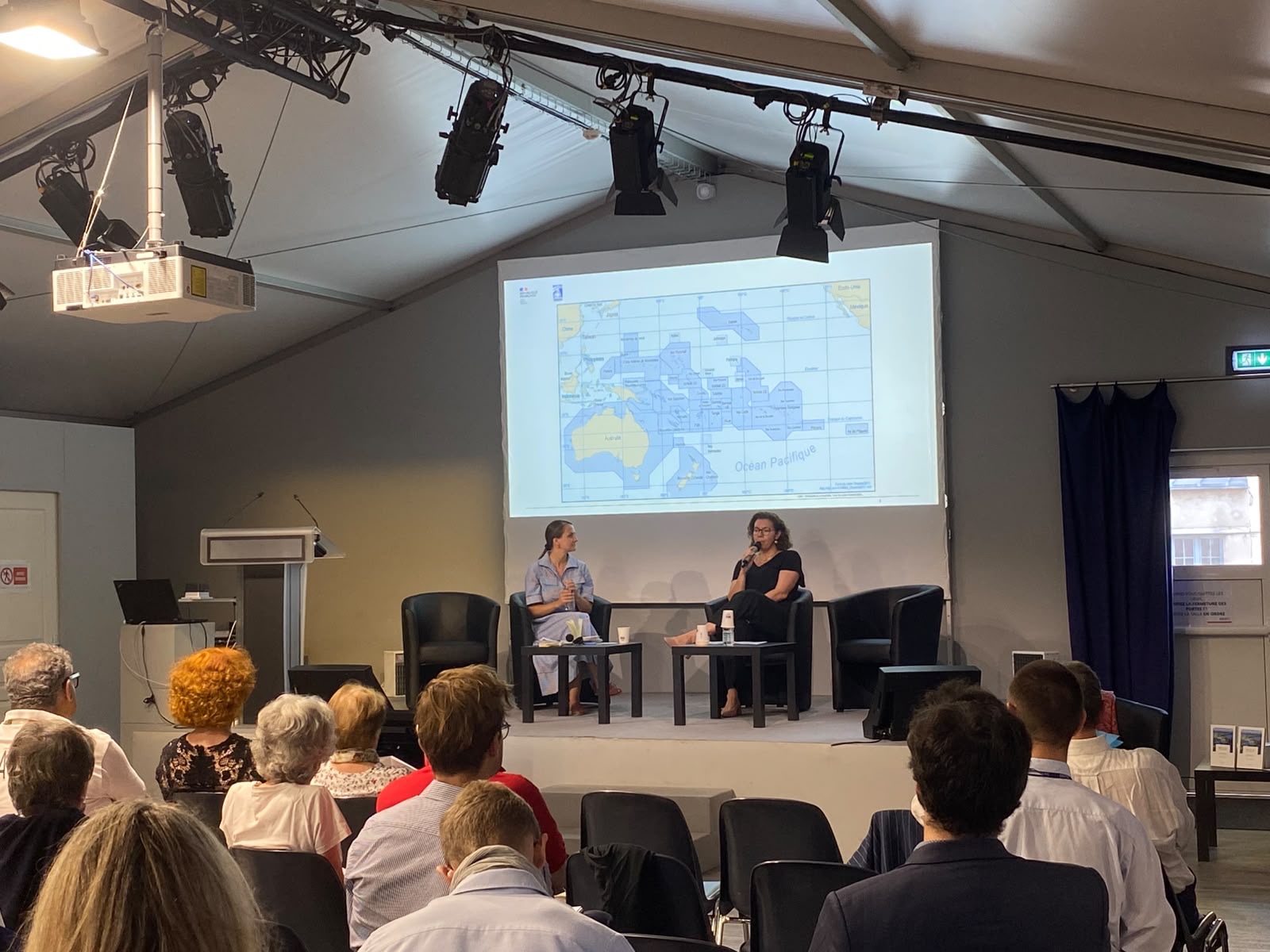
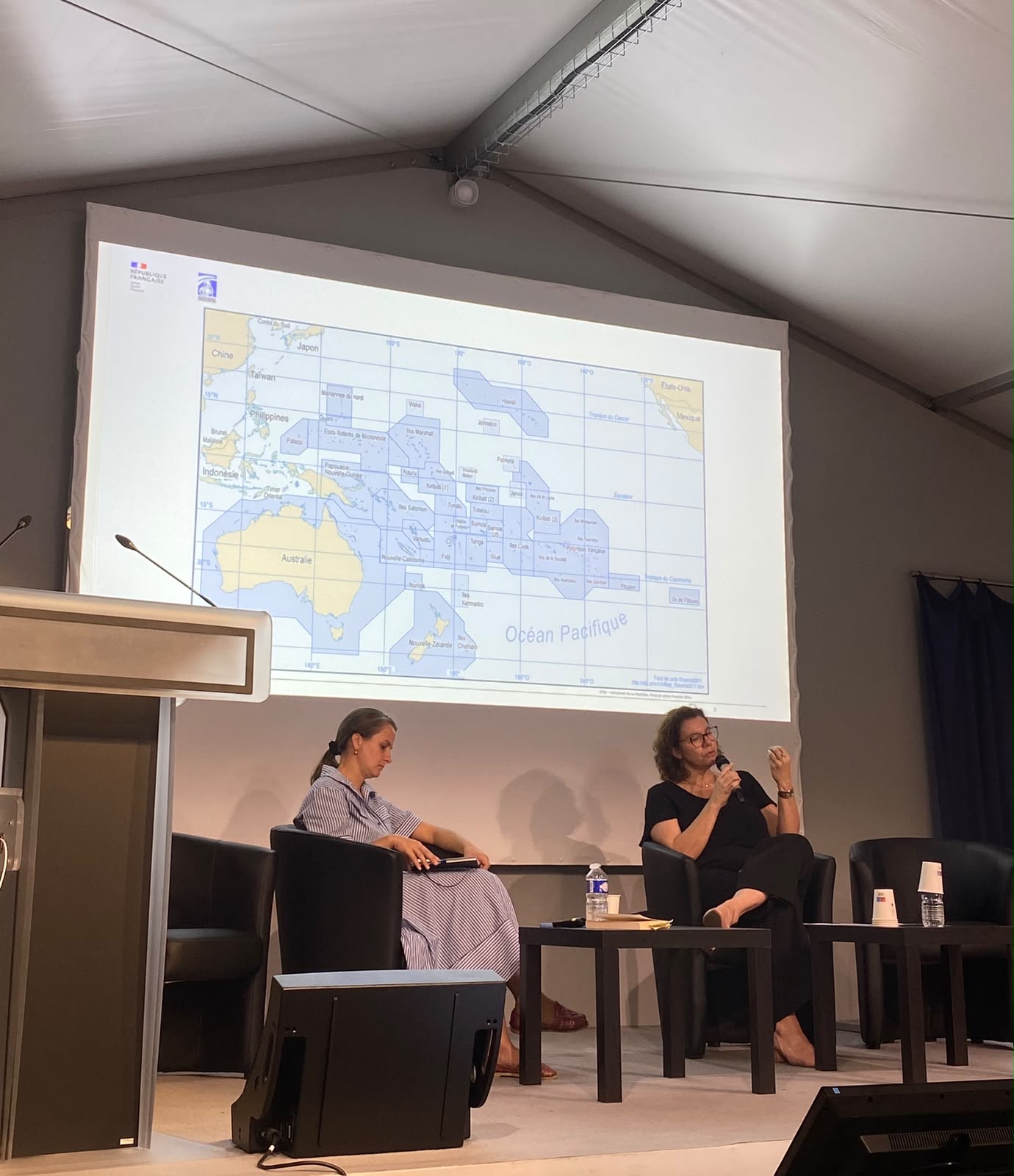
This debate lived up to the promise of its title: to present Oceania not as a fictionalised periphery, but as a unique region, rich in its own dynamics, which invites us to rethink our frameworks of interpretation.
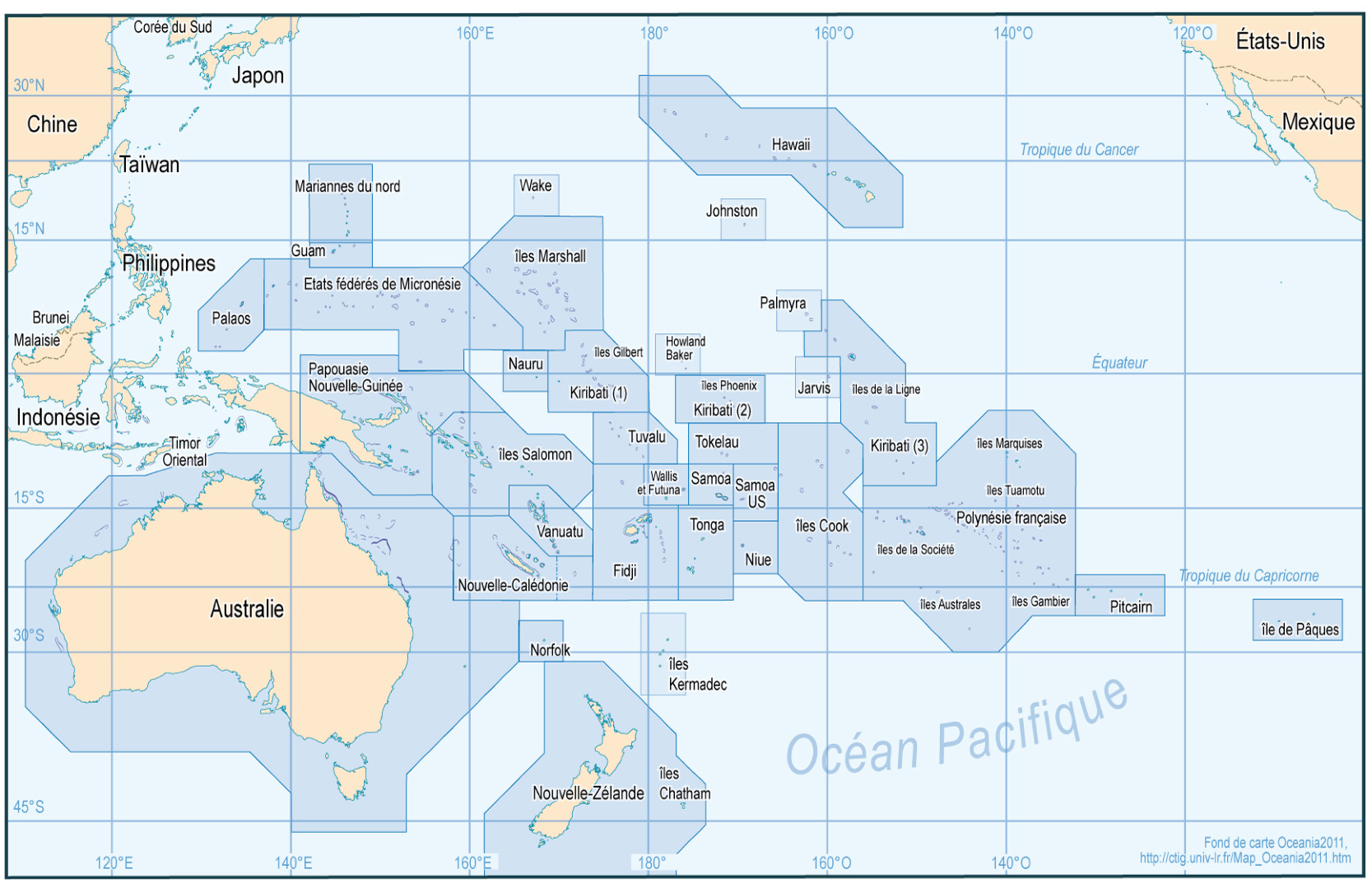
To name something is also to situate it. The region encompasses all the lands from Hawai’i to Rapa Nui and from Micronesia to New Zealand, including Australia. The term ‘Oceania’ dates back to the early 19the century. It led to the division of the region into three major island groups, whose names are still used today: Polynesia, Melanesia and Micronesia. Oceanian intellectuals, such as Albert Wendt, Epeli Hau’ofa and Teresia Teaiwa, subsequently reclaimed this term and turned it into an act of decolonisation. For what these societies have in common, beyond their linguistic and religious diversity, is an almost ontological relationship with the ocean: it is neither a void between the lands nor is it bounded by coastlines, but rather a constituent part of their identity and territory. The poet Teresia Teaiwa sums it up in a single sentence: «We sweat and weep salty tears; the ocean is in our blood.»[1]. Island states are therefore no longer thought of as islands lost in a distant sea, but as forming «a sea of islands»[2].
A laboratory for sovereignty. Colonial geography imposed borders on long-standing alliances, and these borders have remained those of today’s states. Some do not recognise these boundaries, as illustrated by the dispute between France and Vanuatu over the Matthew and Hunter Islands. Conversely, the region has also developed a wide variety of forms of sovereignty: associated states, sovereignty distinct from independence, and a high degree of autonomy.
A poorly defined competition. The broader narrative tends to reduce Oceania to a battleground in the Sino-American rivalry. In reality, other powers are seeking partners, voices and markets there. This proliferation of options enables the island states to diversify their partnerships and foreign policy – something Sarah Mohamed-Gaillard describes as their «agency».
In response to the US Indo-Pacific strategy, Australia’s concentric security approach and the pervasive influence of China, the Pacific Islands Forum (PIF) is putting forward its own narrative: the Blue Pacific. This narrative transforms microstates into major maritime powers and places climate resilience – rather than military threats – at the top of the security agenda.
A lesson for Paris. According to the speaker, France’s foreign policy in Oceania depends above all on its domestic policy within its local authorities. When its relations with the Pacific communities are stable, France is a influential player and an established power. When these ties are in crisis, they reduce it to the status of an external power.
A debate which, by shifting our perspective, sheds light both on Oceania and on the frameworks through which we view it.
 French
  English