
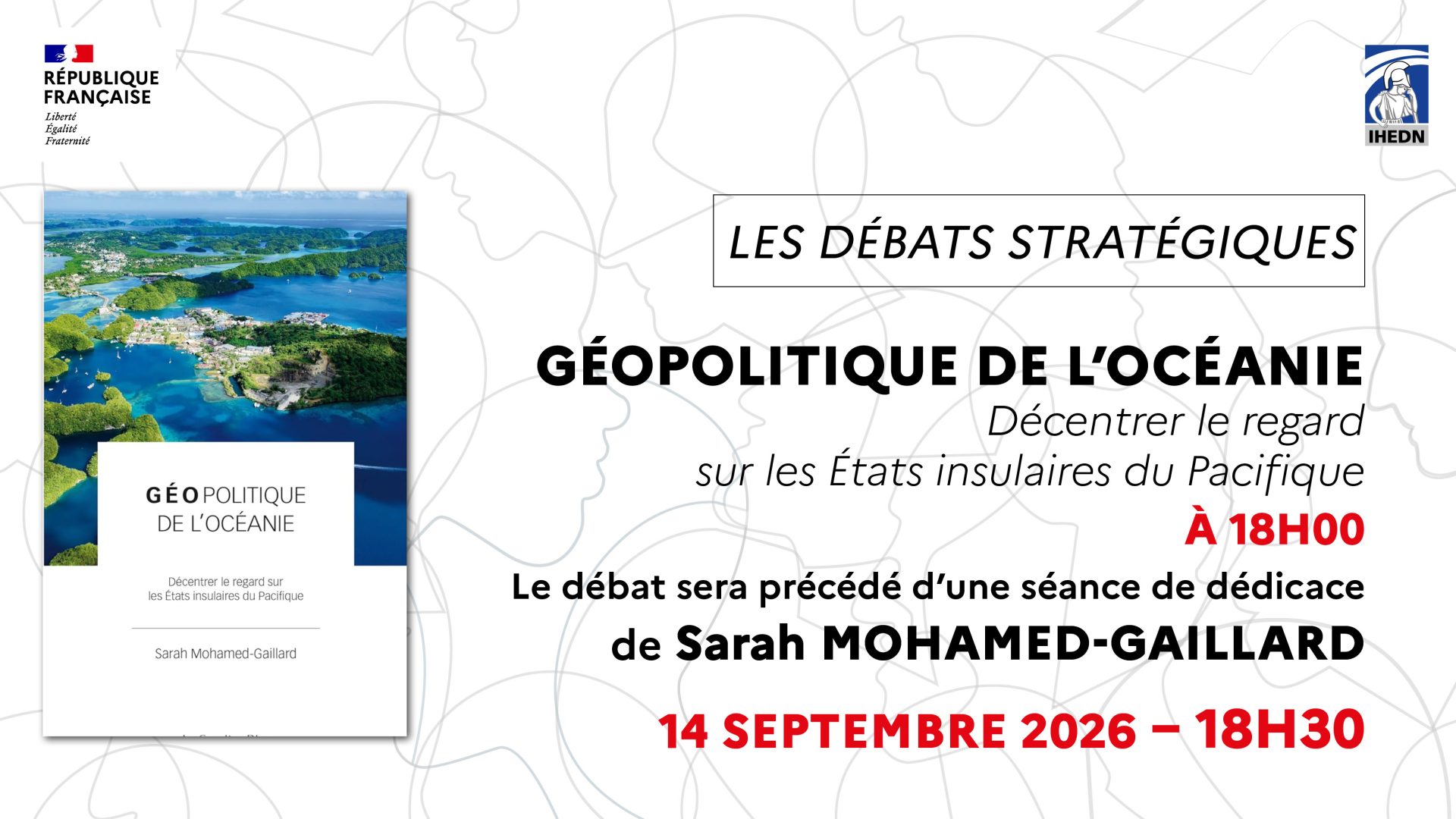
The geopolitical interests of the major powers in Oceania are not unique to the 21st century.e The United Kingdom, Japan, the United States and France have all left their mark on the colonial history of the oceans. Yet the region has long been reduced to Australia, without being considered a continent in its own right. In Géopolitique de l'Océanie. Décentrer le regard sur les États insulaires du Pacifique (Le Cavalier Bleu, 2026), Sarah Mohamed-Gaillard proposes a vision of Oceania that highlights the place of island states in international relations, as well as the shared culture, conceptions and practices of the region's states. Between the renewed appetites of powers such as China, the existential problems posed by climate change and rising sea levels, and the question of marine resources, Oceania is at the heart of very contemporary dynamics. The historical and geographical approach allows us to take a different look at territories that are still little known, yet which are the object of much covetousness and competition.
Sarah Mohamed-Gaillard is a lecturer in contemporary history at Inalco, a researcher at the Centre d'études en sciences sociales sur les mondes africains, américains et asiatiques (CESSMA) and qualified to direct research. Her work focuses on French policy in Oceania from the nineteenth to the twentieth century and on the regional and international issues in contemporary Oceania. She has already published L'Archipel de la puissance ? La politique de la France dans le Pacifique Sud de 1946 à 1998 (Peter Lang, 2010), Histoire de l'Océanie. De la fin du XVIIIe siècle à nos jours (Armand Colin, 2015) and Atlas de l'Océanie (Autrement, 2021), as well as several contributions to books and scientific journals.
The strategic debate will be preceded by a book-signing session, starting at 6.00 pm.
 French
  English