These four intense days enabled them to discover first-hand France's political and military objectives and challenges in this region of the Horn of Africa. As the gateway to the Indo-Pacific region, which is so strategic for the future of the world, and home to the world's most important seaway, the umbilical cord between Europe and Asia, the participants were also able to see the extent to which the world's centre of gravity has shifted eastwards. Finally, it was an opportunity for them to meet a people who, despite the difficulties associated with a harsh nature and a very difficult climate far removed from their own sweet France, gave them a very warm welcome as friends.
After landing at 6am on Friday, a public holiday in Djibouti as in all Muslim countries, the listeners took up residence in the hotel and were briefed by the French forces stationed in Djibouti, culminating in a speech by their commander, Major General Laurent BOITE. The fatigue of the night flight, the prospect of leaving for the field at dawn the next day and the short nights ahead meant that listeners were quick to throw themselves into the arms of Morpheus.

After a quick breakfast, the audience set off for Arta, the venue for the first of three dynamic joint demonstrations of the capabilities of the FFDj. Half of them were able to transit by sea on a French Navy amphibious ship, while the others travelled by lorry over bumpy tracks, experiencing first-hand the rustic conditions experienced by our soldiers, but also benefiting from Djibouti's magnificent wild landscapes.

On this extraordinary site, with the Gulf of Tadjourah as a backdrop, listeners were able to witness the first "sea to land" operation to free a French hostage several thousand kilometres from France, recalling the operations to free the hostages of Le Ponant, Le Carré d'As and La Tanit off the coast of Somalia in 2008 and 2009.
Listeners were able to witness a real joint operation in which the marine commandos of the Jaubert commando, assisted by Army helicopters and an Air Force fighter jet, parachuted in with their equipment, attacked the terrorist camp, freed the hostage and were then exfiltrated, all in record time and with a total element of surprise.


Cluster exfiltration of the marine commandos and the hostage freed by an Army Puma in front of an admiring audience.
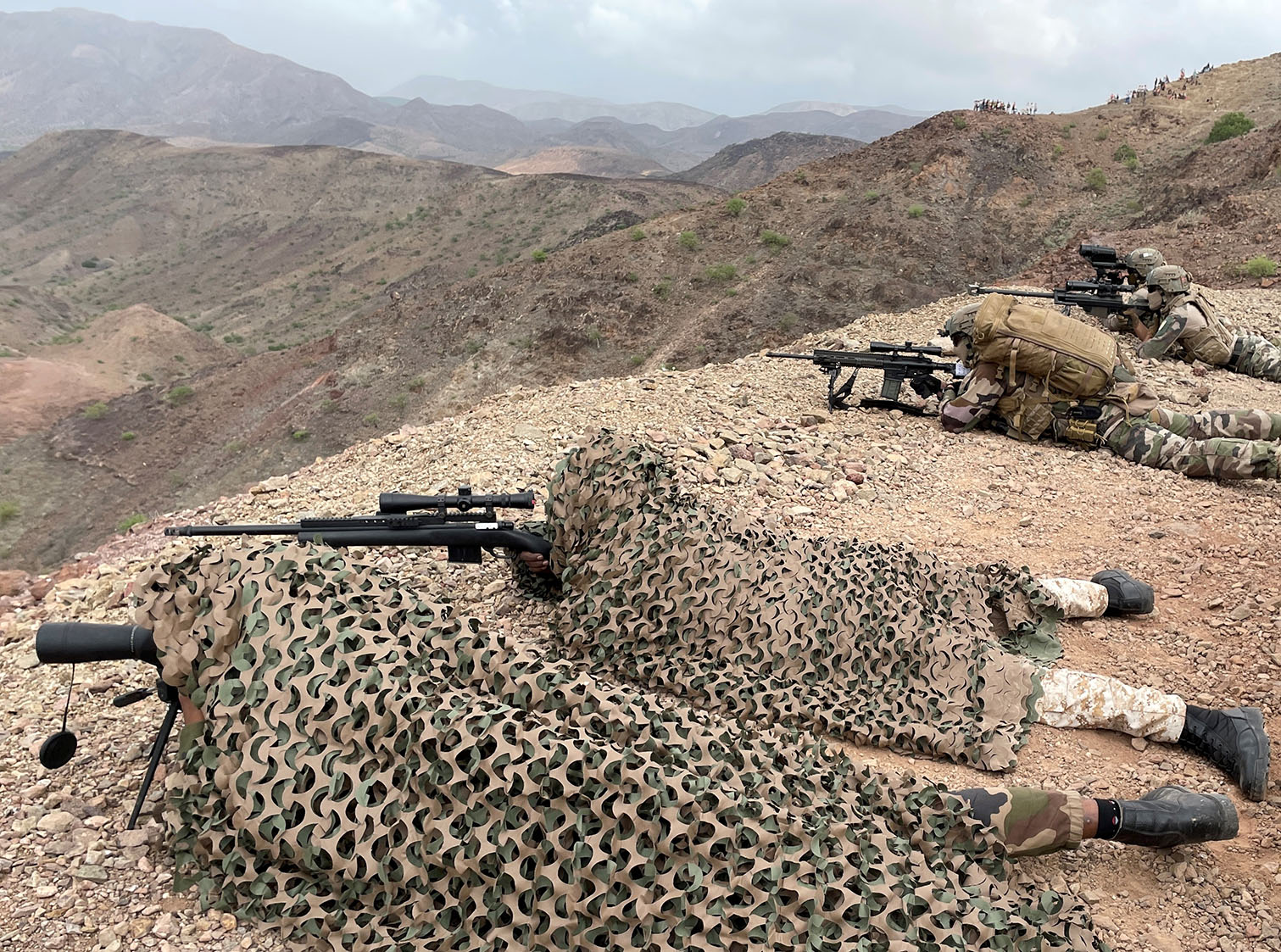
After a rousing wake-up call by the marine commandos, the audience moved on to the Koron area to watch a joint demonstration of "Air-land combat in desert areas" by the 5th RIAOM and the Djibouti Armed Forces (FAD), supported once again by Army helicopters and combat aircraft from the Air Force and Space Agency.
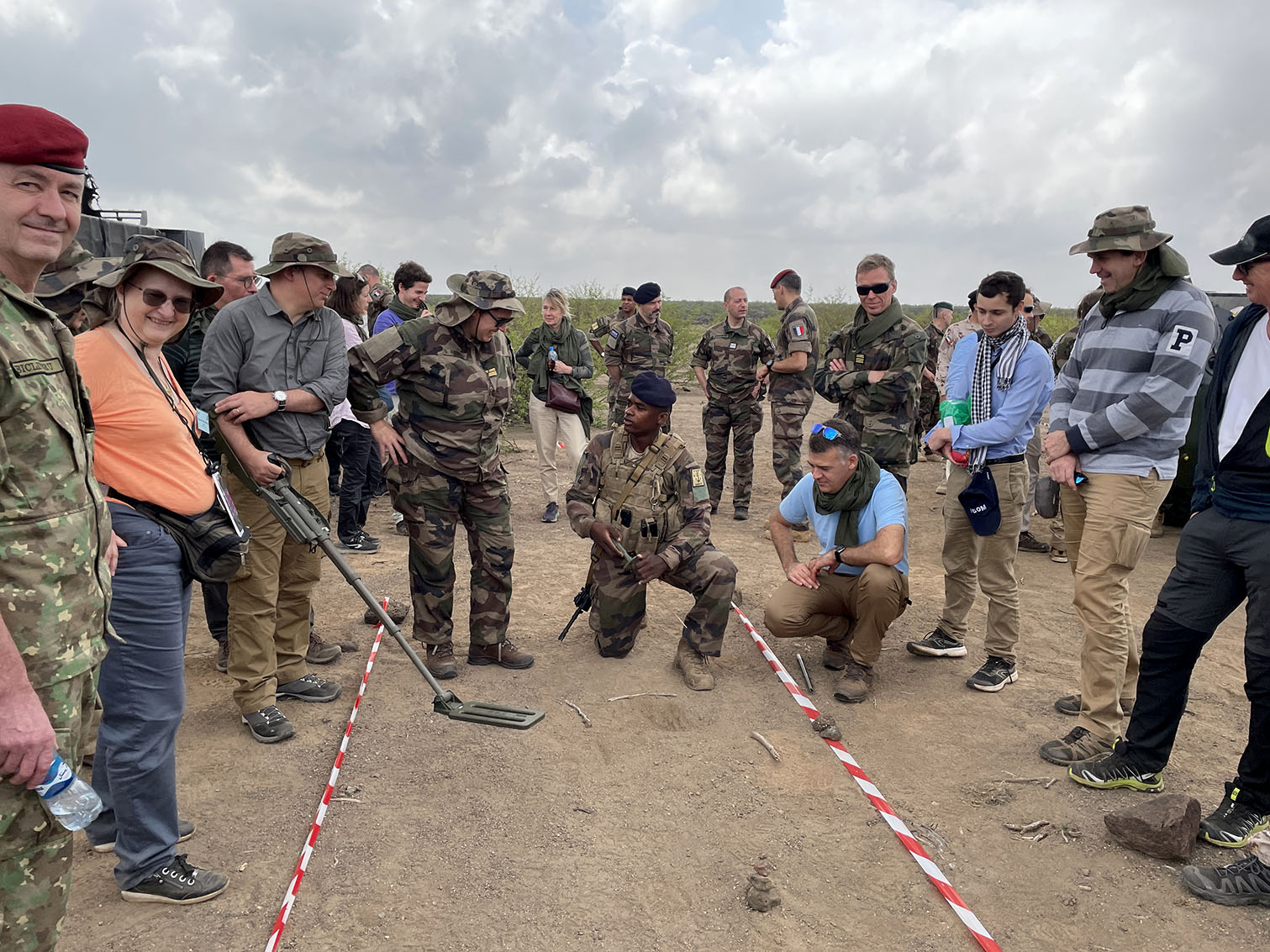
After visiting the army's equipment and talking to the soldiers who use it, the auditors were particularly impressed by the deployment of a joint battle group (GTIA) presented by Colonel Sébastien BotheronCommander of the 5e RIAOM. Comprising AMX 10 RCR tanks, CAESAR guns, infantry fighting vehicles (VBCI), light armoured vehicles (VBL), and PUMA and Gazelle helicopters, this GTIA fought a fictitious enemy with live fire in one of the few training areas in the world offering this possibility.o.
Finally, at sunset, presented by Colonel Fabien CoulibalyThe final highlight of the day, which was devoted to the capabilities of the armed forces, was a third-dimensional interaction between air force and space force resources, supported by French army helicopters. To the roar of jet engines, the audience was treated to a succession of breathtaking aerial demonstrations, during which they were able to admire the exceptional manoeuvrability of the Rafale multirole fighter aircraft used by the French Navy and Air Force.
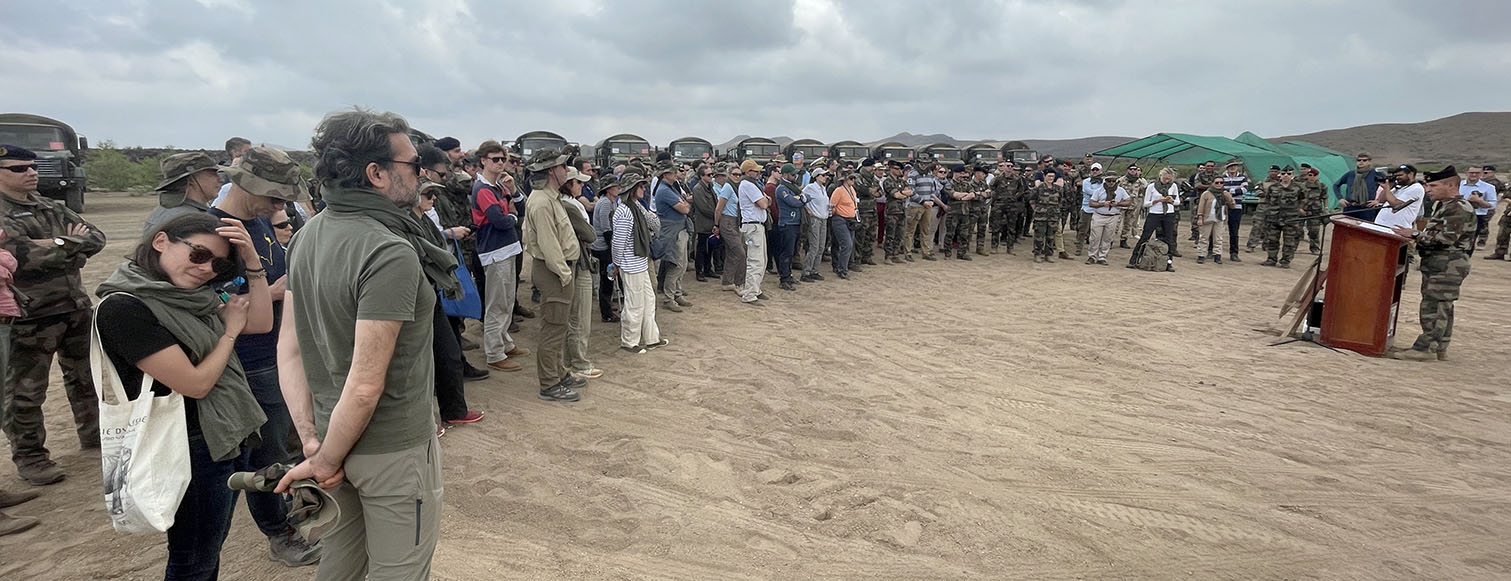
One last, and by no means least, capability of the French Armed Forces, which was of direct benefit to the listeners, was the ability to set up a bivouac in the middle of the desert to house and feed 500 soldiers, providing them with all the necessary logistical support, not forgetting the traditional flagpole at the top of which flew proudly the Djiboutian and French flags.
After a dinner in the desert in the purest tradition of the French armies, topped off with a few victuals brought by the listeners to thank their Djiboutian hosts and concluded with the traditional songs of the marsouins, legionnaires and sailors, the listeners fell asleep in their tents; it had been a long and hectic day!


But it was a short night, as the listeners were rudely awakened by the bugle call at 3.45am on Sunday morning! After a quick wash in the communal washbasins outside the tents and a quick breakfast, they had to get back in the lorries to get back on the track and head back to the hotel.

After a short refresher course, it was time for a change of scenery as the audience moved from the practicalities of the field to the theory of conferences and strategic debates with the highest local authorities.
These were launched by an intervention from H.E. Mrs Dana PURCARESCUFrance's ambassador to Djibouti.
This was followed by a round table discussion on the major challenges facing the Indo-Pacific region, bringing together H.E. Umio OTSUKAAmbassador of Japan, H.E. Mr Ramachandran CHANDRAMOULIAmbassador of India and Ms Andrea TOMASZEWICZChargé d'affaires a.i. of the United States Embassy to the Republic of Djibouti. The auditors were thus able to improve their knowledge of the major issues at stake in this strategic zone and the perception of some of France's main partners.

This was followed by a second round-table discussion on "Djibouti in its international environment" with H.E. Mr Bin HUAmbassador of China to the Republic of Djibouti, Mr José BARAHONAUN Resident Coordinator in Djibouti and Mr Mohamed Idriss FarahSpecial Advisor to the Special Representative of the President of the Commission for the Horn of Africa. The audience was able to appreciate the extent to which Djibouti, despite its small size, is a haven of peace in a very turbulent region and an important diplomatic player on the international stage.

After a well-deserved lunch, the audience was treated to "A look at the strategic challenges facing the Horn of Africa" from the following speakers Major General Laurent BOITEand Brigadier General Valerie A. JACKSONDeputy Commanding General CJTF - HOA accompanied by Colonel Andy PITTJ5 director. The listeners were able to appreciate the complexity of this area, but also to identify a few glimmers of hope for its future.

After a short break, listeners were treated to a speech by Mr Mahmoud ALI YOUSSOUFDjibouti's Minister of Foreign Affairs and International Cooperation and government spokesman, who came to present the major issues of his country's foreign policy. The audience was impressed by the frankness of the answers given to their many questions, and the exceptional diplomatic influence of the Republic of Djibouti in relation to the size of the country.

The day ended with a final round table discussion on the economic challenges and prospects facing the Republic of Djibouti, bringing together three major players in the local economy: Mr Ahmed Osman AliGovernor of the Central Bank, Mr Régis BarriacDirector of the Banque pour le Commerce et l'Industrie - Mer Rouge (BCIMR), and Mr Abdillahi Adaweh SigadManaging Director of Société de Gestion du Terminal Conteneur (SGTD).

On Sunday morning, after two busy days and a little rest, the auditors were divided into several groups to visit a number of sites: the International School for Advanced Training in Criminal Investigation, the American, Japanese and Operation Atalanta bases, the port of Doraleh and the desalination plant built by the French group Eiffage.
The fruit of a Franco-Djiboutian collaboration developed by the two heads of state during a meeting at the Élysée Palace in 2018 and inaugurated in March 2020 with its first trainees, the International School for the Advanced Training of Judicial Police Practices is located on a campus on the outskirts of Djibouti city. The trainees, one third of whom are Djibouti nationals and one third of whom come from a number of mainly French-speaking African countries, take part in 4- to 6-week sessions in groups of around ten to learn about best practice in judicial police and forensic science. Hosted by Lieutenant-Colonel Houssein Mohammed KayadAfter visiting several buildings, including fingerprint analysis training laboratories, and attending an investigation procedure course, the auditors were able to assess the high quality of the teaching provided.
Located at Camp Lemonnier, the former French headquarters of the Foreign Legion, the American base is the American logistical and operational base for the Horn of Africa. The very convivial round table discussion led by Major General Valérie A. Jackson gave the audience a better understanding of the US strategic vision for the region, particularly in the light of the regional context and the global geopolitical crisis. The dynamic tour of the base that followed made the audience realise the gigantic logistical footprint of an American force projection.

On a completely different scale is the Japanese base opened in 2011 to mark Japan's involvement in the fight against piracy and housing a detachment of maritime patrol aircraft. After a brief tour of its main facilities, the audience was treated to demonstrations of close combat and kendo by the Japanese self-defence forces, with the various regulation bugle calls and a taiko (Japanese drum) session. The Japanese base commander then gave the audience an overview of the base's activities before answering any questions. The rich exchanges between the Japanese military personnel and the auditors enabled the latter to appreciate the synergy and the particularly close links between France and Japan in Djibouti.


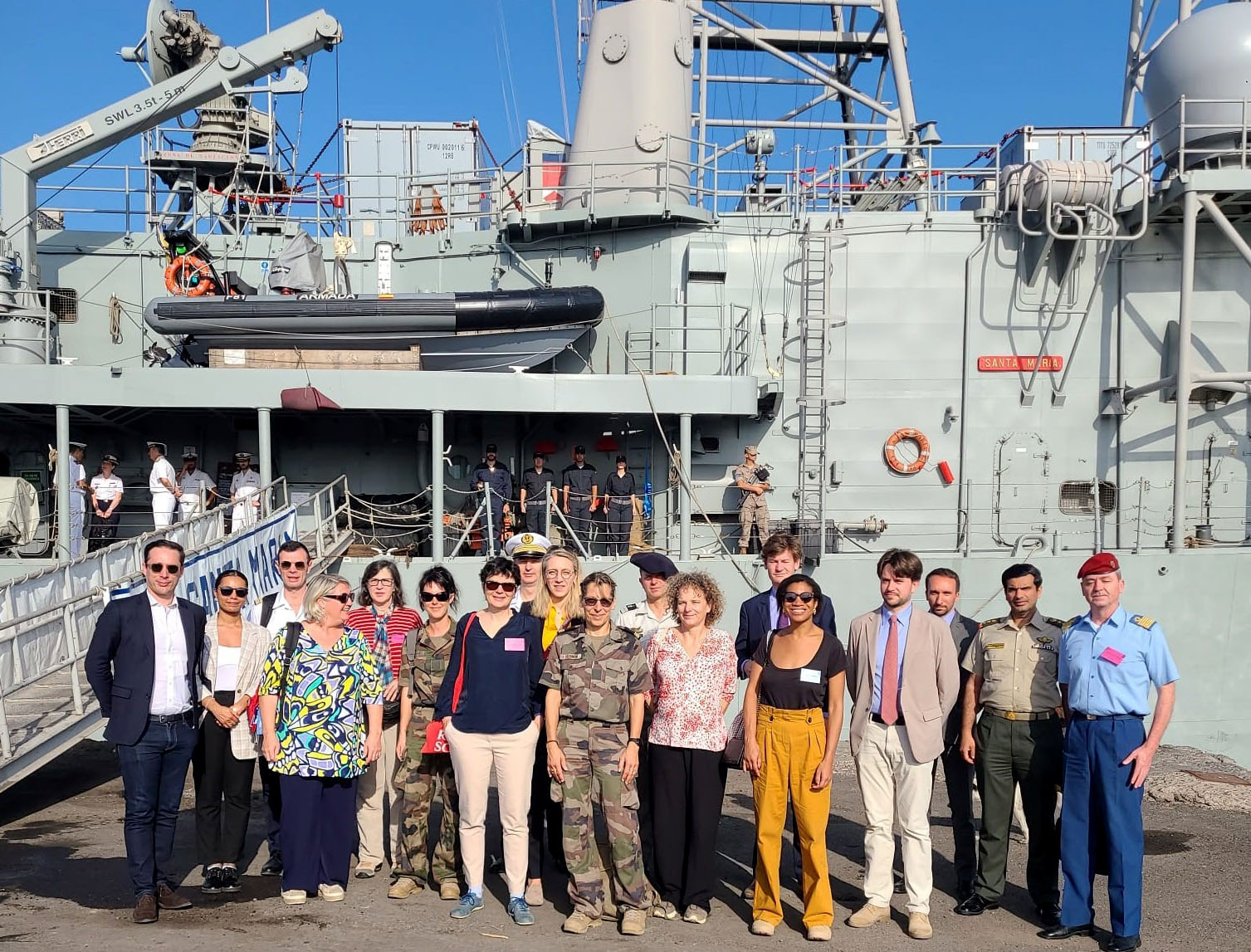
As part of the European naval force (Eunavfor) deployed as part of Operation Atalanta, the Spanish frigate Santa Maria welcomed the audience on board. This military operation against piracy in the Indian Ocean was initiated by France and implemented by the European Union as part of the Common Security and Defence Policy (CSDP). The auditors attended a strategic and tactical briefing on the operation and Europe's positioning in the Indian Ocean, and then visited the frigate. This visit to a combat ship taking part in Europe's first naval operation confirmed to the auditors the importance of the European Union's involvement in this strategic area.
Those who had the opportunity to visit the desalination plant located near the port of Doraleh, close to the Chinese base, realised the strategic importance of this facility in a particularly arid country that previously depended entirely on a single pipeline linking it to Ethiopia for its water supply. The result of a European project, this very modern plant - which opened in 2017 - operates on the principle of reverse osmosis. Although far from covering all the needs estimated at 110,000 m3 per day, this efficient process nevertheless provides a daily production of 23,000 m3 to help the most disadvantaged neighbourhoods, and this will soon be increased to 45,000 m3 with the installation of the 2e instalment already planned. The audience was also able to taste this water, which has nothing to envy certain Parisian "Château Lapompe".
Finally, a group of auditors visited the Doraleh Multi-Purpose Port. They were given a very warm welcome by its Managing Director, Mr Djama Ibrahim Darar and his senior subordinates, they enjoyed an exceptional briefing and exchange of views. This large multi-purpose port (dry and liquid bulk, containers, Ro-Ro, general cargo), located on one of the world's most important maritime routes linking Europe and Asia, and virtually the sole gateway to Ethiopia for the majority of that country's goods, is experiencing strong economic growth. The listeners were particularly impressed by its capacity and its exceptional development prospects, accentuated by its position on China's strategic "Maritime Silk Road". With a draught of 20 metres, the port will be able to accommodate the largest ships, and its transhipment facilities are among the most efficient in the world. The future city centre port will house a business centre, data centre, marina and luxury hotel, in line with the country's ambitions to develop tourism.

Having just returned from their various field visits, some of the auditors went to the French embassy at the invitation of H.E. Mrs Dana PURCARESCU who organised a working lunch on two themes, "the blue economy" and "health". Their meetings with key Djiboutian players in these sectors led to particularly fruitful exchanges and promising contacts for future bilateral cooperation.
Finally, an open discussion led by H.E. the Ambassador of France, the COMFOR FFDj and the Director of the IHEDN brought this instructive mission to a close.

Finally, the listeners who still had a little energy left went into town to meet the Djibouti people and were able to find out more about the French bases in Djibouti and the daily lives of FFDJ soldiers and their families.
It was an unforgettable experience, impressed by the quality of the welcome they received and proud of the capabilities and professionalism of their armies that, in the evening, the listeners took off for the mainland for another night flight. Sleep came very quickly with the sudden end of the continuous flow of activities of the last four days. Tired but happy, the listeners will long remember this unique mission on Djibouti soil, of which they are now new ambassadors.