

This fact sheet is also available in audio format
Click below to listen:
Summary
- Space exploration emerged as a competitive field during the Cold War. Despite the desire for a framework under international law, attempts at regulation in the late 1960s and 1970s produced only a limited legal framework. With the emergence of the New Space In the 2000s, the situation became even more complex with the arrival on the scene of private players whose role has become decisive.
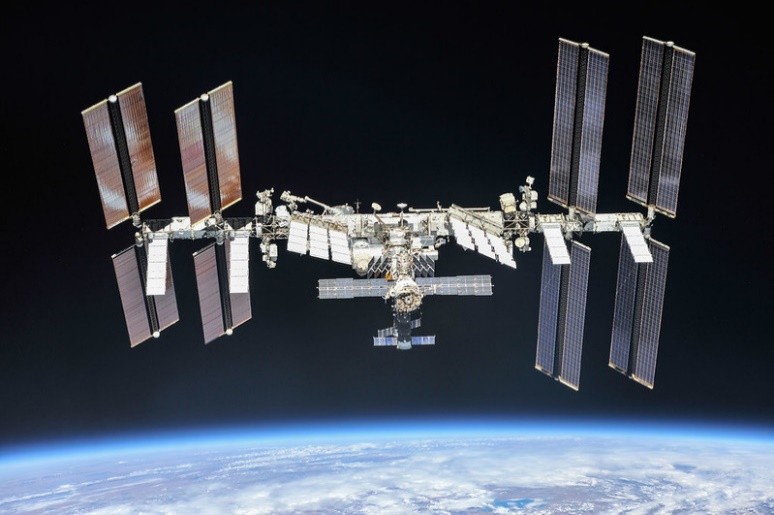
- After a brief phase of international cooperation in the 1990s and 2000s, notably around the International Space Station (ISS), space has once again become the focus of strategic rivalries, as shown by the competition between the United States and China in this field.
- Against this backdrop, the question of the weaponisation of space is becoming increasingly important. The issue of space sovereignty appears to be a major challenge, and one that is set to take on even greater importance in the years to come.
Context - From the Cold War to New Space
Analysis - Sino-American rivalry in space
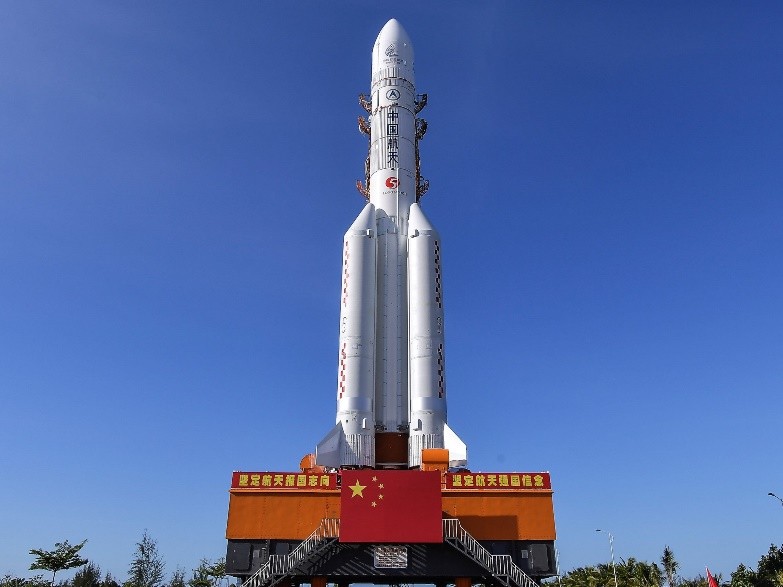
In the same way, the conquest of Mars is emerging as a continuation of this space competition, which is becoming ever more distant. Indeed, Donald Trump has stated his intention to place the American flag on Mars before 2030. Using the Starship launcher, the idea is to use the Moon as a springboard: NASA's overall strategy, known as «Moon to Mars», provides for a technical, logistical and scientific sequence of missions from the lunar surface to Mars. To this end, the Artemis missions are being used to test living and working on the Moon in partial-gravity habitats, in order to reduce the costs associated with Martian expeditions. For the time being, however, there are still a number of technical obstacles in the way of this project, making its prospects highly uncertain. China, for its part, is following a similar trajectory. The country has already flown a Mars mission (Tianwen-1 in 2021) and is preparing a mission to return Martian samples to Earth in 2028 (Tianwen-2). China's objectives also include a first manned mission to Mars around 2033, following on from its robotic successes and the modernisation of its Long March launchers.
Finally, the rivalry between China and the United States also revolves around space connectivity constellations. These play a highly strategic role, as they enable the flow of information and in particular military communications in conflict zones. SpaceX's Starlink constellation currently dominates the market, with more than 8,000 satellites already in orbit (the goal is to reach 40,000) providing worldwide broadband internet coverage. For its part, China is developing several megaconstellations, including Guowang (13,000 satellites planned) and Qianfan (also known as Thousand Sails), with several dozen satellites currently launched. Through these constellations, Beijing is seeking to provide independent connectivity on a national and even global scale, and to ensure China's digital sovereignty. In geostationary orbit, China carried out unprecedented operations in 2025 to bring satellites closer together and potentially refuel them, which could change the way constellations are managed and extend their lifespan. These projects are led by public entities (China Satellite Network Group, a branch of the CASC) and regional entities (Shanghai Spacecom Satellite Technology), and aim to secure national communications as well as competing with American networks.
The race for space constellations is therefore not limited to civil connectivity, but is part of a dynamic of digital and military power, with each country seeking to control its own infrastructures to avoid strategic dependence on the other. China, for example, is looking to build up its power rapidly, with massive launches (up to nine satellites in 25 days in August 2025) to make up for lost time with Starlink. To make themselves less dependent, Europeans are seeking to develop their own resilience and secure satellite interconnection infrastructure.[5].
Perspectives - The weaponisation of space?
In the light of these developments, the idea of a «militarisation» or weaponisation of space is frequently raised.[6]. To date, there are no weapons positioned in space that could target the Earth. On the other hand, many dual-use technologies exist, i.e. for civilian and military use. This vagueness considerably complicates the introduction and application of binding regulations. An observation satellite can be used both to monitor deforestation and to locate military infrastructures. What's more, technologies capable of aiming at targets in space from space exist, even if they are banned. In 1962, the United States carried out a nuclear test in space that rendered many satellites inoperable. Since then, other technologies have been tried. In the 1970s, for example, the Soviet Almaz station experimented with the installation of an orbiting cannon on a satellite. More recently, and more indirectly, a Russian satellite was spotted near a Franco-Italian satellite. This was a «forager» satellite, capable of interfering with the operation of a target. Faced with this situation, France is developing the Laser Toutatis system, which aims to equip defence satellites with a laser capable of neutralising any suspicious object approaching them. In conclusion, space, like any common space, is a place of cooperation but also of competition, where strategic opportunities must be identified.
[1] Naja, Géraldine. «European intergovernmental space policies». Annales des Mines - Industrial realities, May 2919 (2), 6-12.
[2] Julienne, Marc. «China's space ambitions», IFRI, 20 January 2021.
[3] The last time men set foot on the Moon was during the Apollo 17 mission in December 1972.
[4] Julienne, Marc. «China will send a new crew to its space station». IFRI, 23 April 2025.
[5] The next fact sheet, devoted to Space and the EU, will look at this question.
[6] Coutant, Katia. «Arsenalisation de l'espace : quelles armes, quelles menaces, quel droit ?, The Conversation, 27 July 2025.
To find out more
Bibliography
This This fact sheet is based on information from the following sources:
- Astorg, Jean-Marc. «Space industry: What place for Europe in the face of American domination?, Polytechnique Insights, 9 April 2025.
- Bourron, Jean-Benoît. «La course à l'espace extra-atmosphérique entre défis scientifiques, concurrence économique et rivalités de puissance». Geoconfluences, 18 September 2024.
- CNES. «Newspace: the new players in space». CNES.
- Couraye, Hervé. «The Sino-American rivalry in international relations». Conflits magazine, 20 November 2021.
- Coutant, Katia. «Arsenalisation de l'espace : quelles armes, quelles menaces, quel droit ?, The Conversation, 27 July 2025.
- Guyon, Anthony. «Rivalries and power in space», Non Fiction, December 2, 2024.
- Julienne, Marc. «China's space ambitions», IFRI, 20 January 2021.
- Julienne, Marc. «Le succès à double tranchant du programme spatial chinois, entre performance et isolement», IFRI, 27 February 2024.
- Julienne, Marc. «China will send a new crew to its space station». IFRI, 23 April 2025.
- Josephs, Jonathan. «US-China rivalry stiumbs investment in space technology», BBC, 28 September 2023.
- Sourbès Verger, Isabelle. „Launching the Tianwen-2 mission: understanding China's space policy. A conversation with Isabelle Sourbès-Verger». The Conversation, 14 May 2025.
- Khan, Natasha. «In the race to the Moon, the United States» main rival is no longer Russia, but China". L'Opinion, 5 September 2023.
- Le Monde. USA-China: a trompe-l'œil space match. Le Monde, 18 May 2021.
- Louvet, Brixe. «La Chine dévoile son plan pour bâtir sur la Lune : les Etats-Unis déjà hors course?», Sciencepost, 24 April 2025.
- Naja, Géraldine. «European intergovernmental space policies». Annales des Mines - Industrial realities, May 2919 (2), 6-12.
- Wang, Alex, «China's plans for space conquest». Conflits magazine, 16 May 2025.
- Wang, Yucong, Li, Bin. „Laws governing space are 50 years old. New ones are needed to prevent it becoming a ‘wild west’. The Conversation, 18 March 2025.
- Wohrer, Paul. «Successful flight of the Starship mega rocket: does the conquest of Mars make sense?» 28 Minutes, 28 August 2025.
This file is automatically translated
 French
  English