

This fact sheet is also available in audio format
Click below to listen:
Summary
- Franco-German cooperation on defence, initiated by the Élysée Treaty in 1963 and strengthened by the Aachen Treaty in 2019, illustrates a constant desire for political and strategic rapprochement between Paris and Berlin despite their sometimes divergent visions of European security.
- Major joint industrial programmes, such as the «Future Air Combat System» (SCAF) and the «Tank of the Future» (MGCS), embody the ambition of a European defence industrial base, but also reveal persistent tensions linked to national strategic cultures, operational requirements and industrial balances.
- In operational terms, the Franco-German Brigade provides a unique framework for interoperability and a practical laboratory for European military integration, which is particularly relevant at a time when the security balance in Europe is shifting.
Background - A relationship steeped in history
The Elysée Treaty signed on 22 January 1963 by the German Chancellor, Konrad Adenauer, and the French President, Charles de Gaulle, set out the framework for cooperation between Germany and France in a number of areas, including international relations, defence and education. The primary objective of this treaty was to confirm the relationship of trust and friendship between the two former «hereditary enemies», barely ten years after the start of the reconciliation process, which had begun with the first steps towards the creation of the European Coal and Steel Community (ECSC).
In particular, the treaty establishes a programme for the organisation of military or intergovernmental summits to support cooperation. For France, the main objective of this treaty, over and above Franco-German friendship, was to build a European bloc independent of both the United States and the Soviet Union, against the backdrop of the Cold War. However, when the treaty was ratified, the German parliament, the Bundestag, adopted a preamble reaffirming «the close association between Europe and the United States of America» and «the common defence within the framework of the North Atlantic Alliance», thus demonstrating West Germany's desire to maintain its Atlantic anchorage and putting into perspective France's ambitions for strategic autonomy.[1].
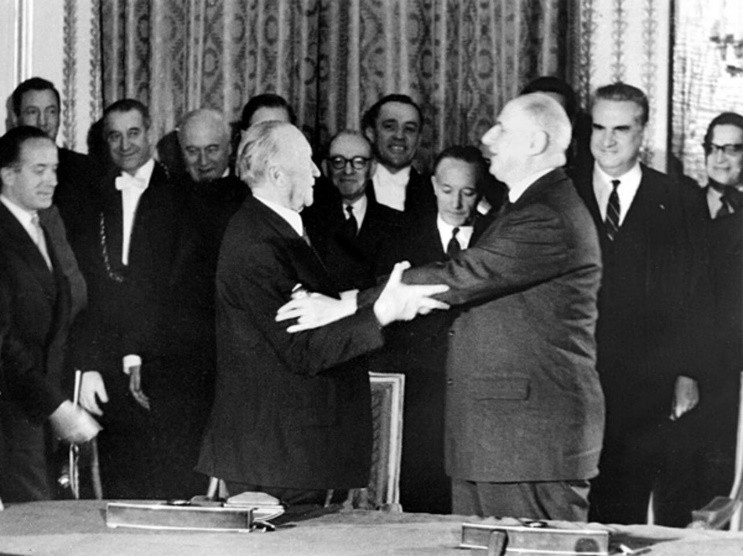
As a result, Franco-German relations were once again strained, and foreign policy provisions were hard to put into practice. Moreover, in October 1963, Chancellor Konrad Adenauer was replaced by Ludwig Erhard, a staunch Atlanticist. As a result, the treaty was implemented in other areas besides defence. In education, for example, the Franco-German Youth Office (OFAJ) became a key player, developing exchanges between young people from the two countries and working to bring the two cultures closer together. Then, in the 1970s, the Giscard-Schmidt couple gave new impetus to the Franco-German cause by instituting an almost systematic approach to cooperation. The two heads of state co-led the adoption of a European mechanism designed to reduce exchange rate fluctuations between the member countries of the European Community. After them, the Mitterrand-Kohl couple worked for a symbolic reconciliation between the two countries that strengthened cooperation between France and Germany.
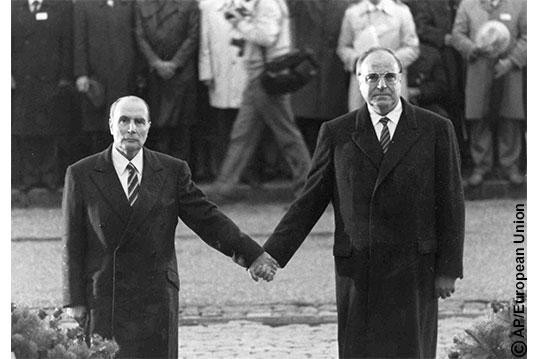
In 1988, France and the FRG signed an additional protocol to the Elysée Treaty, further strengthening Franco-German cooperation in the fields of economics and defence. The protocol establishes a Franco-German Economic and Financial Council, a body for coordinating the economic policies of the two countries, bringing together the ministers for the economy and finance and the governors of the central banks. The protocol also adds a Franco-German Defence and Security Council, the purpose of which is to ensure coordination between the Ministries of Foreign Affairs and Defence and to contribute to the development of European defence. Twice a year, this Council brings together the President of the French Republic, the German Chancellor, the Ministers of Foreign Affairs and Defence, as well as the French Chief of Staff and the Inspector General of the German Armed Forces, the French Minister of Defence and the French Minister of Defence. Bundeswehr and thus promotes dialogue between the two countries. In addition to this, a number of staff exchange initiatives have been developed, such as the exchange between officers from the Ecole spéciale militaire de Saint Cyr and the Offizieranwärter which has been held every year since 2012.
On 22 January 2019, 56 years after the signing of the Elysée Treaty, a new treaty was signed in Aachen between France and Germany. The aim of this treaty is to supplement and strengthen the Elysée Treaty. The Germans and the French intend to further unify their cooperation, particularly in the area of foreign and security policy. To this end, the two countries are committed to implementing the new treaty around 15 priority projects, to be monitored by the Franco-German Council of Ministers, an organisation created in 2003 that meets once or twice a year. One of the flagship projects is increased cooperation within the United Nations Security Council, with the aim of coordinating French and German positions as closely as possible. The text also states that «the two States consult each other regularly at all levels before major European deadlines, seeking to establish common positions and agree on coordinated statements by their ministers. They will also coordinate the transposition of European law into their national law.»
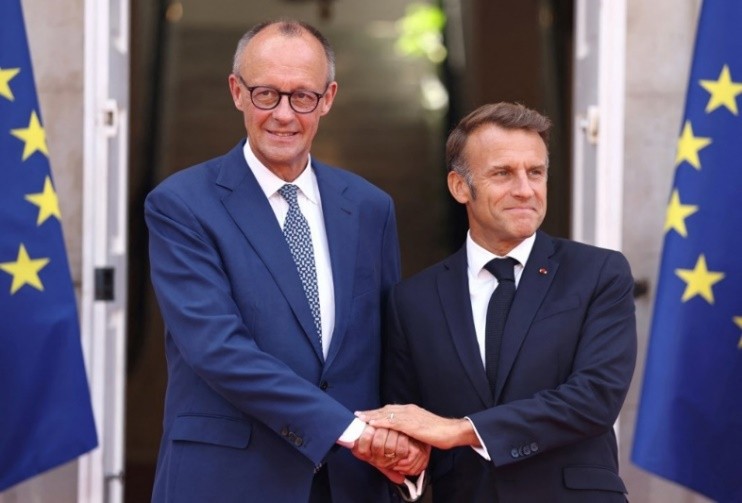
Despite this desire for more coordinated decision-making in the field of security and defence, Russia's invasion of Ukraine in 2022 has had a negative impact on Franco-German relations over the last three years. Indeed, in 2022, Olaf Scholz gave his speech on the Zeitenwende (change of era) in Prague and not in Paris. These difficulties are partly linked to structural differences between the two countries, in particular the Chancellor's reduced room for manoeuvre on defence issues.[2]. Added to this are internal political divisions that prevent Germany's coalition partners from reaching a common position within supranational organisations, notably the EU. In recent years, Germany's abstention on important issues (notably foreign and security policy) has been dubbed the «German abstention".« German vote »in Brussels. This phenomenon is an obstacle to the coordination of security and defence policies between France and Germany. The current Chancellor, Friedrich Merz, is seeking to remedy this by emphasising his desire to renew the Franco-German partnership. Since he came to power in May 2025, the two heads of state have made numerous announcements of cooperation, notably on the occasion of the 25e Franco-German Council of Ministers held in Toulon in August 2025. Following this, two Franco-German projects were adopted to strengthen the fight against disinformation[3].
Analysis - Industrial cooperation can be difficult
International industrial cooperation is often highly complex. The Airbus A400 Atlas project, a multi-purpose military transport aircraft, is a good example. Conducted in cooperation with 6 countries (France, Germany, Spain, the United Kingdom, Turkey and Belgium), the project selected in 2000 has been plagued by delays and cost overruns. The aircraft was finally certified for military use in August 2013.
Today, the challenges facing Franco-German defence cooperation are many. On the industrial front, the 2019 Treaty of Aachen officially gave new impetus to two major Franco-German armaments projects: the Main Ground Combat System (MGCS), nicknamed the «tank of the future», and the Future Air Combat System (SCAF). The MGCS is designed to replace the battle tanks currently in service in both countries: the Leopard 2 on the German side and the Leclerc on the French side. Coordinated by Germany, the MGCS is not intended to produce a single armoured combat vehicle but a series of systems designed around it. It should be developed and manufactured by KNDS (a holding company founded in 2015 by the German arms manufacturer KMW and the French defence company Nexter Systems) and Rheinmetall, which joined the project in 2019. The arrival of Rheinmetall in the MGCS was not without its tensions between Paris and Berlin, as the leadership of the development of the various pillars of the programme, as well as industrial production, were initially to be divided equally between the two countries. In the end, an agreement was reached: Nexter, KMW and Rheinmetall will each lead the development of a third of the programme's pillars, with the guarantee that Nexter will manufacture 50 % systems as initially agreed, while the other half will be divided between the two German contractors. The first production unit is scheduled to roll off the assembly line in 2045. At the same time, Rheinmetall has also approached Italian manufacturer Leonardo to build Panther tanks that could be delivered to the Italian army within the next three years - a project that somewhat jeopardises the realisation of the MGCS.
The Future Air Combat System (SCAF) plans to establish a set of interconnected air weapons systems. Now involving France and Germany as well as Spain and Belgium (observer member), cooperation is proving more difficult. The aim of this project is to provide France, Germany and Spain with a sixth-generation fighter aircraft to gradually replace the Dassault Rafale and the Eurofighter - the latter already being a European project. Based on three pillars: a new-generation fighter aircraft, drones and software, the SCAF is much more than a fighter aircraft but rather a «system of systems». However, the project is experiencing a series of problems between French and German manufacturers. Dassault is seeking priority for the fighter aircraft pillar, but this alone accounts for 60 to 80 % of the project - whereas France is paying as much as the other partners, i.e. 33 %. Added to this are other differences that are not insignificant: for France, one of the specific features of this future system is its ability to operate from and to an aircraft carrier and to carry nuclear weapons. This dimension does not concern the Spanish or the Germans. As the project is already well advanced, abandoning it would entail major financial losses and call into question political efforts to speed up the creation of a «Defence Europe».
Perspectives - The Franco-German brigade, a vehicle for European integration?
At the operational level, Franco-German cooperation has also been highly institutionalised since the end of the Cold War. A Franco-German Brigade (BFA) was set up in 1989 following a joint initiative by François Mitterrand and Helmut Kohl. Comprising German, French and mixed units, its headquarters are located in Müllheim, Germany. The BFA currently comprises 5,400 soldiers, 40 of whom are French % and 60 German %. Bosnia was the first theatre of external operations where French and German units were sent as stabilisation forces, six years after the creation of the brigade. The brigade was subsequently deployed to Afghanistan and Kosovo.
Today, the AFB has taken another step forward by coming under NATO command and being made available to the Multinational Army Corps North East in Stettin, Poland. The unit will take part in NATO exercises in Eastern Europe this year and could carry out its first mission on the Alliance's eastern flank the following year. Cooperation between the two countries also extends to the air: there is also a Franco-German transport squadron, created in 2021, stationed at Evreux. Troops there work in Franco-German pairs in all areas.
In the current strategic context, marked by the deterioration of the European security environment and rising expectations for a more integrated European defence, these Franco-German units represent a concrete tool for experimentation and interoperability. By bringing together on a day-to-day basis personnel, procedures and equipment from two armed forces with different strategic cultures, they constitute a laboratory for European defence cooperation, the lessons of which can feed into wider efforts to build a common European capability.
[1] Preamble to the law ratifying the Franco-German Treaty passed by the Bundestag, 15 June 1963, accessed on 18 November 2025.
[2] On this subject, see the latest news sheet: DER, «German rearmament, News sheet n°32, IHEDN, October 2025.
[3] Elysée Palace, Franco-German Council of Ministers: key initiatives in bilateral cooperation, consulted on 19 November 2025.
To find out more
- Delphine Deschaux-Dutard. French-German Military Cooperation and European Defence. Routledge, 2025.
Bibliography
This This fact sheet is based on information from the following sources:
- Emil Archambault, «How FCAS Can Move Forward», DGAP, 5 August 2025.
- French Defence Procurement Agency. «Jewel: France and Germany lay the foundation stone for a European early warning capability», 24 October 2025., accessed on 29 October 2025.
- Elysée. «Conclusions of the Franco-German Defence and Security Council, 2 September 2025., accessed on 29 October 2025.
- France Diplomatie. «The Elysée Treaty in 6 questions», updated on 23 December 2024, accessed on 29 October 2025.
- Laurent Geslin, «Macron and Merz promise a ‘new impetus’ for the EU thanks to a joint economic programme», Euractiv, 29 August 2025.
- Laurent Lagneau, «Paris and Berlin plan to develop a network of ground-based early warning radars via the JEWEL project», Zone militaire, Opex 360, 1er September 2025.
- Ministry of the Armed Forces, French Army, «Franco-German Brigade».», accessed on 29 October 2025.
- Ministère des Armées, Actualités, «Montée en puissance de la brigade franco-allemande», 6 February 2025, accessed on 29 October 2025.
- Johanna Möhring, «Twins in a bad way: the SCAF and the Char du futur and Franco-German cooperation», IFRI, December 4, 2023.
- Léo Péria-Peigné, «Tensions between Dassault and Airbus, diverging interests... What's wrong with Europe's ‘fighter plane of the future’, the Scaf?, Media interventions, IFRI, 3 September 2025.
- Jacob Ross, Nicolas Téterchen, «The Franco-German brigade and the relaunch of European defence», IFRI, 8 April 2025.
- Toute l'Europe, «What is the Treaty of Aachen?», updated on 1er June 2021, consulted on 29 October 2025.
- Toute l'Europe, «What is the Elysée Treaty?», updated on 21 January 2025, accessed on 29 October 2025.
This file is automatically translated
 French
  English