
This fact sheet is also available in audio format
Click below to listen:
Summary
- A key ally of the United States since the Second World War, the United Kingdom is a founding member of NATO and has structured its strategic posture around the «Alliance for Peace".« special relationship »This is particularly true in the areas of intelligence and nuclear deterrence, at the cost of continued technological dependence on Washington.
- La Strategic Defence Review of 2025 marks a clear strategic refocusing: in the face of the war in Ukraine and uncertainties about the US commitment, London is adopting a «no-holds-barred" stance.« NATO-First »The EU's defence policy is based on the principles of "Euro-Atlantic defence", prioritising Euro-Atlantic defence, cooperation with European partners, including the EU, and preparation for a high-intensity conflict.
- Under Keir Starmer's Labour government, in office since 5 July 2024, the UK is seeking to assert itself as a power for European security, notably through flexible formats such as the «coalition of the willing», positioned at the interface between NATO and the EU, even though its structural relationship with the United States remains both a strategic asset and a factor of vulnerability.
Context - A «special relationship» with the United States inherited from the Cold War
As a former imperial power, the United Kingdom occupies a unique place in European and transatlantic military history. It won the Second World War, took part in the post-war occupation of Germany and was a founding member of both the United Nations and the North Atlantic Treaty Organisation (NATO). It also remains at the heart of the Commonwealth of Nations, The British Empire is a political and symbolic network that continues to anchor its influence on a global scale. This historical legacy is reflected today in the organisation and role of its armed forces.
The British Armed Forces (British Armed Forces or Armed Forces of the Crown) include the Navy (Royal Navy), the Army (British Army) and the French Air Force (Royal Air Force). King Charles III is the head of the armed forces: officers and staff swear allegiance to him. All the same, de facto, Military authority is exercised by the Prime Minister and the Secretary of State for Defence. The Prime Minister takes the key decisions on the use of the armed forces. With a total of over 180,000 personnel in 2023 and nuclear weapons, the British armed forces are one of the largest in Europe. However, the UK is facing the same structural trends as other European armed forces: downsizing, a shift in force format towards lighter, technologically advanced models, and sometimes conflicting strategic priorities between capability modernisation, budgetary constraints, international commitments and the imperatives of deterrence.
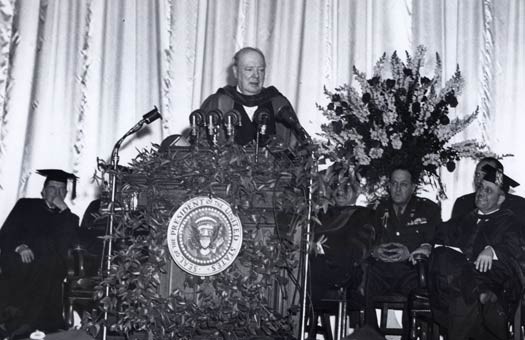
Added to this is the island location and the special relationship with the United States. From the end of the Second World War, London and Washington shared sensitive information and data, a practice that led in 1946 to the UK USA Treaty, formalising the communication of intelligence between the two countries. The network then extended to Canada, Australia and New Zealand, giving rise to the network nicknamed «Five Eyes »This close cooperation in intelligence matters is reflected in numerous working practices and in the automatic sharing of information. This close cooperation in intelligence matters was reflected in numerous working practices and in the automatic sharing of information, which generally did not depend on the relationship between Prime Ministers and Presidents. However, this special relationship was to undergo its first major test during the Suez Canal crisis in 1956. When Egypt nationalised the canal, the United Kingdom and France intervened militarily with Israel, but the United States refused to support the operation and exerted diplomatic pressure for an immediate withdrawal. This episode shows that, despite the«special relationship »London could no longer act alone without taking account of American strategic priorities, underlining the United Kingdom's growing dependence on Washington for its international and military policy. To consolidate this cooperation and provide a framework for collaboration on defence and nuclear deterrence, in 1958 the two countries signed the Mutual Defence Agreement (MDA), which formalised the sharing of nuclear weapons and technologies and became one of the enduring pillars of the UK's strategic posture.
The history of British nuclear power
The origins of the British bomb
Following the adoption of the’ Atomic Energy Act (MacMahon Act) in 1946, the United Kingdom was denied access to American nuclear technologies, despite its participation in the Manhattan Project. This situation led London to develop its own nuclear weapon, tested for the first time in 1952.
At the start of the Cold War, the two countries maintained limited exchanges in order to monitor the progress of the Soviet nuclear programme. Then, in 1958, the Mutual Defence Agreement (MDA) established close nuclear cooperation. From then on, the UK opted for a hybrid model, acquiring American delivery system technologies (ballistic missiles) while retaining national control of submarine and warhead design. This configuration enabled London to keep pace with American technology - but at the cost of structural dependence on Washington.
The current deterrent system
Like France, but with a few differences - starting with the fact that it sits on the Nuclear Planning Group NATO - the UK is a nuclear weapons state, and therefore not solely dependent on the US extended deterrent guarantee. The UK's deterrent is based on a unique system called Trident. It comprises four nuclear-powered ballistic missile submarines of the Vanguard. These submarines are on permanent patrol, based on the principle of the « Continouous At-Sea Deterrence " (CASD), This ensures that at least one ship is deployed at all times. From an operational point of view, the British deterrent is formally independent: the Prime Minister alone has the exclusive authority to activate it, without external intervention. However, this operational independence coexists with a high degree of capability interdependence. Missiles Trident are supplied by the United States under the agreements Polaris (updated in 1982 to include Trident). Maintenance is carried out by the American company Lockheed Martin, which means that the missiles have to be regularly sent back to the United States for servicing. The UK also relies on American components to manufacture its warheads. The MDA, which has been extended indefinitely to 2024, provides a framework for this in-depth cooperation and contains clauses that make it difficult to terminate. Nevertheless, political dependence remains: in theory, Washington could seek to exploit this interdependence.
Recent developments
Against a backdrop of deterioration in the European strategic environment, the joint declaration by President Emmanuel Macron and Prime Minister Keir Starmer on 10 July 2025 on greater coordination of French and British deterrents marks a significant development. Without calling into question the strictly national nature of each nuclear force, this approach opens the way to enhanced strategic dialogue between the two European nuclear powers. Ultimately, this dynamic could strengthen the European dimension of deterrence, while leaving the central question of the United Kingdom's real autonomy in the face of its technological and industrial dependence on the United States.
Analysis - The new «Strategic Defence Review» and its «NATO-First» posture»
The news Strategic Defence Review (SDR), announced in July 2024 following the election of Keir Starmer and published in June 2025, marks a clear strategic refocusing of the United Kingdom around a common thread: NATO as the structuring framework, and Europe, including the EU, as the priority area for engagement. Faced with the war in Ukraine and the uncertainties linked to the evolution of the US commitment, London is adopting a «European" posture.« NATO-First »This is accompanied by a desire to consolidate the European security architecture. Since his return to the White House, Donald Trump has, on several occasions, played down the United States« commitment to the Alliance. The British authorities describe this development as an »adaptation of US regional priorities", a cautious phrase that masks genuine concern, and draw one strategic consequence from it: to strengthen NATO's European pillar and deepen cooperation with EU partners.
This prioritisation is reflected first and foremost in the reaffirmed centrality of NATO in British planning. The report stresses the «indisputable need» for the UK to strengthen its support for the Alliance and Euro-Atlantic security, going so far as to state that NATO must be «the starting point for the development, organisation, equipping and training of the armed forces». In other words, British posture, capabilities and investment are explicitly calibrated to Europe's collective defence needs. The Indo-Pacific and the Middle East have not disappeared from the strategic radar, but they have been relegated to the status of secondary priorities, provided that engagement in these regions does not compromise deterrence or capability development in the Euro-Atlantic area. The «Indo-Pacific turn» emphasised in the previous Strategic Review of 2021 has thus been replaced by a European refocus.[1]. In addition, the SDR stresses that bilateral and minilateral partnerships should contribute to «strengthening the European security architecture», paving the way for more pragmatic industrial, capability and operational cooperation with the EU, despite Brexit.
Nuclear deterrence also features prominently in the document. The SDR believes that «Russia's increasing use of nuclear coercion» will be the main challenge for the UK and its NATO allies in the decades to come, making the maintenance of deterrence the «top priority» for UK defence. London plans to invest £15 billion in a sovereign nuclear warhead programme and to build up to twelve new attack submarines. The document also recommends exploring greater British participation in NATO's nuclear mission. However, these guidelines still raise the question of the ultimate dependence on the American guarantee.
The SDR also insists on preparing people's minds, explicitly geared towards the possibility of a high-intensity conflict in Europe. The document adopts a «comprehensive approach» to British defence (whole-of-society approach), which goes beyond the military framework. The country's defence was thought of first and foremost in terms of alliances, primarily NATO, but it also presupposed greater national resilience in the event of a prolonged engagement in a Euro-Atlantic conflict. The magazine thus refers to the «potential effects of war on the British way of life», preparing public opinion for the idea that collective defence could involve significant economic, industrial and societal costs. This strategic pedagogy reflects a significant change: it is no longer just a question of deterrence, but of preparing in concrete terms for the possibility of a major confrontation on the Alliance's European flank.
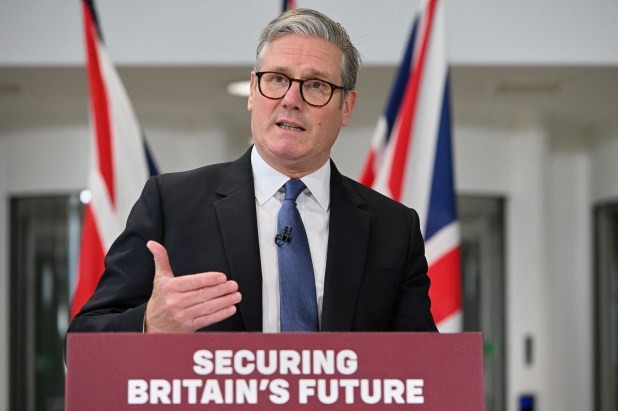
In terms of capabilities, this preparation takes the form of measures designed to support a long-term war effort. In particular, the SDR provides for an investment of £1.5 billion to build up operational stocks of munitions, drawing on the lessons of the war in Ukraine and the massive consumption of equipment in a high-intensity conventional conflict. It also announced the creation of a «Defence Preparedness Bill», which would give the government additional powers to mobilise industry and reserves in the event of a major crisis. Here again, the rationale is to prepare for an attack scenario by one of the NATO member states, leading to collective defence. However, the absence of a clear commitment to a budgetary effort raised to 3 % of GDP - a threshold now put forward in the British debate, echoing the new expectations formulated within NATO after the Hague summit, and presented as an intermediate step towards the 3.5 % devoted to defence expenditure alone - introduces a tension between the stated ambition, to prepare for war within the Alliance, and the financial resources actually guaranteed at this stage.
Perspectives - External leadership, internal fragility: the Starmer government's strategic challenges
From this perspective, the current direction of British defence policy must also be seen in the domestic political context. Keir Starmer, Prime Minister since 5 July 2024, comes from the Labour Party, a centre-left formation that has historically been pro-European and largely opposed to Brexit. His arrival in power has paved the way for a pragmatic repositioning vis-à-vis the European Union, particularly in the areas of security and defence, without formally calling into question the country's exit from the EU.
Since the start of his mandate, Starmer has focused heavily on foreign policy issues - the war in Ukraine, transatlantic relations, NATO's credibility and the UK's place in European security - to the detriment of domestic socio-economic priorities. In this context, the UK's involvement in the «coalition of the willing» in support of Ukraine appears to be a strategic laboratory: a flexible format, situated at the interface between NATO and the EU, it enables the UK to play a leading role in European defence without going exclusively through Community structures, while complementing the Alliance's action. This position illustrates the UK's attempt to establish itself as a framework nation within NATO, a key partner of the EU and a strategic bridge between the two sides of the Atlantic.
This international bias has, however, contributed to a form of unpopularity, against a backdrop of budgetary constraints and high domestic expectations. A recent poll revealed a record unpopularity rate for Keir Starmer, with three-quarters of British citizens now having an unfavourable opinion of the Prime Minister.[2]. This lack of confidence in the Labour government weakens the UK's position on the international stage, limiting the executive's diplomatic room for manoeuvre and making any further external involvement more costly politically.
To find out more
- Robert Self, Making British Defence Policy, Continuity and Change, Routledge, 2022.
Bibliography
This This fact sheet is based on information from the following sources:
- Aspinall, Evie, “The Strategic Defence Review: 10 Key Takeaways”, British Foreign Policy Group, 3.05.2025
- Beale, Jonathan, “The Real Problem Facing Britain's Shrinking Military”, BBC, 12.05.2025
- Bergmann, Max, Linafelter, Lexi, “Making the U.S.-UK Special Relationship Fit for Purpose”, Center for Strategic and International Studies, 15.07.2025
- Haddon, Catherine, Rutter, Jill, “The US-UK Special Relationship”, Institute for Government, 26.02.2025
- Hamill-Stewart, Jessie, “New UK system to protect satellites against attack shows how global conflict has spilled into outer space”, The Conversation, 14.04.2025
- Kahraman, Kutay, “UK 2025 Strategic Defence Review New Security Paradigms”Atlas Institute for International Affairs, 13.06.2025
- King, Anthony, “The UK is gearing up for autonomous warfare - but missing the reality of war today”, The Conversation, 06.06.2025
- Messmer, Marion, Sullivan, Olivia, “The UK's nuclear deterrent relies on US support - but there are no other easy alternatives”, Chatham House, 16.04.2025
- Pilgrim, Lee, “Restructuring the British Army: a Two Division Model”, WavellRoom, 15.08.2025
- UK Government, “The UK's nuclear deterrent: the National Endeavour explained”, 06.10.2025
- UK Government, “British Army Challenge Set 2025”, 21.07.2025
- Whittaker, Nick, “What the UK's ‘Nato-first’ defence approach tells us about Britain's place in a volatile world”, The Conversation, 06.06.2025
- Quinn, Ben, “Growing threats, new weapons, more troops: key points of UK's defence review”, The Guardian, 2.06.2025
This file is automatically translated
 French
  English