
IHEDN Mondays are now available in audio format!
Click below to listen:
To understand this key concept in modern military doctrine, a simple analogy comes to mind: that of a large symphony orchestra.
Originally, the art of war was based on compartmentalised operations. Land, sea and air forces each operated according to their own plans. Coordination between the different branches of the armed forces, or between the armed forces as a whole, took place on a case-by-case basis.
Today, the emergence of new arenas of conflict (cyberspace, outer space via satellite networks, the information sphere on social media, etc.) has made strategic thinking and operational realities far more complex.
FROM ISOLATED ACTION TO A SYMPHONY OF COMMUNITIES
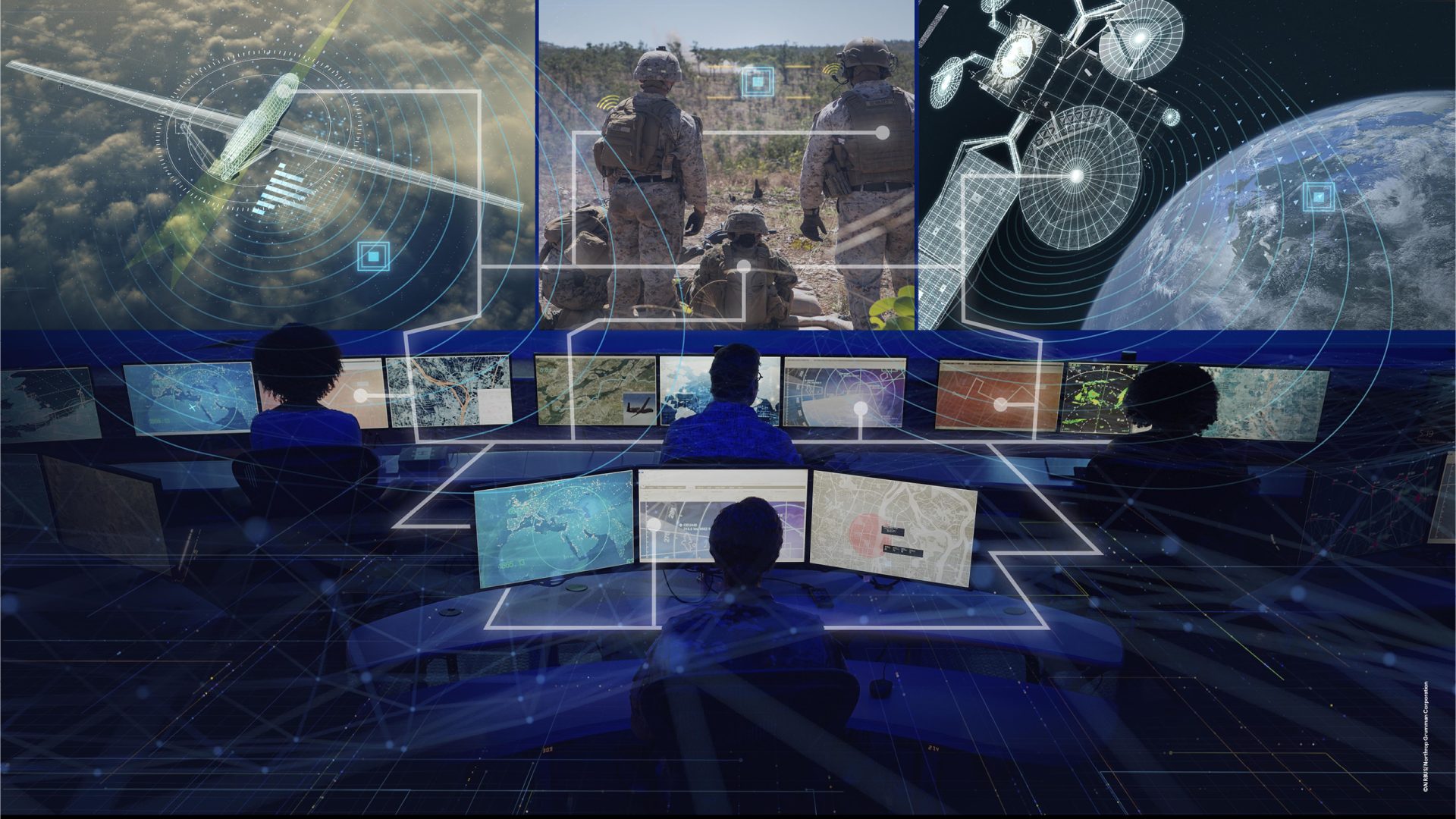
«Multi-domain superiority» involves precisely synchronising all these environments—both physical and digital—in real time. The success of operations now depends on comprehensive coordination and the synchronisation of effects between physical environments and equipment originally designed for their own specific environment.
In an article published in 2020 in the Revue Défense Nationale whilst he was a visiting student at the Centre for Advanced Military Studies (CHEM) and the IHEDN, Étienne Faury believed that «modern multi-domain warfare has its origins in the Soviet era and the doctrinal proliferation of the 1920s and 1930s».
He has since been promoted to Air Force Major General (and appointed at the end of 2025 Head of Nuclear Expertise for Defence and Security, Étienne Faury added that the modern version of multi-domain warfare emerged in the United States in the 2010s in order to «address the resurgence of symmetric threats from Russia and China whilst incorporating new conflict environments».
A DOCTRINAL REVOLUTION ACCELERATED BY THE RETURN OF HIGH-INTENSITY OPERATIONS
Here is how he defined this «revolution», which he described as both «indispensable and inevitable»:
«Modern so-called multi-domain operations involve integrating and combining the effects of new domains (information, cyber and space) into joint operations at the operational and tactical levels, with an accelerated decision-making cycle, in order to surprise, overwhelm or disrupt the adversary. […]
Whoever can make decisions and take action most swiftly to achieve the greatest combined effect thereby gains a military advantage: the element of surprise. […]
Some experts believe that this cross-sector synergy is inevitable in the long term, given the convergence of all sectors via digital tools. »
Six years on from these analyses, and in the wake of recent high-intensity conflicts, this synergy has become an operational reality. It is now firmly established within the French armed forces and the defence industrial and technological base, as evidenced by the creation of the Future combat command (CCF) of the Army in 2023, or that of the Defence Digital Commission (CND, reporting directly to the Minister for the Armed Forces) in 2025.
Another example is the decision to make multi-domain superiority the main theme of Eurosatory 2026. This theme aims to highlight «the integration of digital technologies, AI, cloud computing and C4ISR [Editor’s note: an acronym for «command, control, communications, computers, intelligence, surveillance and reconnaissance»] and electronic warfare to enhance the forces» protection, coordination and information superiority.
THE SIX PILLARS OF MULTI-DOMAIN SUPERIORITY
Axis 1 will be developed through six thematic areas that define the current scope of multi-domain superiority:
- C2 (command and control), sensor fusion and autonomous decision-making: collect and instantly cross-reference data from multiple sources to speed up decision-making;
- Electromagnetic warfare and spectrum warfare: control and dominate the spectrum to ensure communications, detection and jamming;
- Cyber defence and digital sovereignty: to ensure the security of critical systems and the continuity of operations in cyberspace;
- Influence, disinformation and cognitive warfare: to protect or impose a narrative in the face of hybrid strategies and the manipulation of perceptions;
- Defence cloud and tactical data: process and analyse data, which has become an operational resource in its own right;
- Interoperability and broader alliances: ensure technical compatibility and seamless data sharing between allied forces.
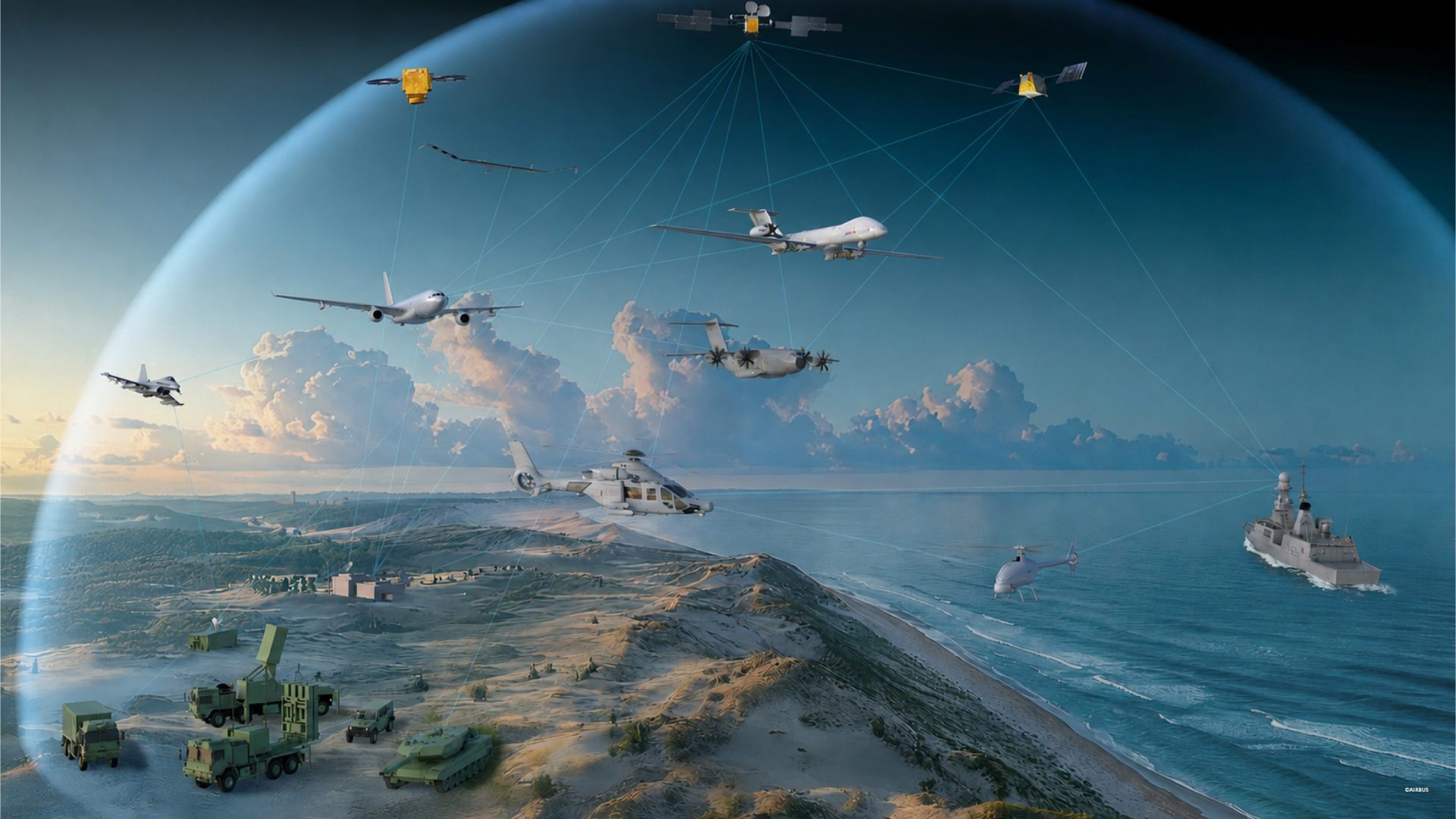
On the exhibition stands, this development is radically changing the way equipment is presented. A tank or a drone is no longer displayed as a stand-alone piece of equipment, but as a hyper-connected component of a single network.
The aim of the live demonstrations and simulations on display at Eurosatory is to bring this concept to life: to show how information captured from space or the air by a drone or satellite is transmitted live to a soldier’s screen on the ground, guiding their immediate actions.
 French
  English