
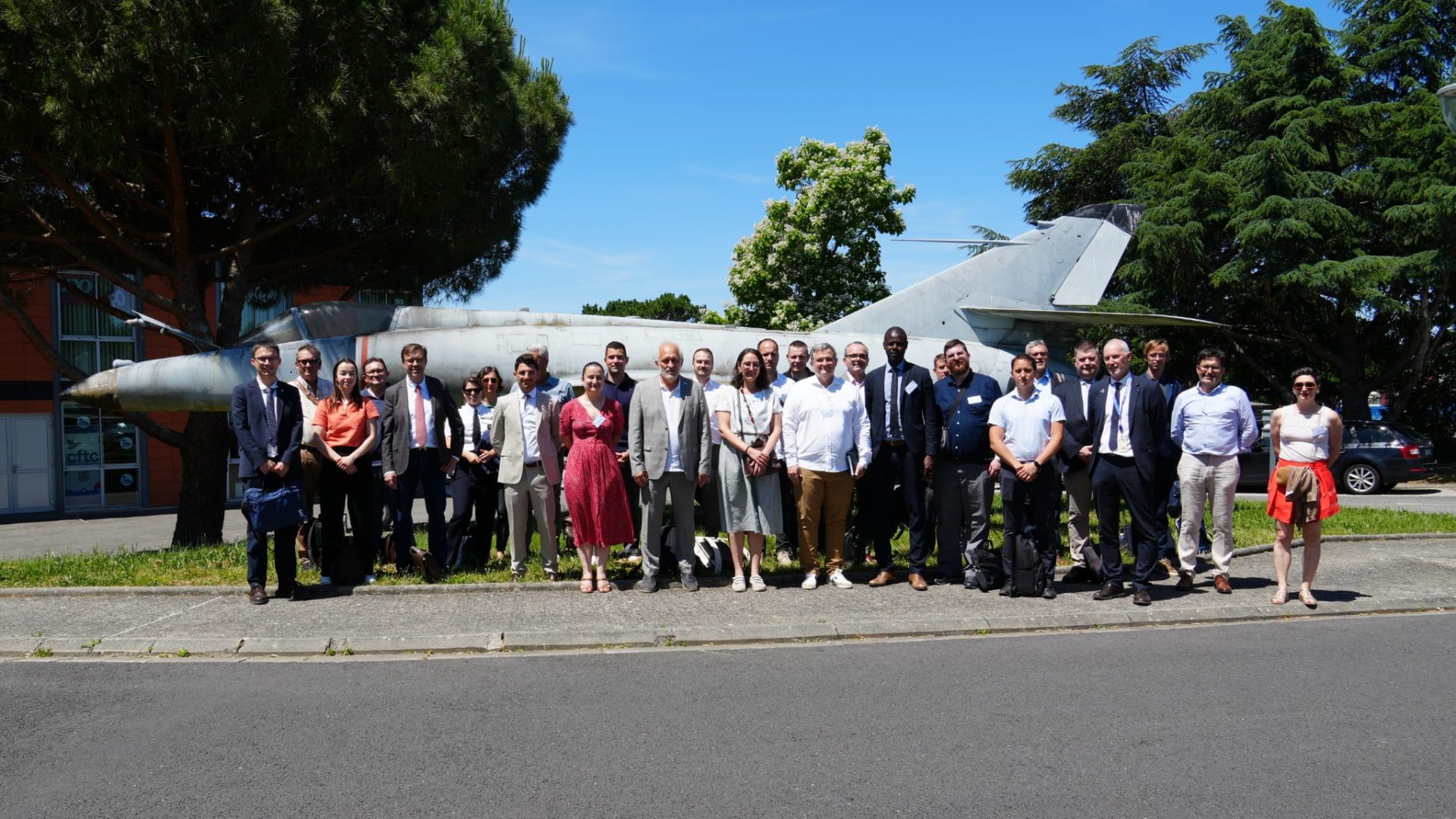
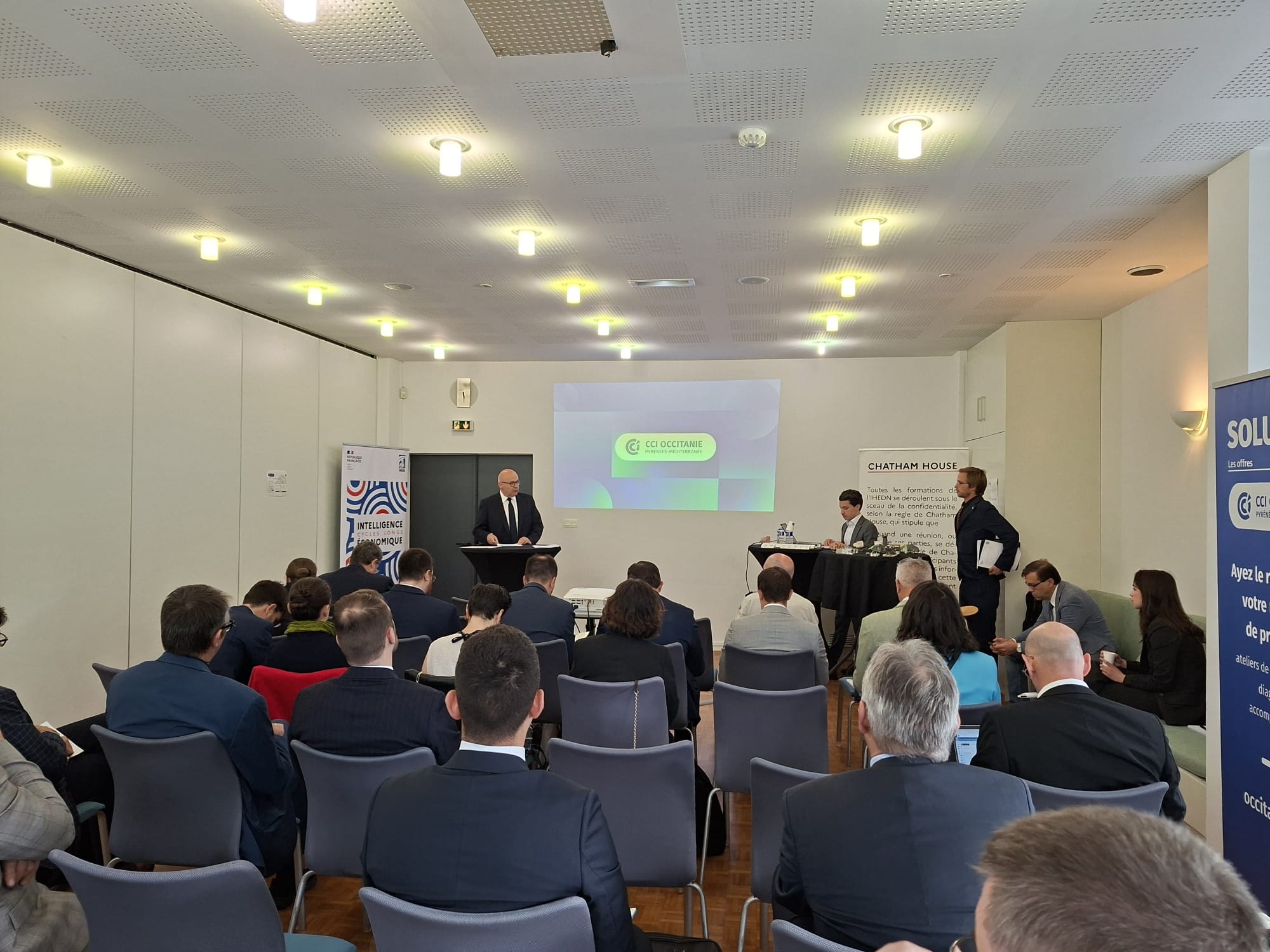
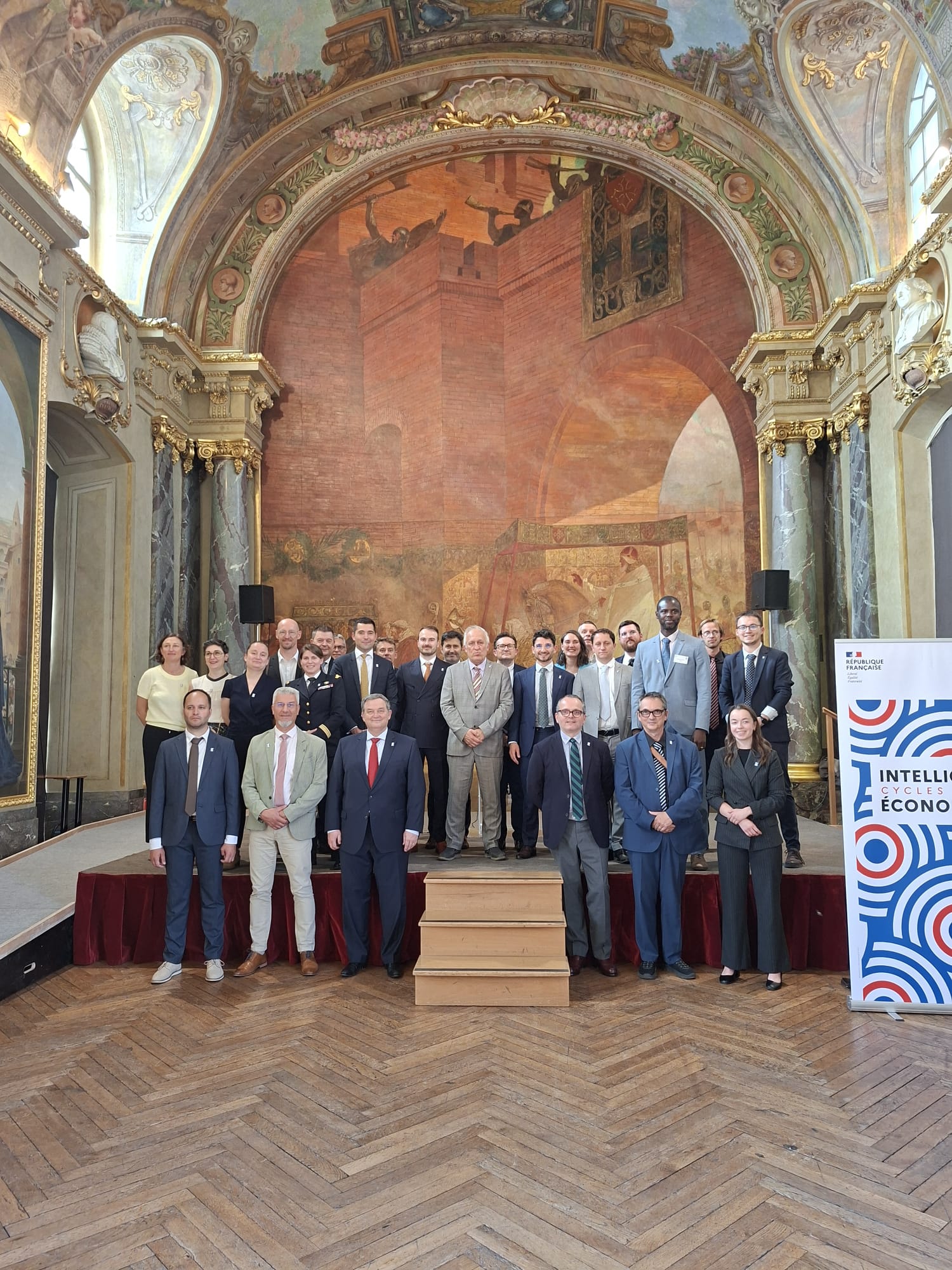
During seven days of training spread over two weeks, 25 participants from the public sector, industry, defence, security, academia and consultancy came together with a common objective: to acquire a business intelligence methodology enabling them to understand, anticipate and act in an increasingly complex strategic environment.
For this 93e edition, IHEDN chose one of France's industrial flagships: aeronautics.
Through a case study focusing on Airbus and its ecosystem, participants worked on the major issues of sovereignty that are shaping international competition today: control of value chains, critical dependencies, protection of know-how, economic warfare, cybersecurity, influence and industrial resilience.
Over and above the theoretical lessons, this course provided an opportunity to immerse oneself in the heart of one of our country's most strategic regions.
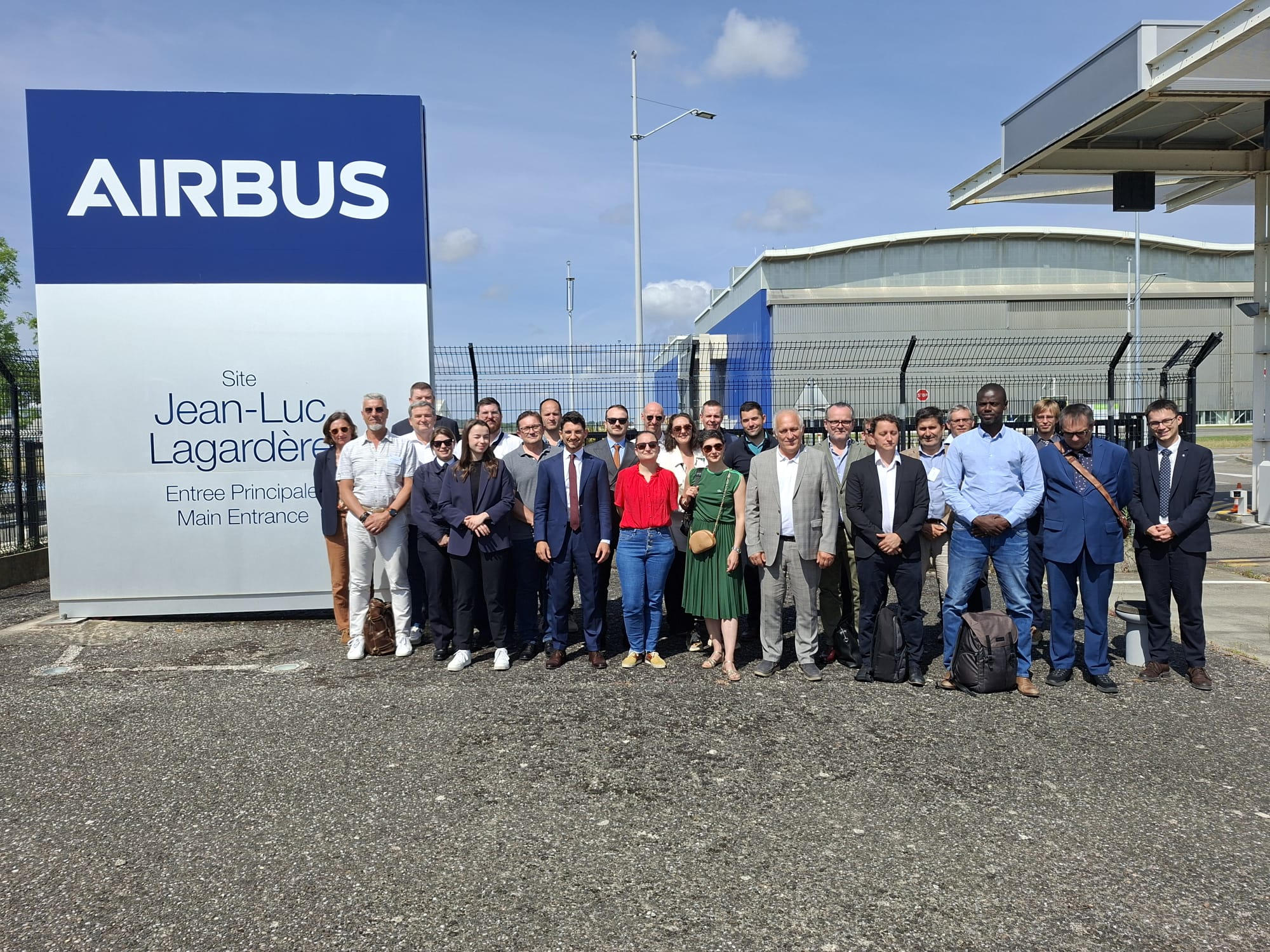
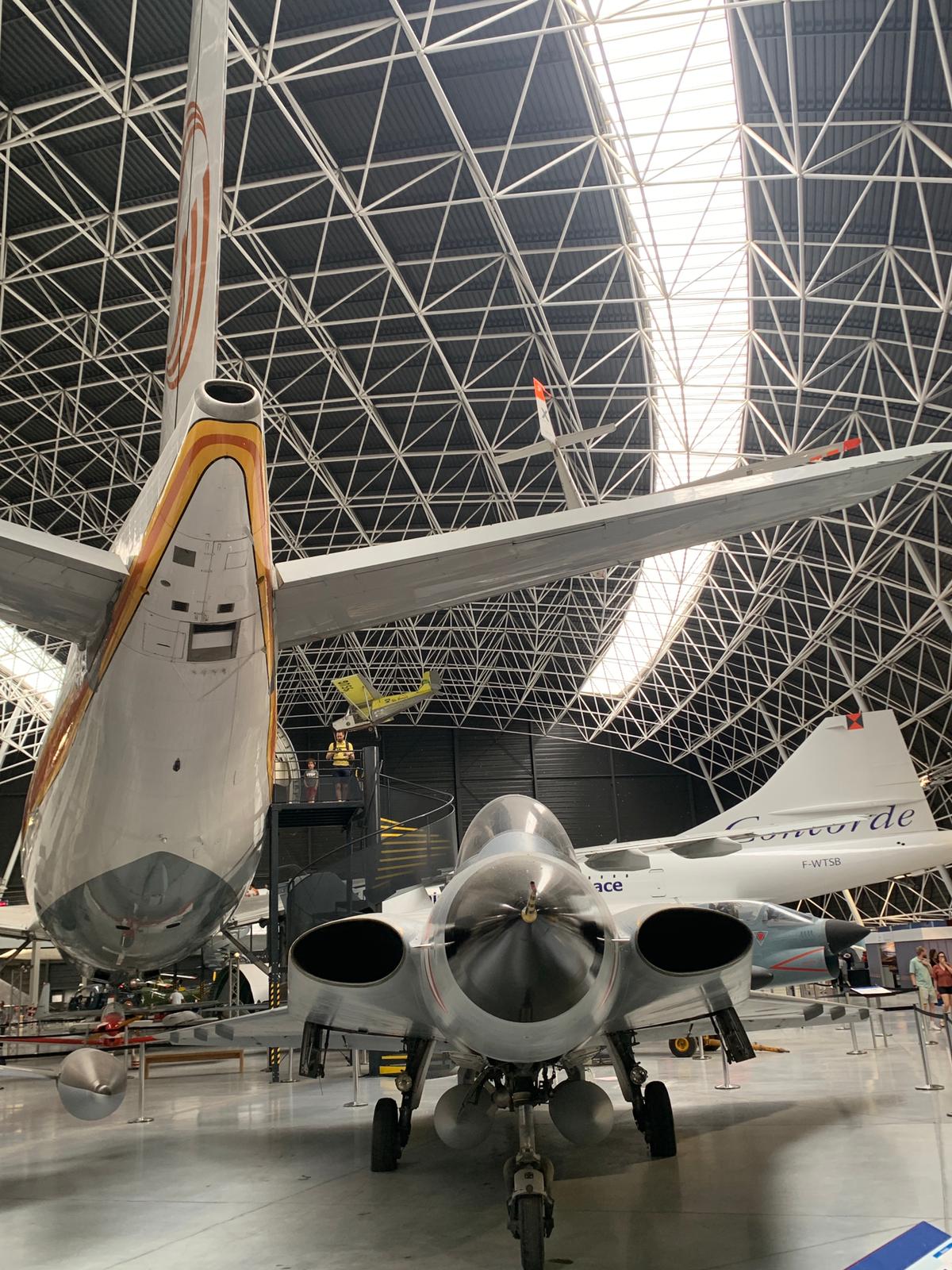
Participants had the privilege of discovering the final assembly line for the Airbus A320, a symbol of European industrial know-how and France's ability to remain a leading aeronautical power.
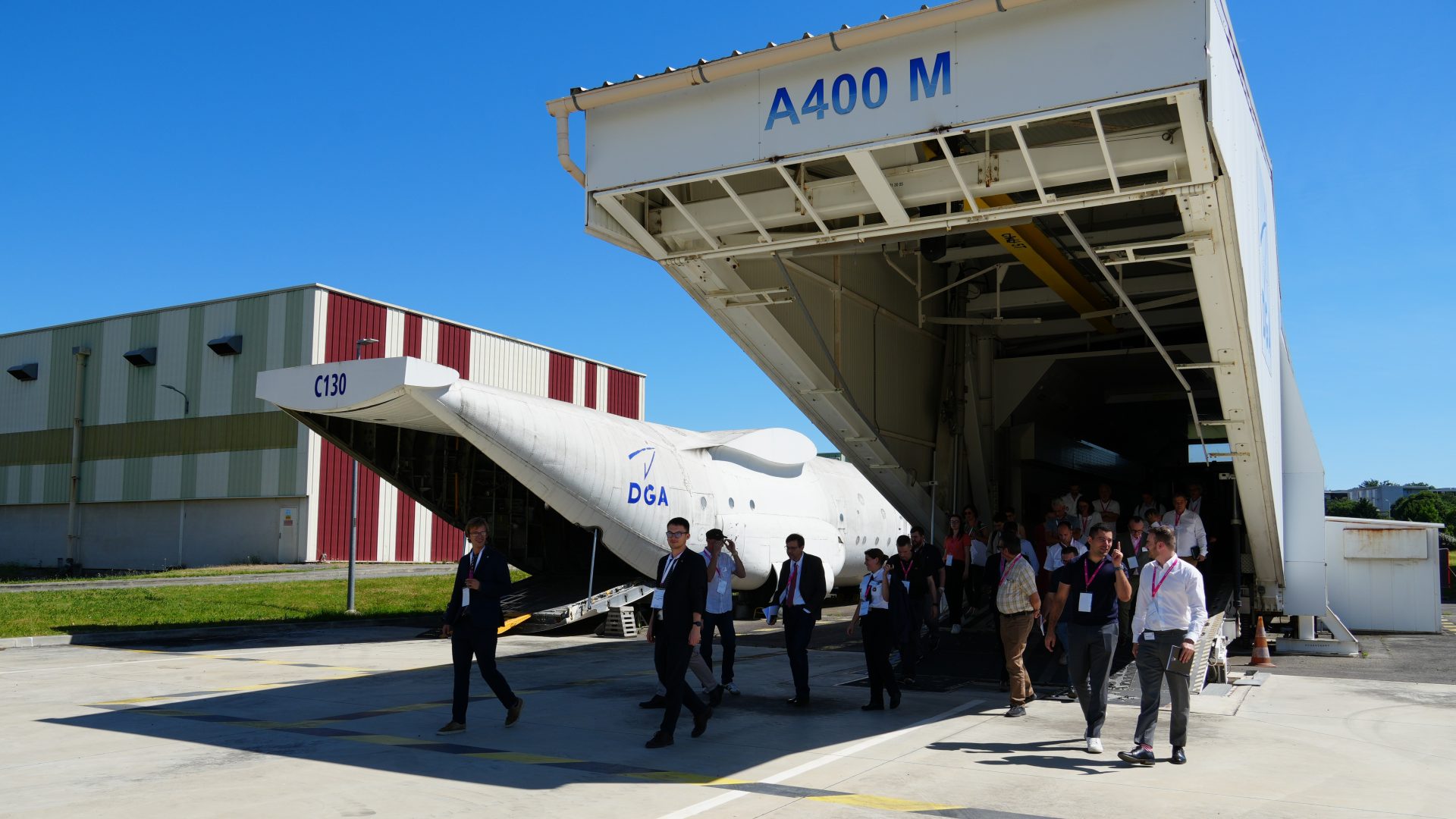
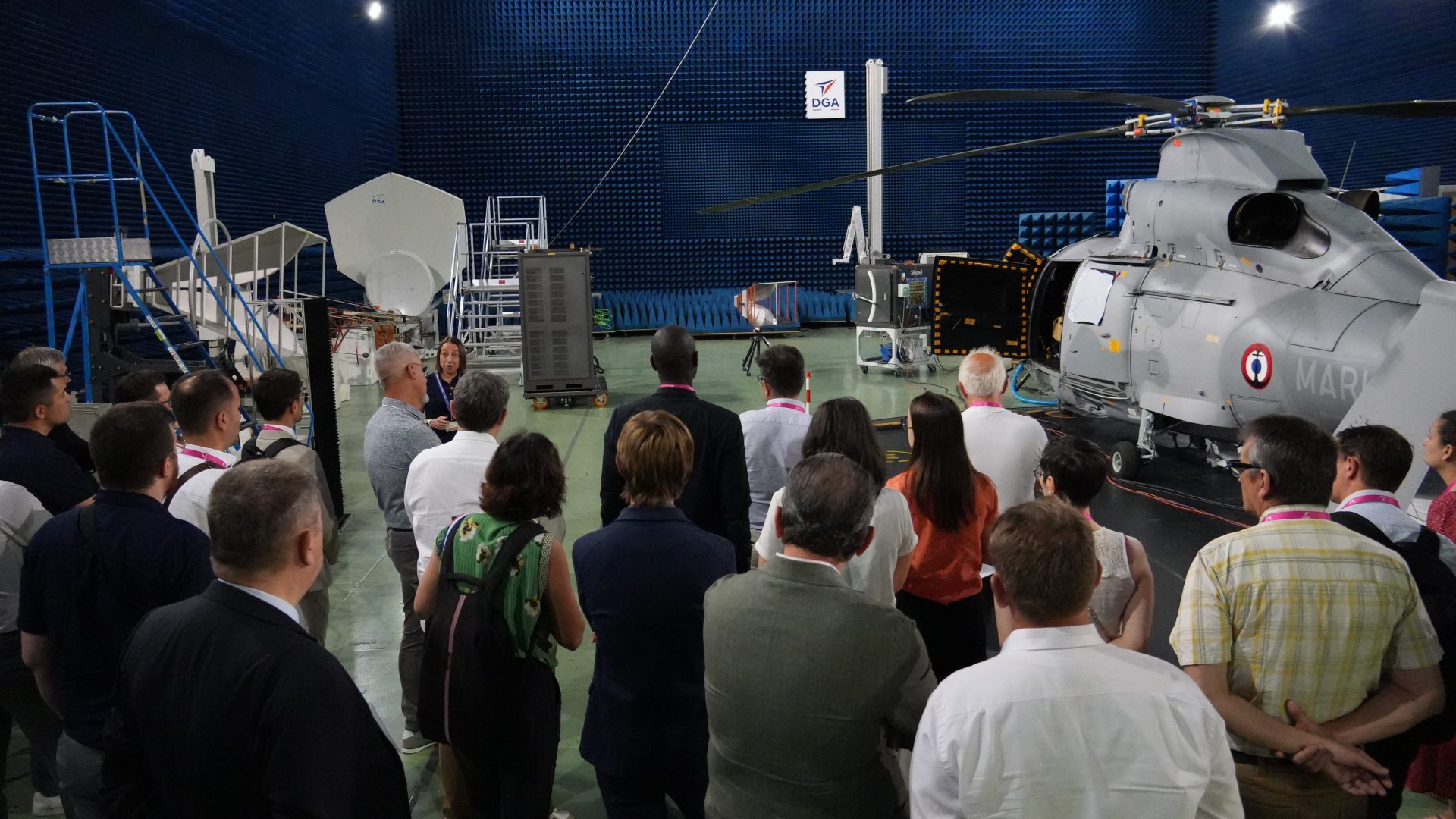
They were also welcomed to the Direction Générale de l'Armement - Techniques Aéronautiques (DGA TA), a key player in France's technological superiority, where they were able to gain a better understanding of the challenges of innovation, evaluation and sovereignty that accompany the development of aeronautical and defence capabilities.
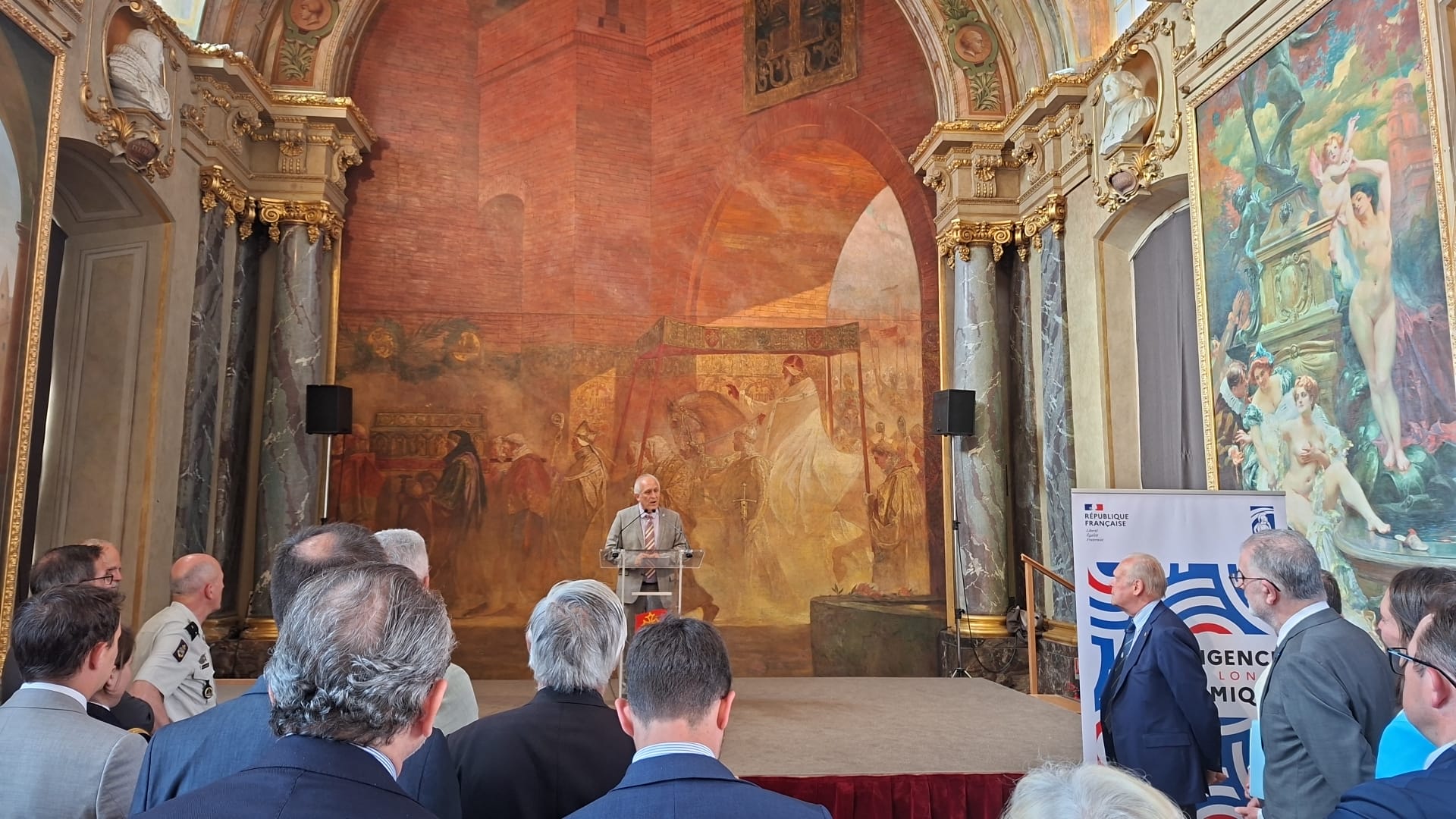
This year's event was also marked by a remarkable mobilisation of regional government departments. Participants benefited from the insights and feedback of those involved on a daily basis in protecting the national economic fabric, whether in terms of economic security, cybersecurity or the protection of scientific and technical heritage. This was a concrete illustration of the essential cooperation between the State, businesses and the academic world in the face of today's threats.
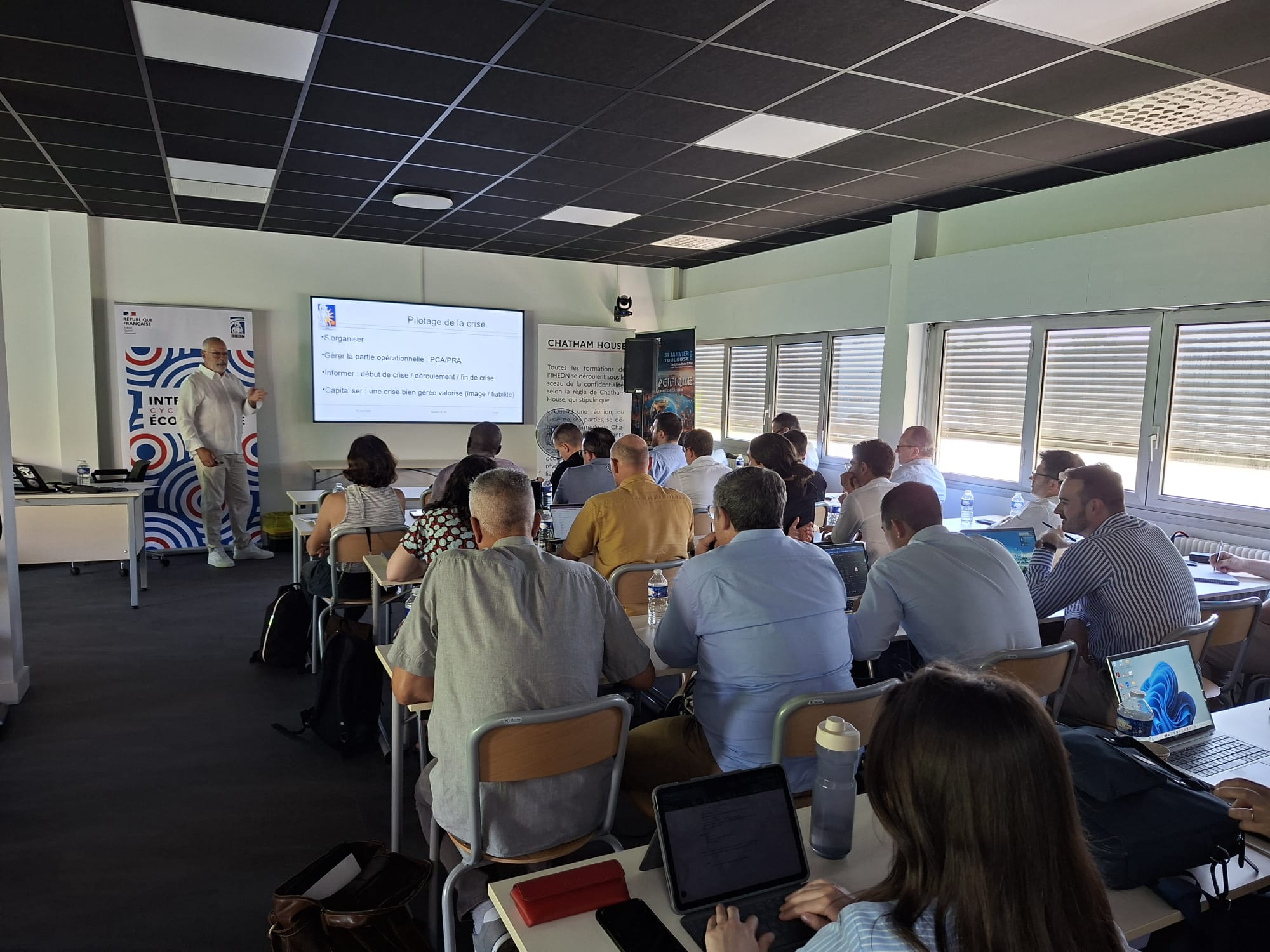
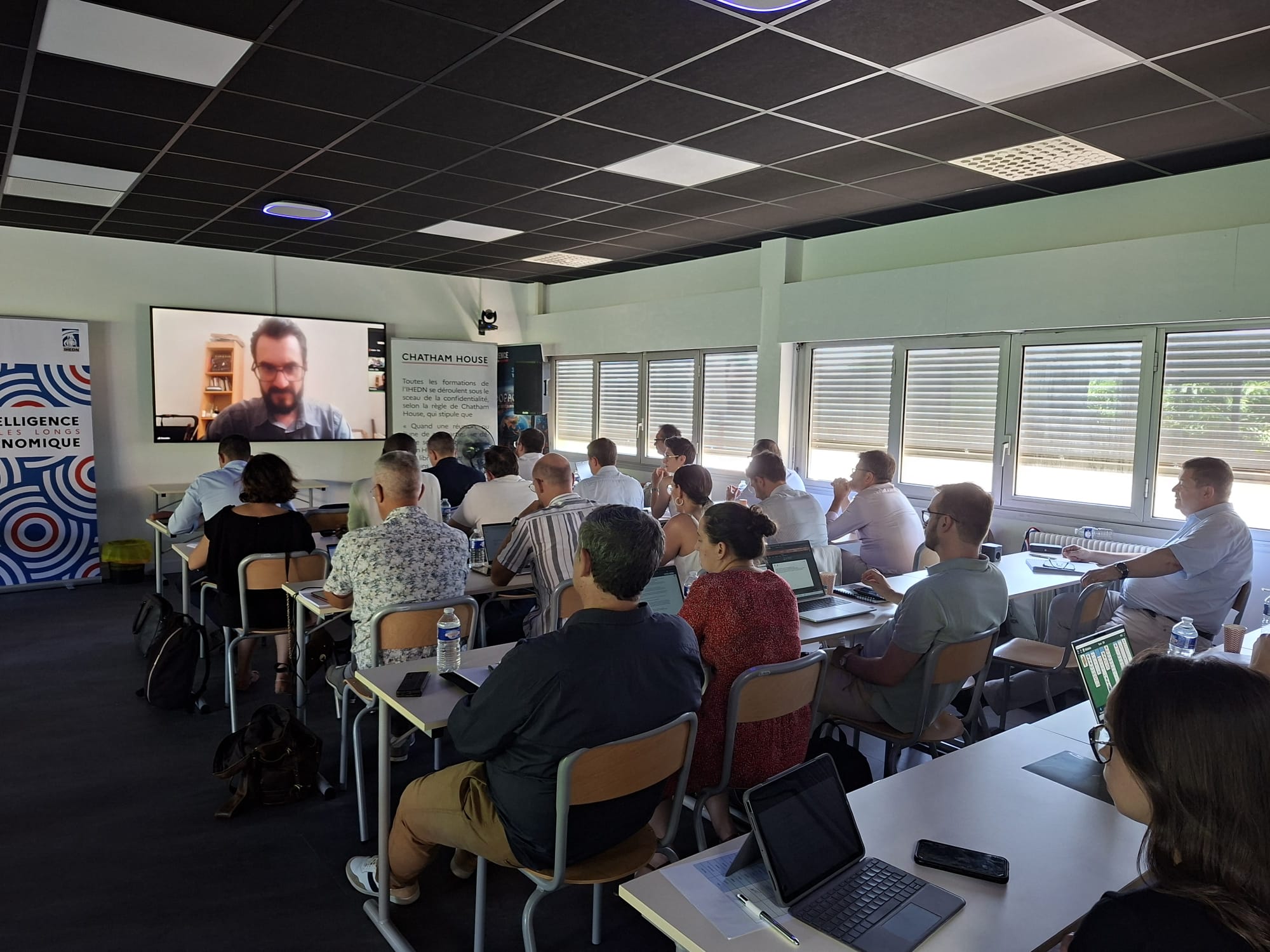
Throughout the course, the auditors were introduced to the main business intelligence tools:
- strategic intelligence and anticipation ;
- OSINT and the use of open sources ;
- economic security ;
- cybersecurity ;
- influence and public affairs ;
- compliance and risk management ;
- strategic decision support.
The pedagogy of the IES cycles is based on a simple principle: using a strategic sector as a pretext for acquiring a method that can be directly transposed to any organisation.
This approach culminated in the committee work carried out throughout the course. Divided into four groups, the participants analysed various issues related to the aeronautics ecosystem in order to produce strategic recommendations and decision-making tools.
Their final reports were presented to a panel of judges made up of Brigadier General Hugues de Roquemaurel, Nicolas Dubuc, Business Intelligence Advisor, and Pierre Woblewski, Business Intelligence Officer at Airbus.
The series closed with a speech by Bernard Carayon, a leading figure in economic intelligence in France. His analysis of contemporary geopolitical, technological and information-related changes served as a reminder of just how topical the issues of economic sovereignty are, and the importance of training decision-makers capable of incorporating these dimensions into their strategies.
This 93e This year's edition fully illustrates the DNA of IHEDN's IES cycles:
- decompartmentalise approaches ;
- bringing public and private players together; ;
- combining expertise; ;
- develop a collective intelligence in the service of national sovereignty.
The IHEDN would like to thank all the speakers, partners and institutions that contributed to the success of this event, in particular: Airbus, the Occitanie regional prefecture, the DGA Techniques aéronautiques, the strategic information and economic security department (SISSE) and other government departments involved in economic security. But also the Agence nationale de la sécurité des systèmes d'information (ANSSI), the Institut des hautes études du ministère de l'Intérieur (IHEMI) and the Protection civile de la Haute-Garonne.
After cycles devoted to semi-conductors, quantum, submarine cables, New Space and nuclear energy, this new edition confirms IHEDN's determination to anchor its training courses as close as possible to France's major strategic ecosystems in order to gain a better understanding of the sovereignty challenges of the 21st century.
Finally, congratulations to the new IHEDN auditors for their commitment, the quality of their work, their intellectual curiosity and the collective spirit that has animated this class throughout the cycle. And welcome to the community of IHEDN auditors.
 French
  English