
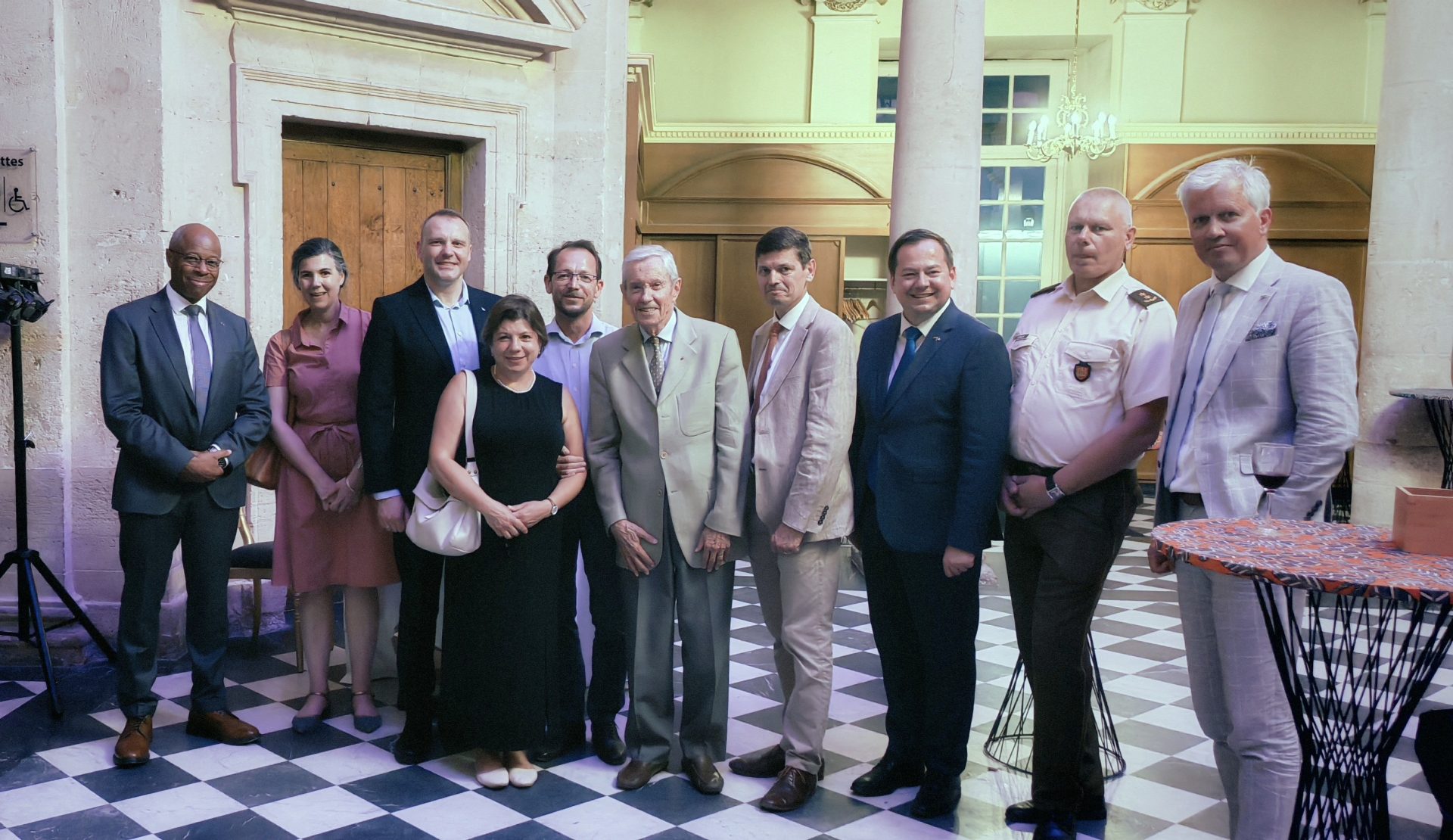
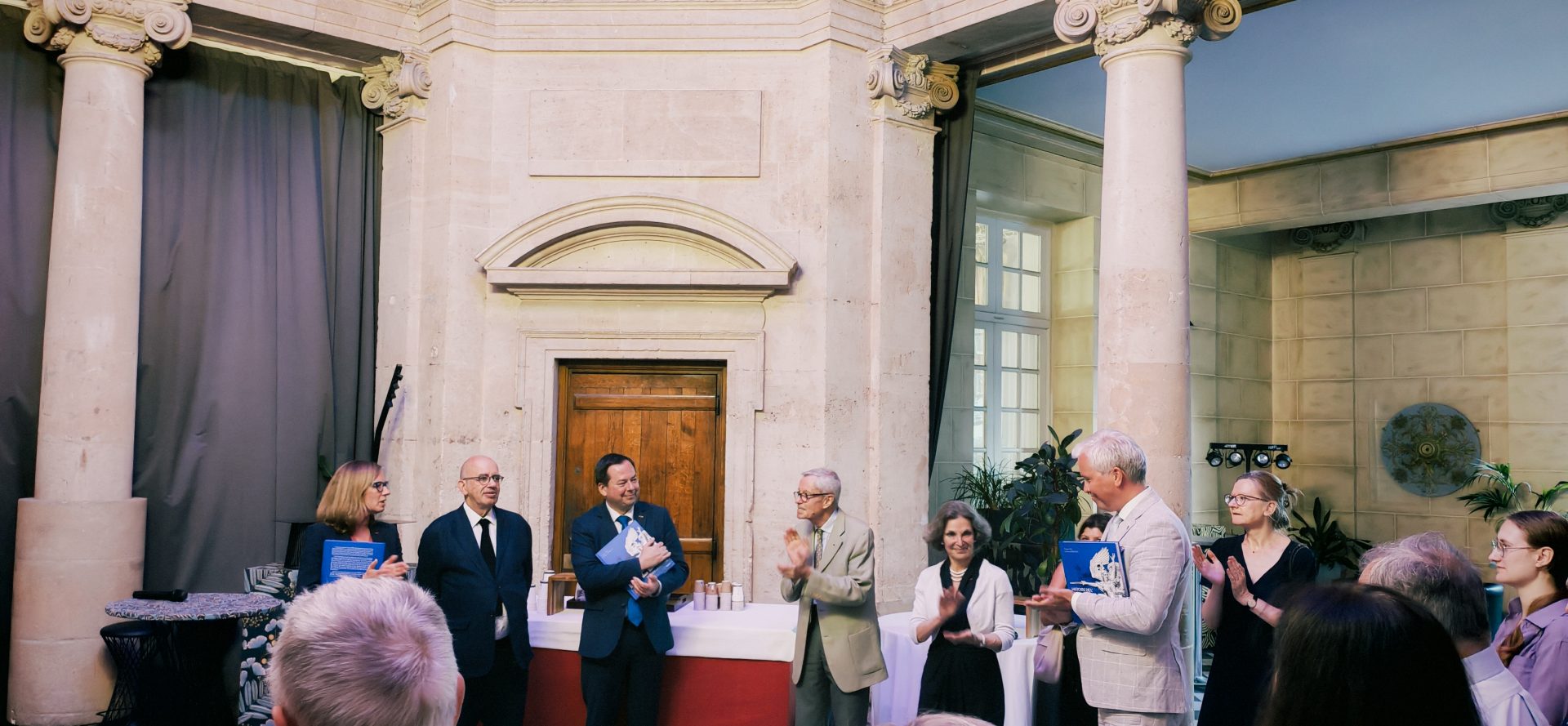
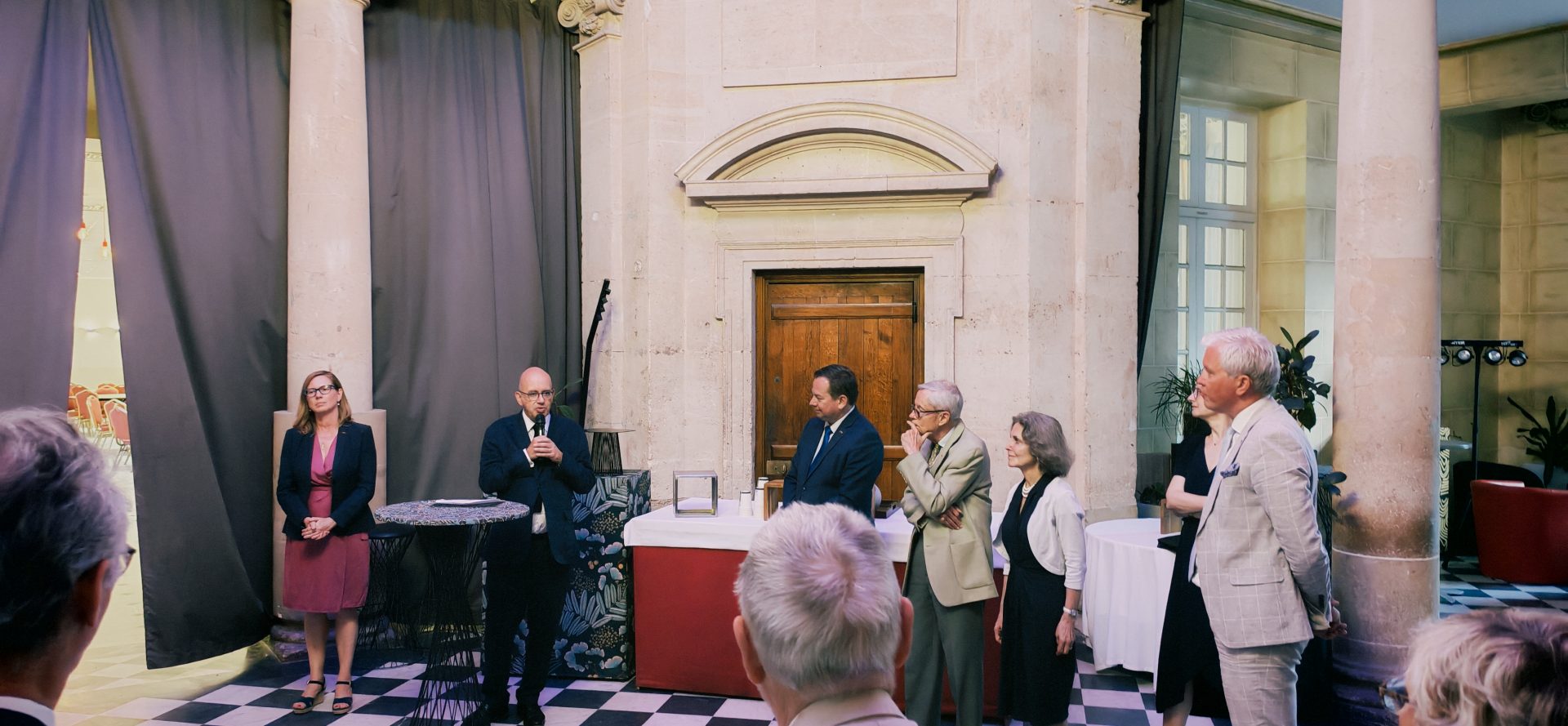
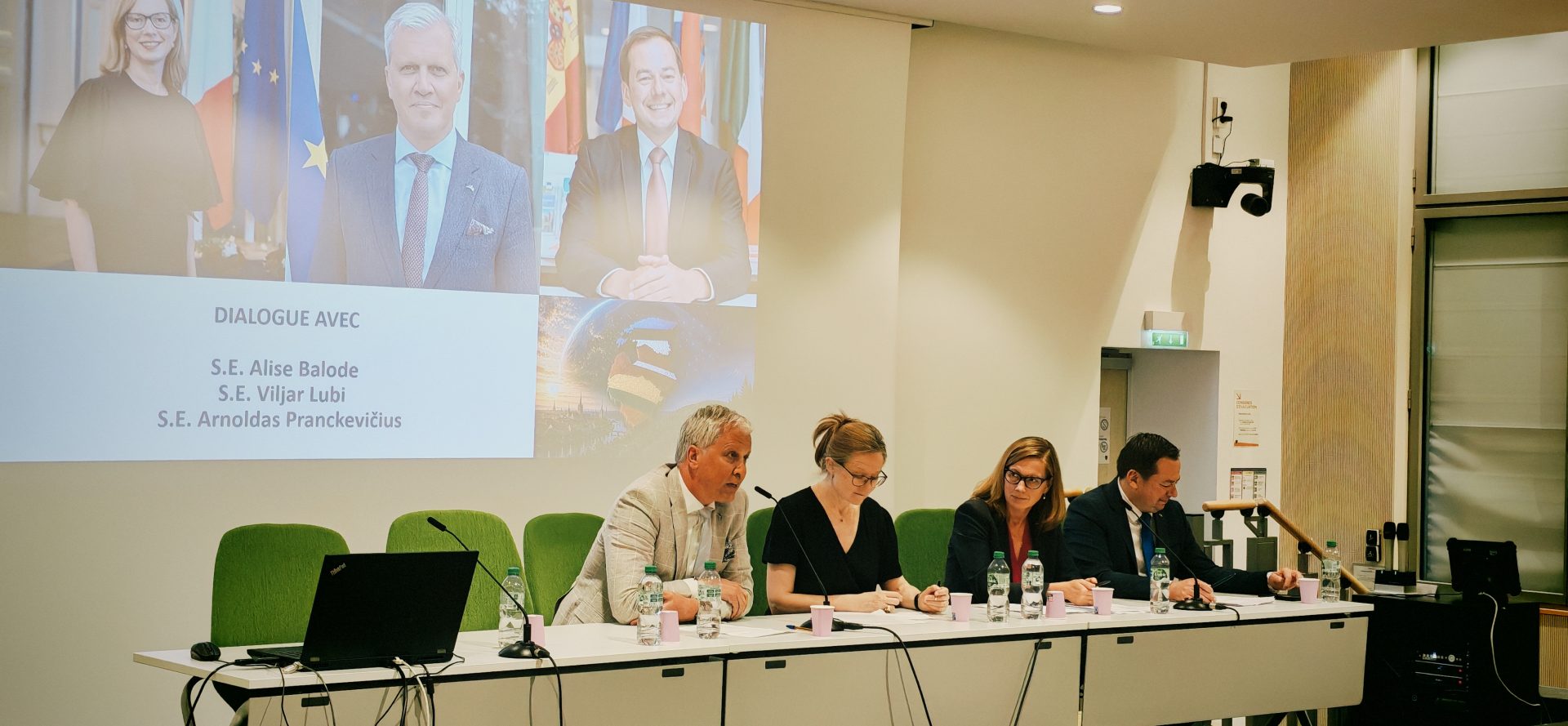
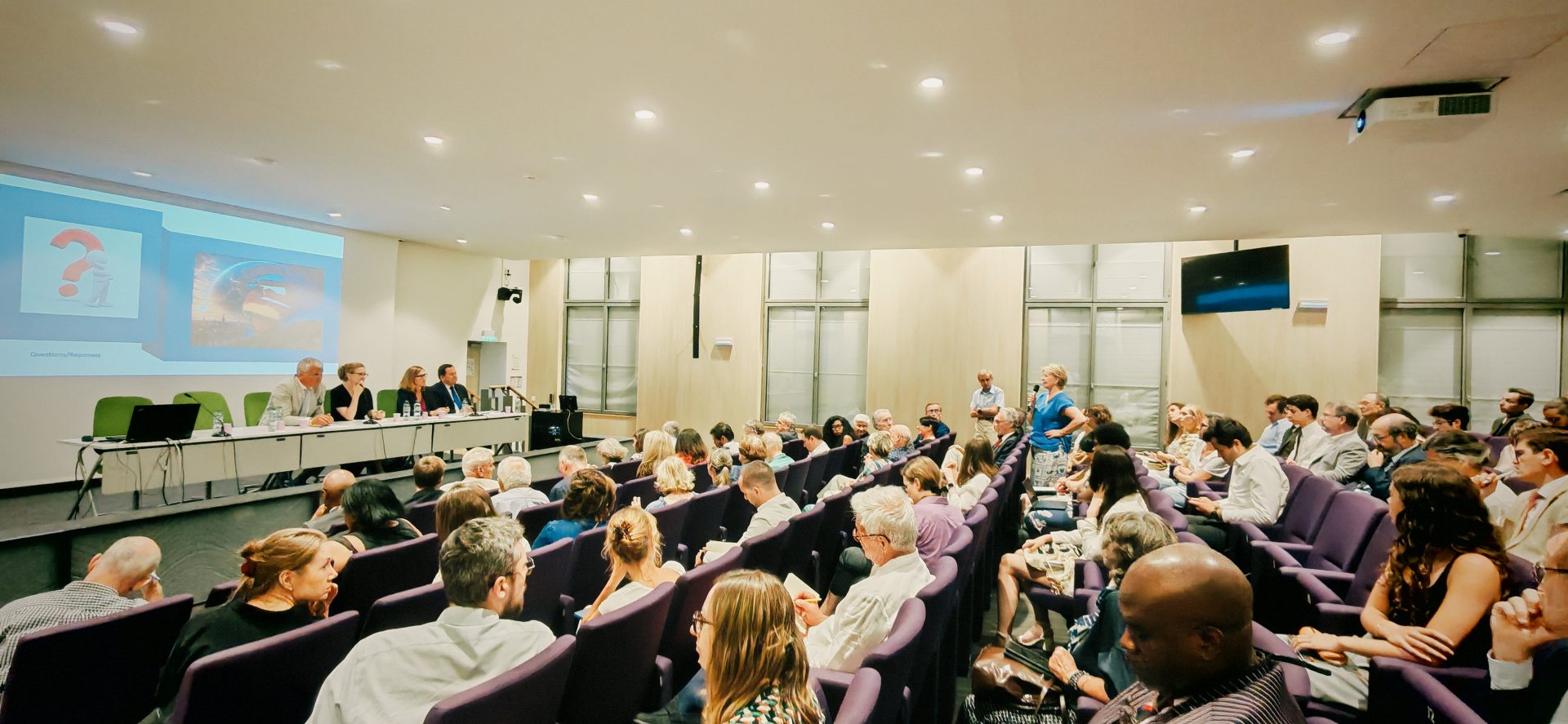
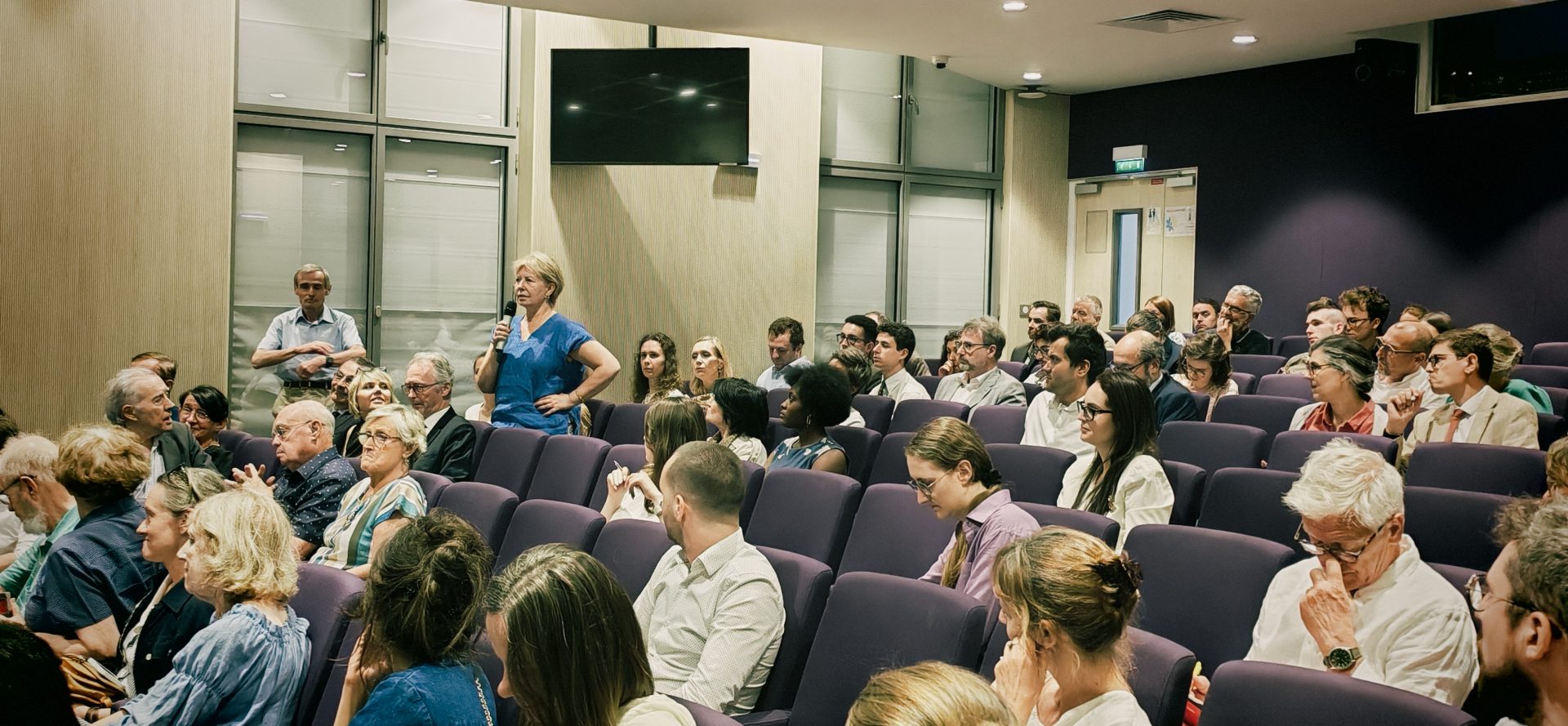
On 7 July at the École Militaire, the EuroDéfense-France association, the IHEDN and the Association of IHEDN Trainees (AA-IHEDN) organised a conference on the theme «The three Baltic States – Estonia, Latvia, Lithuania – in the world of 2026: a European perspective, new threats and global defence». Five speakers took the floor:
- Viljar Lubi, Estonian Ambassador to France,
- Alise Balode, Latvian Ambassador to France,
- Arnoldas Pranckevičius, Lithuanian Ambassador to France,
- Céline Bayou, an expert on the Baltic region, Russia and geopolitical issues in Eastern Europe, and a policy officer for Russia and Continental Europe at the Centre for Analysis, Forecasting and Strategy (CAPS) of the Ministry for Europe and Foreign Affairs,
- Pierre Lévy, French Ambassador, former French Ambassador to Russia, Chairman of the Board of Directors of the IHEDN.
The Baltic states share a threefold reality that shapes their unique perception of the threat: a direct border with Russia, an asymmetrical demographic balance (a combined population of 6 million compared with Russia’s 143 million) and a collective memory deeply marked by the Soviet occupation.
The end of complacency in the face of Russia’s imperial obsession
In 2026, Moscow’s stance towards them oscillates between hybrid threats and cognitive warfare aimed at undermining the cohesion of Western democracies. The Baltic region is the subject of constant hostile rhetoric from the Kremlin (warnings about «the end of peaceful life», simulated attacks). Nevertheless, the year 2026 marks a turning point: faced with the Ukrainian forces’ ability to strike deep into Russian energy infrastructure, a growing sense of unease and nervousness is palpable in Moscow.
A range of threats below the threshold of conflict
Whilst Russia’s conventional military deployment along the Baltic borders has been partially scaled back to bolster the front line in Ukraine, the threat has not disappeared. It is constantly present, just «below the threshold» for the activation of NATO’s Article 5, placing the region in a permanent grey area: «We are not yet at war, but we are no longer at peace». This threat takes many forms:
- Hybrid warfare and physical disruption: Widespread GPS jamming affecting civil aviation, repeated airspace violations, parcel bombs, and the exploitation of migration flows orchestrated by Belarus.
- Cognitive and cyber warfare: A reluctant pioneer since the massive cyberattack of 2007, Estonia points out that cyberspace remains a daily battlefield. Russian disinformation seeks to capitalise on Russian-speaking minorities (particularly in Narva and Daugavpils). However, Lithuania points out that investment in the media and the use of artificial intelligence have reduced life expectancy among fake news Russians in a few minutes.
Europe can establish itself as a truly autonomous strategic power
The Baltic doctrine is based on a historical axiom: «To be alone is to be dead». To avoid repeating the mistakes of neutrality made in the 1930s, the three states have structured their security around a dual, inseparable guarantee: NATO and the European Union.
Faced with political uncertainty across the Atlantic, the Baltic states did not wait to to contribute to national defence. For example, the three countries will reach 5 % of their GDP (when ?) allocated to defence. In Latvia and Lithuania, conscription has been reintroduced and has sparked a strong wave of voluntary enlistment. In a sign of a shift towards a more hardline stance, the three countries, along with Finland, have withdrawn from the Ottawa Convention on anti-personnel mines.
Over the past ten years, the Baltic states have broken free from their neighbour and have strengthened their sovereignty, achieving the feat of completely disconnecting from Russian networks for its gas, oil and electricity supplies, and connecting permanently to the European network.
The local defence industry is booming, particularly in the drone and anti-drone sectors, directly as a result of lessons learnt from the Ukrainian front. This trend is accompanied by increased industrial partnerships. Lithuania has thus become the world’s second-largest user of French CAESAR artillery systems, whilst France’s Directorate General for Armament (DGA) and major groups (such as Naval Group) are signing agreements with Baltic start-ups.
Towards an inspiring «total defence» model for Europe
The main lesson that the Baltic states offer their Western partners lies in the concept of comprehensive and total defence, which posits that whilst armies win battles, it is nations that win wars.
Above all, this involves civil society mobilisation: Just like paramilitary organisations (such as the Defence League or the Lithuanian Riflemen’s Union), citizens of all ages and leading political figures are actively involved in the reserves and train in the forest.
And this results in the acquisition of a Cognitive resilience from school age onwards: Estonia has chosen to incorporate AI education extensively into its school curricula in order to train informed users who are capable of countering future attempts to manipulate information for destabilising purposes.
The Baltic responses: industrial sovereignty and European solidarity
The situation in the Baltic States in 2026 serves as a reminder of the urgent need for a pan-European strategic awareness. Faced with nuclear blackmail and the cultural soft power strategies that Russia continues to employ in Paris and Rome, The Baltic states are demonstrating strong political will.
The strengthening of the European Defence Industrial and Technological Base (EDITB), supported by ambitious projects such as the Eurobonds defence, and the creation of a post of European Commissioner for Defence, to be filled by Lithuania, demonstrate that Europe has the economic and technological means to establish itself as a truly autonomous strategic power, provided one can overcome one’s own fear.
To find out more
Discover Céline Bayou’s book: The Baltic States in 100 Questions: Facing the Russian Threat
Read more Eurodéfense publication
 French
  English